
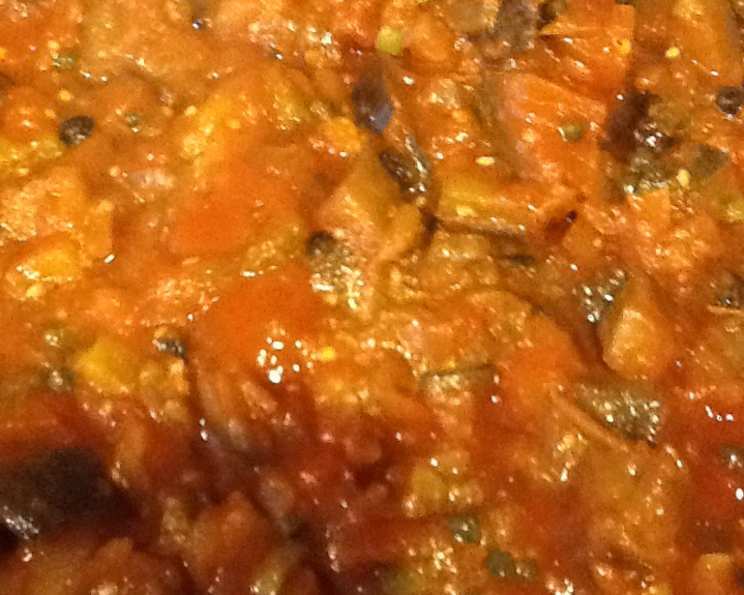
Caponata: A Taste of Sicily, Preserved
The scent of caponata instantly transports me back to a sun-drenched terrace in Sicily. My grandmother, Nonna Emilia, would be stirring a massive pot of the sweet and savory relish, the aroma of eggplant, tomatoes, and vinegar mingling with the salty sea breeze. Each spoonful was a taste of sunshine, family, and the vibrant flavors of her homeland, a memory I cherish with every bite. This canned version allows you to capture that Sicilian sunshine and preserve it for year-round enjoyment.
Recipe Overview
- Prep Time: 30 minutes
- Cook Time: 1 hour 30 minutes
- Total Time: 2 hours
- Servings: About 3 pint jars
- Yield: Approximately 3 pints
- Dietary Type: Vegan
Ingredients
- 1/2 cup olive oil
- 2 eggplants, unpeeled, cut into 1-inch cubes
- 2 large Spanish onions, peeled
- 1 clove garlic, crushed
- 3/4 cup celery, finely diced
- 2 cups tomato puree or 2 cups tomato sauce
- 1/3 cup pitted green olives, coarsely chopped
- 1/3 cup pitted black olives, coarsely chopped
- 1/4 cup capers, drained
- 1/4 cup red wine vinegar or 1/4 cup white wine vinegar
- 2 tablespoons brown sugar
- 1/2 teaspoon salt
- 1/2 teaspoon pepper
- 1/2 teaspoon dried oregano
- 1/4 teaspoon dried thyme
- 3 tablespoons parsley, minced
Equipment Needed
- Stockpot
- Cutting board
- Knife
- Measuring cups and spoons
- 3 pint-sized canning jars with lids and rings
- Jar lifter
- Pressure canner
Instructions
-
Begin by preparing the eggplant. Cut the unpeeled eggplants into approximately 1-inch cubes. This size will allow them to cook evenly and maintain some texture.
-
In a large stockpot, heat 5 tablespoons of the olive oil over medium-high heat. Once the oil is hot, add the cubed eggplant.
-
Stir-fry the eggplant for 10-12 minutes, or until it is golden brown and slightly softened. Be sure to stir frequently to prevent sticking and ensure even cooking. The eggplant should be “touched with brown”, indicating some caramelization for added flavor.
-
Add the remaining olive oil to the pot. Then, add the peeled onions, garlic, and celery. Stir-fry these ingredients for another 10 minutes, or until they are golden and softened. The onions should become translucent and the garlic should release its fragrant aroma.
-
Now, incorporate the remaining ingredients: the tomato puree (or sauce), green olives, black olives, capers, red wine vinegar (or white wine vinegar), brown sugar, salt, pepper, dried oregano, and dried thyme.
-
Stir well to combine all the ingredients thoroughly. Bring the mixture to a simmer, then cover the pot.
-
Reduce the heat to moderately low and simmer for 1 hour, stirring approximately every 10 minutes. This frequent stirring will prevent sticking and ensure even cooking and flavor development.
-
After the hour, remove the lid from the pot and continue to cook, uncovered, until the caponata has thickened considerably and reaches a consistency similar to chutney. This may take another 15-30 minutes. The final consistency is crucial for both flavor and proper canning.
-
While the caponata is simmering, prepare your canning jars. Wash 3-pint sized jars and lids in hot, soapy water. Rinse well and keep hot until ready to use. You can keep them hot in a simmering pot of water or in a warm oven.
-
Once the caponata has reached the desired consistency, carefully ladle it into the hot, sterilized jars, leaving 1-inch of headspace at the top of each jar.
-
Wipe the rims of the jars with a clean, damp cloth to ensure a good seal. Place the lids on the jars and screw on the rings until they are fingertip tight.
-
Process the filled jars in a pressure canner at 10 pounds pressure for 30 minutes. Be sure to follow the manufacturer’s instructions for your specific pressure canner. Adjust processing time for altitude if necessary.
-
After processing, turn off the heat and allow the pressure to return to zero naturally. Then, carefully remove the jars from the canner using a jar lifter and place them on a towel-lined surface to cool.
-
As the jars cool, you should hear a “pop” sound, indicating that the lids have sealed properly. Once the jars are completely cool (after about 12-24 hours), check the seals by pressing down on the center of each lid. If the lid does not flex, it is sealed. If the lid flexes, it is not sealed and should be refrigerated and used within a week, or reprocessed with a new lid.
Expert Tips & Tricks
-
For a deeper, richer flavor, try roasting the eggplant before adding it to the pot. Toss the cubed eggplant with olive oil, salt, and pepper, then roast at 400°F (200°C) for 20-25 minutes, or until tender and slightly browned.
-
Adding a splash of balsamic vinegar along with the red wine vinegar can add a complex sweetness.
-
If you prefer a smoother texture, you can partially blend the caponata with an immersion blender after it has finished simmering.
-
Don’t be afraid to adjust the sweetness and acidity to your liking. Add more brown sugar if you prefer a sweeter caponata, or more vinegar if you like it tangier.
Serving & Storage Suggestions
Caponata is incredibly versatile. Serve it at room temperature or chilled as an appetizer with crusty bread or crackers. It’s also delicious as a side dish alongside grilled meats or fish. Spoon it over pasta for a quick and flavorful vegetarian meal. You can also use it as a topping for bruschetta or crostini.
Properly canned caponata, with sealed lids, can be stored in a cool, dark place for up to a year. Once opened, refrigerate any unused portion in an airtight container and consume within a week.
Nutritional Information
(Estimated per serving, based on 3 pints yield)
| Nutrient | Amount per Serving | % Daily Value |
|---|---|---|
| Calories | 583 kcal | 29% |
| Total Fat | 45.2g | 69% |
| Saturated Fat | 6.8g | 34% |
| Cholesterol | 0mg | 0% |
| Sodium | 1153.6mg | 48% |
| Total Carbohydrate | 54.6g | 18% |
| Dietary Fiber | 17.3g | 69% |
| Sugars | 29g | – |
| Protein | 7.9g | 16% |
*Percent Daily Values are based on a 2,000 calorie diet.
Variations & Substitutions
- Spicy Caponata: Add a pinch of red pepper flakes or a finely chopped chili pepper to the pot for a touch of heat.
- Nutty Caponata: Stir in toasted pine nuts or almonds for added texture and flavor.
- Seasonal Caponata: Experiment with different vegetables depending on the season. Zucchini, bell peppers, and artichoke hearts are all delicious additions.
- Sweet Caponata: Add raisins or dried cranberries for a sweeter twist.
FAQs (Frequently Asked Questions)
Q: Why is it important to cut the eggplant into uniform pieces?
A: Uniform size ensures even cooking, preventing some pieces from becoming mushy while others remain undercooked.
Q: Can I use fresh tomatoes instead of tomato puree or sauce?
A: Yes, you can. You’ll need about 4 cups of chopped fresh tomatoes. Cook them down a bit longer to reduce the liquid content before adding the other ingredients.
Q: Why is it necessary to pressure can the caponata?
A: Caponata is a low-acid food, which means it requires pressure canning to destroy botulism spores and ensure safe storage.
Q: Can I freeze caponata instead of canning it?
A: Yes, freezing is an option. Allow the caponata to cool completely, then pack it into freezer-safe containers, leaving some headspace for expansion. It can be stored in the freezer for up to 3 months.
Q: What if my jars don’t seal properly after processing?
A: If a jar doesn’t seal within 24 hours, refrigerate it immediately and use the caponata within a week. Alternatively, you can reprocess the jar with a new lid, ensuring the jar rim is clean.
Final Thoughts
Making caponata is more than just following a recipe; it’s an experience, a connection to the rich culinary heritage of Sicily. Don’t be afraid to experiment with the flavors and create your own unique version of this classic relish. And most importantly, share your creation with friends and family – food is always best enjoyed together. This canned version allows you to extend that experience throughout the year, offering a taste of summer sunshine even on the coldest winter days. Buon appetito!