
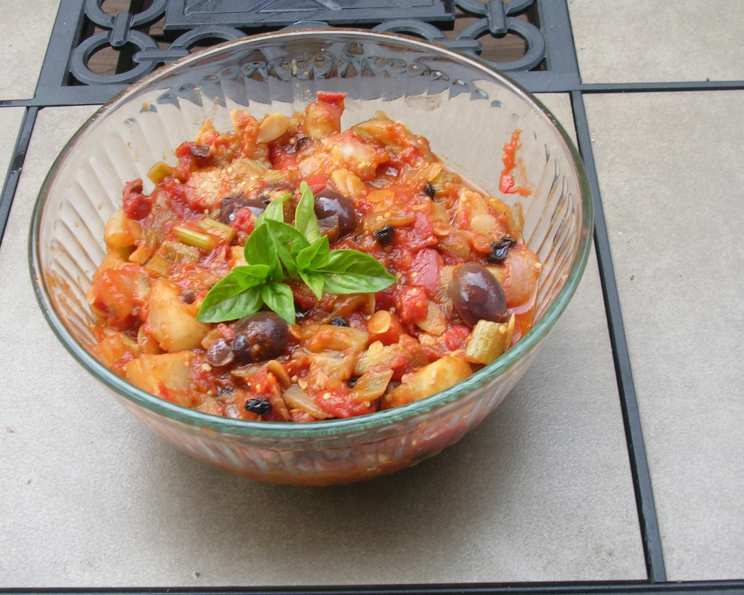
Caponata With Fennel, Olives and Raisins
My grandmother, Nonna Emilia, always had a pot of caponata simmering on the stove during the summer months. The aroma, a blend of sweet, sour, and earthy notes, was the olfactory signature of her kitchen. I remember sneaking tastes of the slightly sweet and tangy stew, the tender eggplant melting in my mouth alongside the salty olives and bright bursts of basil. To this day, the scent of caponata transports me back to her sun-drenched Sicilian kitchen, filled with laughter and the promise of a delicious meal.
Recipe Overview
- Prep Time: 20 minutes
- Cook Time: 40 minutes
- Total Time: 1 hour
- Servings: 6
- Yield: 6 cups
- Dietary Type: Vegan
Ingredients
- 6 tablespoons olive oil
- 1 1/2 lbs unpeeled eggplants, cut into 3/4-inch cubes
- 3 cups coarsely chopped red bell peppers
- 2 cups coarsely chopped fresh fennel bulbs (about 1 medium)
- 6 large garlic cloves, chopped
- 1/2 cup pitted kalamata olives, coarsely chopped
- 1/2 cup golden raisins
- 1 1/4 cups tomato sauce
- 6 tablespoons red wine vinegar
- 3/4 cup chopped fresh basil
- 2 tablespoons sugar (or to taste)
- Salt and pepper to taste
Equipment Needed
- Large, heavy-bottomed pot
- Cutting board
- Knife
- Measuring cups and spoons
Instructions
- Heat the olive oil in a large, heavy-bottomed pot over medium-high heat. Make sure the pot is large enough to accommodate all the vegetables.
- Add the cubed eggplant, coarsely chopped red bell peppers, chopped fresh fennel bulbs, and chopped garlic to the pot. Sauté until the eggplant is tender, approximately 10 minutes. Stir frequently to prevent sticking and ensure even cooking.
- Add the coarsely chopped kalamata olives and golden raisins to the pot. Stir to combine them with the other vegetables.
- Pour in the tomato sauce and red wine vinegar. Mix well to coat all the vegetables.
- Cover the pot, reduce the heat to medium-low, and simmer for 15 minutes, stirring occasionally to prevent sticking.
- Uncover the pot and continue to simmer until the caponata is thick and the vegetables are very tender, stirring occasionally, about 15 minutes longer. The sauce should reduce and cling to the vegetables.
- Stir in the chopped fresh basil.
- Season the caponata to taste with sugar, salt, and pepper. Start with the specified amount of sugar and adjust to your preference, depending on the sweetness of your tomatoes.
- The caponata can be made a day ahead. Cover and refrigerate. Serve at room temperature for the best flavor.
Expert Tips & Tricks
- Eggplant Preparation: To avoid bitterness, you can salt the eggplant cubes before cooking. Place the cubed eggplant in a colander, toss with salt, and let it sit for about 30 minutes. Rinse thoroughly and pat dry before adding it to the pot.
- Fennel Flavor: If you want a more pronounced fennel flavor, you can add a teaspoon of fennel seeds along with the fennel bulbs. Toast the seeds lightly in a dry pan before adding them to the pot to enhance their aroma.
- Acidity Balance: The balance of sweet and sour is crucial in caponata. Adjust the amount of sugar and vinegar to your liking, depending on the sweetness of your tomatoes and the acidity of your vinegar. Taste as you go and make small adjustments.
- Texture Control: To ensure that the celery retains some firmness, add it a few minutes after the other vegetables. Avoid overcooking it.
- Spice it up: Add a pinch of red pepper flakes when you sauté the vegetables if you’d like a little heat.
Serving & Storage Suggestions
Caponata is best served at room temperature, allowing the flavors to meld and develop. It can be served as a relish, a side dish, or an appetizer. Serve it on toasted bread rounds (crostini), alongside grilled vegetables, or as a topping for pasta or polenta.
Leftover caponata can be stored in an airtight container in the refrigerator for up to 5 days. While it can sit at room temperature for a few hours, refrigerating it promptly is best for food safety. To reheat, gently warm it in a saucepan over low heat or microwave it in short intervals, stirring occasionally. Freezing is not generally recommended, as the eggplant can become mushy upon thawing.
Nutritional Information
| Nutrient | Amount per Serving | % Daily Value |
|---|---|---|
| Calories | 263.7 kcal | N/A |
| Calories from Fat | 138g | 53% |
| Total Fat | 15.4 g | 23% |
| Saturated Fat | 2.1 g | 10% |
| Cholesterol | 0 mg | 0% |
| Sodium | 386.5 mg | 16% |
| Total Carbohydrate | 32.8 g | 10% |
| Dietary Fiber | 8.1 g | 32% |
| Sugars | 19.4 g | 77% |
| Protein | 3.8 g | 7% |
Variations & Substitutions
- Add Artichokes: Include quartered artichoke hearts for an extra layer of flavor and texture. Add them with the bell peppers and fennel.
- Use Different Olives: Experiment with different types of olives, such as Castelvetrano or Cerignola, for a unique flavor profile.
- Pine Nuts: Toast pine nuts and stir them in at the end for added crunch and richness.
- Sweet Peppers: Use a mix of red, yellow, and orange bell peppers for a more colorful and vibrant caponata.
- Balsamic Vinegar: Substitute balsamic vinegar for red wine vinegar for a sweeter, more complex flavor. Start with a smaller amount and adjust to taste.
FAQs (Frequently Asked Questions)
Q: Can I make caponata ahead of time?
A: Absolutely! In fact, caponata often tastes better the next day as the flavors meld together. Store it in an airtight container in the refrigerator.
Q: Can I use different types of eggplant?
A: Yes, you can use different varieties of eggplant, such as Italian or Japanese eggplant. Just adjust the cooking time as needed, as some varieties may cook faster than others.
Q: What if I don’t have red wine vinegar?
A: You can substitute white wine vinegar or apple cider vinegar, but keep in mind that the flavor will be slightly different.
Q: How can I make caponata less sweet?
A: Reduce the amount of sugar or omit it altogether. You can also add a squeeze of lemon juice to balance the sweetness.
Q: Can I freeze caponata?
A: While you can freeze caponata, the texture of the eggplant may become mushy upon thawing. If you do freeze it, make sure to drain any excess liquid before serving.
Final Thoughts
Caponata is more than just a dish; it’s a taste of Sicilian history and culture. With its vibrant flavors and simple ingredients, it’s a versatile and satisfying dish that can be enjoyed in countless ways. I encourage you to try this recipe and experience the magic of caponata for yourself. Don’t be afraid to experiment with different ingredients and seasonings to create your own unique version. And if you do, please share your feedback and let me know how it turns out! It pairs perfectly with a crisp glass of Sicilian white wine and some crusty bread. Buon appetito!