
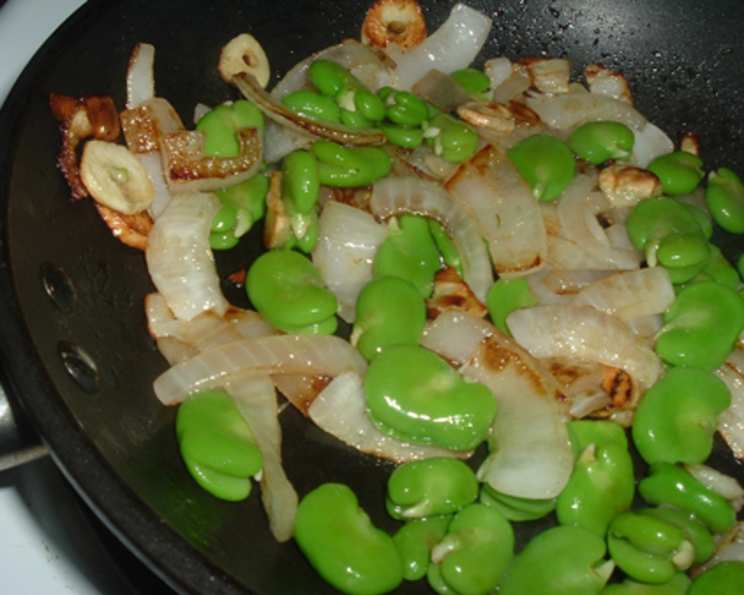
Caramelized Onions & Fava Beans: A Taste of Spring
My Nonna Emilia, may she rest in peace, had a garden overflowing with life. I remember, as a child, spending countless afternoons pulling weeds (much to my chagrin) and, more excitingly, harvesting fava beans. Their velvety pods felt like treasure in my little hands, and the earthy aroma was intoxicating. This simple dish, a staple on her spring table, always brings me back to those sun-drenched days, the taste of fresh fava beans perfectly complemented by the sweetness of caramelized onions, a true celebration of nature’s bounty.
Recipe Overview
- Prep Time: 30 minutes (if using fresh fava beans) / 15 minutes (if using canned or frozen)
- Cook Time: 30 minutes
- Total Time: 1 hour (fresh) / 45 minutes (canned/frozen)
- Servings: 2
- Yield: 2 servings
- Dietary Type: Vegetarian
Ingredients
- 2 lbs fresh fava beans or 2 cups canned or frozen fava beans
- 1 large onion, cleaned and chopped
- 1 teaspoon butter
- 1 teaspoon olive oil
- 1 garlic clove, finely chopped (or more, to taste)
- 4 tablespoons parmesan cheese, grated
Equipment Needed
- Large pot
- Skillet
- Oven-proof dish
Instructions
- Prepare the fava beans (if using fresh): Shell the fava beans. Bring a large pot of water to a rolling boil. Add the shelled fava beans to the boiling water and cook for approximately 10 minutes. Immediately transfer the cooked fava beans to a bowl of ice water to stop the cooking process. This helps preserve their bright green color and prevents them from becoming mushy.
- Remove the outer membrane (if using fresh): Once cooled, gently pinch the skin of each fava bean to remove the outer membrane. This step can be a little tedious, but it significantly improves the texture and digestibility of the beans. This is a step you can skip if you really don’t want to do it.
- Prepare frozen or canned beans: If using frozen fava beans, ensure they are cooked according to package instructions. Canned fava beans are ready to use straight from the can. Drain them well before adding them to the dish.
- Caramelize the onions and garlic: Heat the olive oil and butter in a skillet over medium heat. Add the chopped onion and garlic. Sauté over medium heat, stirring occasionally, until the onions are golden brown and caramelized, approximately 20 minutes. This process brings out the natural sweetness of the onions, creating a rich and flavorful base for the dish. Be patient and don’t rush the caramelization process, as it is key to the final flavor.
- Combine the beans and onions: Add the prepared fava beans to the skillet with the caramelized onions and garlic. Cook until the fava beans are heated through, approximately 5 minutes. Stir gently to avoid mashing the beans.
- Transfer to an oven-proof dish: Transfer the fava bean and onion mixture to an oven-proof dish.
- Add cheese and broil: Sprinkle the grated parmesan cheese evenly over the top of the fava beans and onions. Broil in the oven until the cheese is golden brown and bubbly, approximately 2-3 minutes. Watch carefully to prevent the cheese from burning.
- Serve: Remove from the oven and let cool slightly before serving.
Make-Ahead Option: You can prepare this dish ahead of time up to the point of adding the fava beans to the onions. Place the onions in the casserole dish. When ready to serve, add the fava beans, sprinkle with cheese, and bake in a 350°F (175°C) oven for approximately 25 minutes, then broil for the last few minutes to brown the cheese.
Expert Tips & Tricks
- Caramelization is Key: Patience is your best friend when caramelizing onions. Low and slow is the way to go to develop their maximum sweetness. If the onions start to burn, reduce the heat slightly and add a tablespoon of water to the pan.
- Fresh vs. Frozen vs. Canned: While fresh fava beans offer the best flavor and texture, frozen or canned are perfectly acceptable substitutes. Just adjust the cooking time accordingly. If using canned, rinse them well to remove any excess salt.
- Adding Depth of Flavor: A splash of dry white wine or vegetable broth can add extra depth of flavor to the caramelized onions. Add it to the skillet after the onions have started to soften, and let it simmer until reduced.
- Vary the Cheese: Feel free to experiment with different types of cheese. Pecorino Romano or Asiago would also work well in place of Parmesan. For a vegan option, use nutritional yeast or a plant-based Parmesan alternative.
- Herbaceous notes: Adding a few springs of fresh thyme or rosemary during caramelization gives an aromatic touch. Remove them before adding the fava beans.
Serving & Storage Suggestions
This dish is best served warm as a side dish or as a light lunch with crusty bread. It pairs well with grilled chicken, fish, or lamb.
- Storage: Leftovers can be stored in an airtight container in the refrigerator for up to 3 days.
- Reheating: Reheat gently in a skillet over medium heat or in a preheated oven at 350°F (175°C) until heated through. You can also reheat it in the microwave, but the texture may be slightly altered.
- Freezing: While not ideal, this dish can be frozen. However, the texture of the fava beans may become slightly mushy upon thawing. If freezing, cool completely before transferring to a freezer-safe container. Use within 1 month. Thaw overnight in the refrigerator before reheating.
Nutritional Information
| Nutrient | Amount per Serving | % Daily Value |
|---|---|---|
| Calories | 300 kcal | 15% |
| Total Fat | 12g | 18% |
| Saturated Fat | 6g | 30% |
| Cholesterol | 20mg | 7% |
| Sodium | 200mg | 9% |
| Total Carbohydrate | 30g | 10% |
| Dietary Fiber | 10g | 40% |
| Sugars | 5g | N/A |
| Protein | 15g | 30% |
Note: Nutritional information is an estimate and may vary based on specific ingredients and preparation methods.
Variations & Substitutions
- Vegan Version: Substitute the butter with olive oil or a vegan butter alternative and omit the Parmesan cheese. Use nutritional yeast for a cheesy flavor.
- Spicy Kick: Add a pinch of red pepper flakes to the onions while they are caramelizing for a touch of heat.
- Lemon Zest: Add the zest of one lemon to the dish just before serving for a bright and citrusy flavor.
- Fresh Herbs: Incorporate fresh herbs like mint, parsley, or chives to add freshness and flavor.
FAQs (Frequently Asked Questions)
Q: What’s the best way to peel fava beans quickly?
A: After blanching them in boiling water and shocking them in ice water, make a small slit in the skin with your fingernail. This makes it easier to pop the beans out of their membrane.
Q: Can I use other types of beans instead of fava beans?
A: Yes, you can substitute with lima beans or even edamame, although the flavor profile will be slightly different. Adjust cooking times as needed.
Q: How do I prevent the onions from burning while caramelizing?
A: Use medium-low heat and stir frequently. If the onions start to stick or brown too quickly, add a tablespoon of water to the pan.
Q: Can I add meat to this dish?
A: Absolutely! Crispy pancetta or crumbled bacon would be delicious additions, adding a salty and savory element. Cook the meat separately and add it to the dish along with the fava beans.
Q: Is this dish gluten-free?
A: Yes, this recipe is naturally gluten-free, as it does not contain any gluten-containing ingredients. Always check the labels of your ingredients to ensure they are gluten-free if you have a strict gluten intolerance.
Final Thoughts
This Caramelized Onions & Fava Beans dish is more than just a recipe; it’s a connection to my heritage and a celebration of simple, seasonal ingredients. I encourage you to try this recipe and experience the delightful combination of sweet onions and earthy fava beans. Don’t be afraid to experiment with variations and make it your own. Share your creations and feedback – I’d love to hear how it turns out! Pair it with a crisp white wine for a truly memorable meal. Buon appetito!