
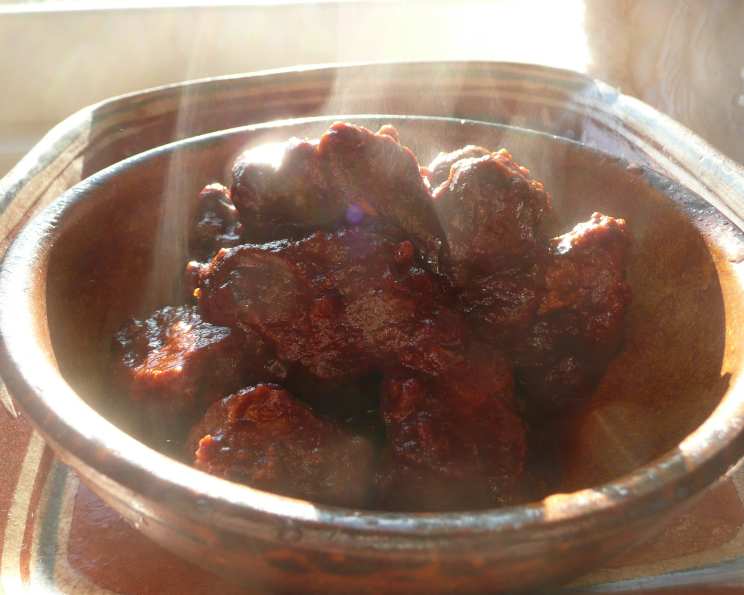
Carne Adovada: A Taste of New Mexico’s Soul
My first encounter with Carne Adovada wasn’t in a restaurant, but in the bustling kitchen of a friend’s grandmother in Santa Fe. The air hung thick with the earthy aroma of dried chiles and simmering pork, a scent that promised warmth and comfort. I watched, mesmerized, as she expertly layered the ingredients, her hands moving with the practiced grace of generations. The finished dish, a vibrant red stew served with warm tortillas, was more than just food; it was a taste of New Mexico itself, fiery, bold, and unforgettable.
Recipe Overview
- Prep Time: 20 minutes
- Cook Time: 2 hours 25 minutes
- Total Time: 2 hours 45 minutes
- Servings: 6
- Yield: 6 servings
- Dietary Type: Gluten-Free (check broth ingredients)
Ingredients
- 3 tablespoons vegetable oil, divided
- 2 medium onions, chopped (about 3 cups)
- 6 large garlic cloves, minced
- 3 tablespoons flour
- 1 1⁄2 teaspoons salt
- 1 1⁄2 teaspoons ground cumin
- 1 teaspoon fresh ground black pepper
- 3 1⁄2 lbs boneless pork shoulder, fat trimmed and meat cut into 1 1/2-in. cubes (butt)
- 1 cup ground red dried New Mexico chile
- 4 cups reduced-sodium chicken broth (or a combination of chicken bouillon and water)
- 1 bay leaf
Equipment Needed
- Large, heavy-bottomed, ovenproof pot with lid
- Large bowl
- Slotted spoon
- Blender
Instructions
- Preheat your oven to 350°F (175°C).
- Heat 2 tablespoons of vegetable oil in a large, heavy-bottomed, ovenproof pot over medium-high heat. Make sure your pot is truly oven-safe; a Dutch oven works perfectly for this.
- Add the chopped onions and minced garlic to the pot and cook, stirring occasionally, until the onions are golden brown, about 6 minutes. The onions should be softened and fragrant, releasing their natural sweetness.
- Using a slotted spoon, remove the cooked onions and garlic from the pot and transfer them to a bowl. Set aside.
- In a large bowl, whisk together the flour, salt, cumin, and black pepper. This dry mixture will help to coat the pork and thicken the sauce.
- Add the cubed pork to the bowl with the dry ingredients and toss to coat evenly. Ensure each piece of pork is well-covered.
- Return the pot to medium-high heat and add the remaining 1 tablespoon of vegetable oil.
- Working in batches, lightly brown the pork on all sides, about 5 to 7 minutes per batch. Don’t overcrowd the pot, as this will steam the pork instead of browning it. Browning the meat adds depth of flavor to the final dish. Transfer the browned pork to a separate bowl as you go.
- Return the cooked onions and garlic to the pot.
- Sprinkle the ground red dried New Mexico chile over the onions and garlic in the pot. Cook, stirring constantly, for about 2 minutes. Be careful not to burn the chile powder, as this will make it bitter. If the mixture seems too dry, add a splash of chicken broth to prevent burning.
- Pour in the remaining chicken broth, stirring to loosen any browned bits from the bottom of the pot. These browned bits, called fond, are packed with flavor and will enhance the overall taste of the stew.
- Carefully transfer the sauce mixture to a blender (or use an immersion blender directly in the pot). Whirl until smooth. This step is crucial for creating a velvety, rich sauce.
- Return the blended sauce to the pot and add the bay leaf and the reserved browned pork. If you happen to have a pork bone, add it to the pot as well; it will add extra richness to the broth.
- Cover the pot tightly with a lid, place it in the preheated oven, and cook for 1 hour.
- After 1 hour, slightly adjust the lid, leaving it slightly ajar to allow some steam to escape. Continue cooking until the pork is fork-tender, about 1 hour more. The pork should be easily pierced with a fork and almost falling apart.
- Remove the bay leaf from the pot. Taste the stew and season with additional salt if needed.
- Serve hot.
Expert Tips & Tricks
- Chile Selection: The type of red chile you use significantly impacts the flavor. Authentic New Mexico chile has a unique earthy sweetness. If you can’t find it, ancho chile powder is a good substitute, though it will be slightly milder.
- Browning the Pork: Don’t skip browning the pork! It adds a crucial layer of flavor that you won’t get otherwise. Make sure your pan is hot and don’t overcrowd it.
- Flavor Depth: For an even richer flavor, consider adding a tablespoon of apple cider vinegar or a small piece of Mexican chocolate (like Abuelita) to the stew during the last 30 minutes of cooking.
- Make-Ahead Magic: Carne Adovada is even better the next day! The flavors meld and deepen overnight. Make it a day ahead and simply reheat before serving.
- Dealing with Spice: If you find the stew too spicy, add a dollop of sour cream or Mexican crema when serving. The dairy will help to cool down the heat.
Serving & Storage Suggestions
Carne Adovada is traditionally served with warm tortillas, allowing you to create delicious and comforting burritos. It’s also excellent served over rice or alongside refried beans. Garnish with a sprinkle of chopped cilantro or a squeeze of lime juice for a burst of freshness.
Leftovers can be stored in an airtight container in the refrigerator for up to 3-4 days. For longer storage, freeze in freezer-safe containers for up to 2-3 months. Reheat gently on the stovetop or in the microwave until heated through. If frozen, thaw overnight in the refrigerator before reheating.
Nutritional Information
| Nutrient | Amount per Serving | % Daily Value |
|---|---|---|
| Calories | 813.6 kcal | N/A |
| Calories from Fat | 556 g | 68% |
| Total Fat | 61.8 g | 95% |
| Saturated Fat | 19.8 g | 98% |
| Cholesterol | 188 mg | 62% |
| Sodium | 817.9 mg | 34% |
| Total Carbohydrate | 14.6 g | 4% |
| Dietary Fiber | 2.6 g | 10% |
| Sugars | 4.4 g | 17% |
| Protein | 49.2 g | 98% |
Note: Nutritional information is an estimate and may vary based on specific ingredients and preparation methods.
Variations & Substitutions
- Vegetarian Option: Substitute the pork with diced sweet potatoes or butternut squash for a vegetarian twist.
- Spicier Version: Add a pinch of cayenne pepper or a chopped chipotle pepper in adobo sauce to the stew for extra heat.
- Slow Cooker Method: Brown the pork and sauté the onions and garlic as directed. Then, transfer everything to a slow cooker and cook on low for 6-8 hours, or on high for 3-4 hours, until the pork is fork-tender.
- Chicken or Beef: While traditionally made with pork, you can also use chicken thighs or beef chuck roast as a substitute. Adjust cooking times accordingly.
FAQs (Frequently Asked Questions)
Q: Can I use chile powder instead of ground red dried New Mexico chile?
A: Yes, you can, but the flavor will be different. Look for a high-quality chile powder for the best results. New Mexico chile powder will provide the most authentic flavor.
Q: How do I prevent the chile powder from burning when I add it to the pot?
A: Stir constantly and add a splash of broth if the mixture seems too dry. Burning the chile powder will make it bitter.
Q: Can I make this in a pressure cooker?
A: Yes! After browning the pork and sautéing the aromatics, add all ingredients to your pressure cooker. Cook on high pressure for 30-35 minutes, followed by a natural pressure release.
Q: My sauce is too thin. How can I thicken it?
A: Simmer the stew uncovered for 15-20 minutes to allow some of the liquid to evaporate. You can also mix a tablespoon of cornstarch with two tablespoons of cold water and stir it into the stew during the last few minutes of cooking.
Q: Can I freeze Carne Adovada?
A: Absolutely! It freezes beautifully. Store it in an airtight container for up to 2-3 months. Thaw overnight in the refrigerator before reheating.
Final Thoughts
Carne Adovada is more than just a recipe; it’s an invitation to experience the vibrant flavors and rich culinary heritage of New Mexico. Don’t be intimidated by the ingredient list or the cooking time – the result is a deeply satisfying and flavorful stew that’s well worth the effort. Gather your ingredients, embrace the aromas, and create a little bit of New Mexico magic in your own kitchen. I encourage you to try this recipe, experiment with the variations, and make it your own. And please, share your feedback – I’d love to hear how it turns out! Pair it with a cold Mexican beer for the perfect Southwestern feast.