
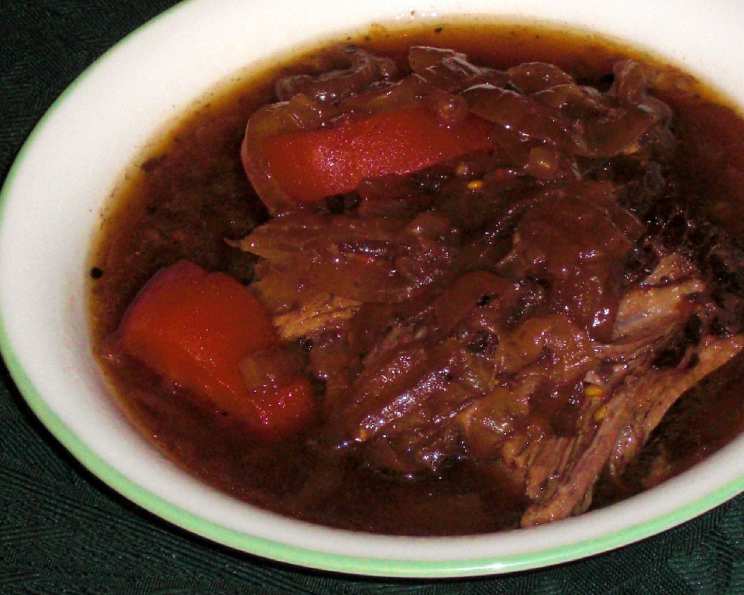
Carne Assada a Portuguesa: A Taste of Portugal in Every Bite
The aroma still lingers in my memory, thick with red wine and the savory depth of slow-cooked beef. I remember watching my Avó, my Portuguese grandmother, as she carefully tended to the pot roast, her hands moving with the practiced grace of someone who had made this dish countless times. The anticipation would build for hours as the scent permeated every corner of her tiny apartment, culminating in a comforting, deeply flavorful meal that felt like a warm hug from Portugal itself. This Carne Assada a Portuguesa, or Portuguese Pot Roast, isn’t just food; it’s a family legacy, a culinary story passed down through generations.
Recipe Overview
- Prep Time: 25 minutes
- Cook Time: 4 hours 30 minutes
- Total Time: 4 hours 55 minutes (plus 24 hours marinating)
- Servings: 8-10
- Dietary Type: Potentially Dairy-Free
Ingredients
- 4-5 lbs boned rump roast
- 2 cups red wine
- 3 large onions, sliced
- 1 garlic clove, minced
- 2 teaspoons salt
- 1/4 teaspoon black pepper
- 1/4 cup oil
- Water
- 2 large tomatoes, thickly sliced
Equipment Needed
- Glass oblong pan
- Dutch oven or heavy kettle with a lid
Instructions
-
Begin the Marinade: Place the rump roast in a glass oblong pan. Add the red wine, 2 sliced onions, minced garlic, salt, and black pepper.
-
Marinate: Cover the pan and place it in the refrigerator to marinate for 24 hours. Turn the roast a few times during this period to ensure even flavor penetration.
-
Prepare to Brown: Heat the oil in a dutch oven or heavy kettle with a lid over medium-high heat. Add the remaining 1 sliced onion and brown it until softened and golden. Remove the browned onions from the pot and set them aside for later.
-
Brown the Roast: Remove the rump roast from the marinade, draining it well. Pat the roast dry with paper towels. This is crucial for achieving a good sear.
-
Sear: Brown the rump roast in the hot oil on all sides, developing a rich crust. This step adds a tremendous amount of flavor to the final dish.
-
Combine: Add the reserved browned onions and the reserved marinade to the dutch oven with the browned roast.
-
Add Water: Add water to the pot until it covers approximately two-thirds of the roast.
-
Simmer: Cover the dutch oven tightly with the lid. Reduce the heat to low and simmer for 4 to 4 1/2 hours, turning the roast occasionally to ensure even cooking. Check the liquid level periodically and add more water if necessary to maintain the desired level.
-
Add Tomatoes: During the last 30 minutes of cooking, add the thickly sliced tomatoes to the pot. Remove the lid and cook uncovered, allowing the sauce to slightly thicken.
-
Check for Doneness: The roast is done when it is fork-tender and easily pulls apart.
-
Serve: Remove the roast from the pot and let it rest for 10-15 minutes before slicing or shredding.
-
Optional Sauce Thickening: If desired, strain the cooking liquid (the sauce) to remove any solids. Return the liquid to the pot and simmer over medium heat until it thickens to your desired consistency. You can also whisk in a slurry of cornstarch and water (1 tablespoon cornstarch mixed with 2 tablespoons cold water) to thicken the sauce more quickly.
Expert Tips & Tricks
- The Marinade is Key: Don’t skip the 24-hour marinating time! This is what infuses the roast with the distinctive Portuguese flavors.
- Browning is Essential: Achieving a good sear on the roast before simmering is critical for developing a deep, rich flavor.
- Low and Slow: Cooking the roast at a low simmer for an extended period is essential for tenderizing the meat.
- Don’t Overcrowd the Pot: Use a dutch oven that is large enough to comfortably hold the roast without overcrowding. If the pot is too small, the roast will steam instead of brown properly.
- Taste and Adjust: Taste the sauce during the last hour of cooking and adjust the seasoning as needed. You may want to add more salt, pepper, or a pinch of red pepper flakes for a little heat.
- Wine Selection: While any dry red wine will work in this recipe, a Portuguese red wine, such as a Douro or Alentejo, will enhance the authentic flavor of the dish.
Serving & Storage Suggestions
Carne Assada a Portuguesa is traditionally served with boiled potatoes, rice, or crusty bread to soak up the flavorful sauce. A simple green salad also makes a nice accompaniment. Garnish with fresh parsley or cilantro for added freshness.
Storage: Leftovers can be stored in an airtight container in the refrigerator for up to 3-4 days.
Reheating: Reheat the roast and sauce gently in a saucepan over medium-low heat, or in the microwave. You may need to add a little water or broth if the sauce has thickened too much.
Freezing: The cooked roast can also be frozen for longer storage. Allow the roast and sauce to cool completely before transferring to a freezer-safe container. Freeze for up to 2-3 months. Thaw overnight in the refrigerator before reheating.
Nutritional Information
| Nutrient | Amount per Serving | % Daily Value |
|---|---|---|
| Calories | 591.8 kcal | N/A |
| Calories from Fat | 310 g | 52% |
| Total Fat | 34.5 g | 53% |
| Saturated Fat | 11.9 g | 59% |
| Cholesterol | 138.3 mg | 46% |
| Sodium | 708 mg | 29% |
| Total Carbohydrate | 9.2 g | 3% |
| Dietary Fiber | 1.4 g | 5% |
| Sugars | 4 g | 15% |
| Protein | 48 g | 95% |
Note: Nutritional information is an estimate and may vary based on specific ingredients and preparation methods.
Variations & Substitutions
- Spice it up: Add a pinch of red pepper flakes or a chopped chili pepper to the marinade for a touch of heat.
- Add Vegetables: Incorporate other root vegetables like carrots, parsnips, or turnips to the pot during the last hour of cooking.
- Different Cut of Beef: While rump roast is traditional, you can also use other cuts of beef suitable for pot roast, such as chuck roast or brisket. Cooking times may need to be adjusted accordingly.
- Wine Substitution: If you don’t have red wine on hand, you can substitute it with beef broth or a combination of beef broth and red wine vinegar.
- Tomato Paste Boost: For a richer tomato flavor, add a tablespoon or two of tomato paste to the pot along with the sliced tomatoes.
FAQs (Frequently Asked Questions)
Q: Can I marinate the roast for longer than 24 hours?
A: Yes, you can marinate the roast for up to 48 hours. However, be careful not to over-marinate, as the acidity of the wine can start to break down the meat’s texture if marinated for too long.
Q: Can I make this in a slow cooker?
A: Yes, you can adapt this recipe for a slow cooker. Brown the roast as directed, then transfer it to the slow cooker with the marinade, onions, and water. Cook on low for 8-10 hours, or on high for 4-5 hours, until the roast is tender. Add the tomatoes during the last hour of cooking.
Q: How do I know when the roast is done?
A: The roast is done when it is fork-tender and easily pulls apart. You can also use a meat thermometer to check the internal temperature. The roast should reach an internal temperature of at least 190°F (88°C) for optimal tenderness.
Q: Can I thicken the sauce with something other than cornstarch?
A: Yes, you can also thicken the sauce by simmering it over medium heat until it reduces to your desired consistency. Alternatively, you can use a roux (a mixture of equal parts butter and flour) to thicken the sauce.
Q: What is the best way to shred the roast?
A: After the roast has rested, you can shred it using two forks. Alternatively, you can use a hand mixer to shred the roast more quickly and easily.
Final Thoughts
Carne Assada a Portuguesa is more than just a meal; it’s a journey to Portugal through flavor. The rich, savory taste of slow-cooked beef, infused with red wine and aromatic vegetables, is a comforting and satisfying experience that is sure to delight your family and friends. I urge you to try this recipe and create your own cherished memories around this classic Portuguese dish. Don’t hesitate to experiment with variations and substitutions to make it your own, and please share your feedback and experiences. Serve it with a glass of Vinho Verde for an authentic Portuguese pairing! Bom apetite!