
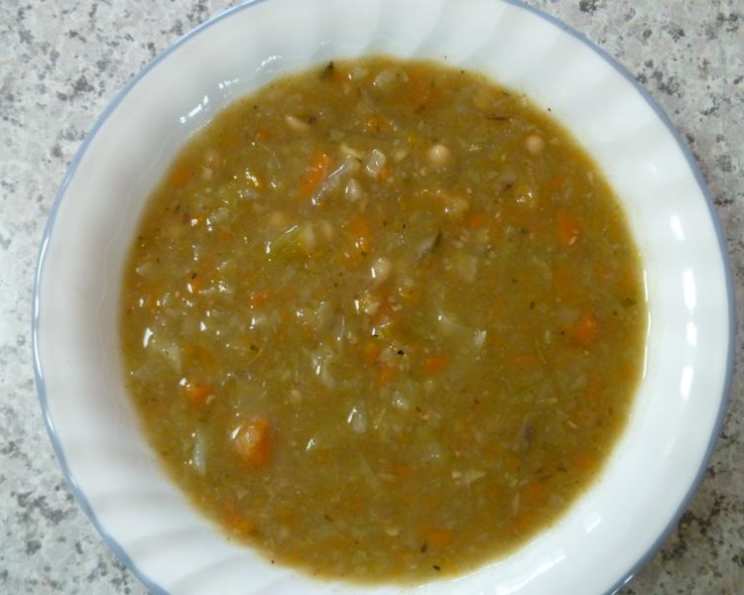
A Humble Bowl, A World of Good: Carrot, Bean and Cabbage Soup
The aroma of simmering vegetables always transports me back to my grandmother’s kitchen. She had a knack for transforming simple, often overlooked ingredients into nourishing masterpieces. This Carrot, Bean, and Cabbage Soup, though not her exact recipe, evokes that same feeling of warmth and wholesome goodness. It’s a reminder that even the humblest of ingredients, when combined with care and intention, can create a truly satisfying and restorative meal. This soup is more than just sustenance; it’s a hug in a bowl.
Recipe Overview
- Prep Time: 20 minutes
- Cook Time: 35 minutes
- Total Time: 55 minutes
- Servings: 8
- Yields: 12 cups
- Dietary Type: Vegan
Ingredients
- 4 large carrots, sliced and rough chopped
- 1 large onion, chopped
- 3 garlic cloves, minced (can slice if you will puree soup later)
- 4 mushrooms, sliced
- 1/4 head cabbage, thinly sliced, then strips cut in 2-inch pieces (1/2 head if small)
- 1 (15 ounce) can reduced-sodium navy beans, drained and rinsed (or other low-sodium white beans)
- 3 (15 ounce) cans low sodium vegetable broth
- 1/4 teaspoon dried thyme
- 1/4 teaspoon dried basil
- 1 teaspoon dried parsley
- 1/8 teaspoon fresh ground pepper
Equipment Needed
- Large pot (at least 5 quarts)
- Cutting board
- Knife
- Can opener
- Immersion blender (optional)
- Blender or food processor (optional)
Instructions
- First, prepare your vegetables. Thoroughly wash and peel the carrots. Slice them into thick rounds and then roughly chop them. Place the chopped carrots into a large pot (at least 5 quarts).
- Next, chop the onion and add it to the pot with the carrots.
- Mince the garlic cloves. If you plan to puree the soup later, you can simply slice the garlic instead. Add the garlic to the pot.
- Slice the mushrooms and add them to the pot. Any variety of mushroom will work well in this soup, so feel free to use your favorite.
- Thinly slice the cabbage, then cut the slices into strips that are approximately 2 inches long. If you have a small cabbage, you might want to use half of the head instead of just a quarter. Add the cabbage to the pot.
- Drain and rinse the can of reduced-sodium navy beans (or other low-sodium white beans). Rinsing the beans helps to remove excess sodium and any starchy residue. Add the beans to the pot.
- Pour the three cans of low sodium vegetable broth into the pot.
- Add the dried thyme, dried basil, dried parsley, and fresh ground pepper to the pot.
- Combine all of the ingredients in the pot. Stir well to ensure that the vegetables are evenly distributed.
- Bring the soup to a boil over medium-high heat, stirring several times to prevent the bottom from burning.
- Once the soup has reached a boil, reduce the heat to low, cover the pot, and simmer the soup until the vegetables are tender, about 20 minutes. Stir occasionally to prevent sticking.
- Check the vegetables for tenderness by piercing them with a fork. If they are easily pierced, they are done. If they are still firm, continue to simmer the soup for a few more minutes, checking periodically.
- If desired, puree the soup using an immersion blender. Carefully insert the immersion blender into the pot and blend until the soup reaches your desired consistency. Alternatively, you can puree the soup in batches using a regular blender or food processor. Be extremely cautious when blending hot liquids; work in small batches and vent the lid to prevent explosions. Do not over blend. Some texture is desirable.
- Taste the soup and adjust the seasonings as needed. You may want to add a pinch of salt, more pepper, or additional herbs.
Expert Tips & Tricks
- For a richer flavor: Sauté the onion and garlic in a tablespoon of olive oil before adding the other ingredients.
- Add acidity: A squeeze of lemon juice or a splash of apple cider vinegar at the end can brighten the flavors of the soup.
- Boost the nutrient content: Add a handful of chopped greens like spinach or kale during the last few minutes of cooking.
- Make it creamy without cream: A tablespoon of cashew butter blended into the soup will add richness and creaminess.
- Prep ahead: Chop all the vegetables in advance and store them in the refrigerator until ready to cook. This will significantly reduce the prep time.
- If the soup is too thick: Add a little more vegetable broth or water to thin it out.
- If the soup is too thin: Simmer it uncovered for a few more minutes to allow some of the liquid to evaporate.
Serving & Storage Suggestions
Serve the soup hot in bowls. Garnish with fresh parsley or a swirl of non-dairy yogurt for added flavor and visual appeal. This soup pairs well with crusty bread or a side salad.
Leftover soup can be stored in an airtight container in the refrigerator for up to 3-4 days. For longer storage, freeze the soup in individual portions for up to 2-3 months. Thaw the soup in the refrigerator overnight before reheating.
To reheat, simply warm the soup in a saucepan over medium heat, stirring occasionally, until heated through. You can also reheat it in the microwave.
Nutritional Information
| Nutrient | Amount per Serving | % Daily Value |
|---|---|---|
| Calories | 33.5 kcal | N/A |
| Calories from Fat | 1 g | 5% |
| Total Fat | 0.2 g | 0% |
| Saturated Fat | 0 g | 0% |
| Cholesterol | 0 mg | 0% |
| Sodium | 31.7 mg | 1% |
| Total Carbohydrate | 7.6 g | 2% |
| Dietary Fiber | 2.2 g | 8% |
| Sugars | 3.6 g | N/A |
| Protein | 1.3 g | 2% |
Note: Nutritional information is an estimate and may vary based on specific ingredients and portion sizes.
Variations & Substitutions
- Potato Power: Incorporate peeled and diced potatoes for added heartiness. About 2 medium potatoes would work well.
- Spice it up: Add a pinch of red pepper flakes or a dash of hot sauce for a spicy kick.
- Mediterranean Twist: Substitute the thyme and basil with oregano and add a handful of chopped Kalamata olives.
- Indian Inspiration: Add a teaspoon of curry powder and a can of diced tomatoes for an Indian-inspired flavor.
- Bean Variety: Experiment with different types of beans, such as cannellini beans, kidney beans, or black beans.
- Broth Boost: Use homemade vegetable broth for an even more flavorful soup.
FAQs (Frequently Asked Questions)
Q: Can I use frozen vegetables in this soup?
A: Yes, frozen carrots, onions, or cabbage can be used in this soup. There is no need to thaw them first. Add them directly to the pot with the other ingredients.
Q: Can I make this soup in a slow cooker?
A: Absolutely! Combine all of the ingredients in a slow cooker and cook on low for 6-8 hours or on high for 3-4 hours.
Q: How can I make this soup more filling?
A: Add more beans, lentils, or grains like quinoa or barley to make the soup more substantial.
Q: Is this soup suitable for freezing?
A: Yes, this soup freezes very well. Allow the soup to cool completely before transferring it to freezer-safe containers.
Q: Can I use water instead of vegetable broth?
A: While you can use water, the soup will be less flavorful. Consider adding a vegetable bouillon cube or some VegiZest and salt to enhance the taste.
Final Thoughts
I hope this Carrot, Bean, and Cabbage Soup brings you as much comfort and nourishment as it has brought me over the years. It’s a testament to the power of simple ingredients and the magic that happens when they’re combined with love and care. Don’t be afraid to experiment with different variations and substitutions to make it your own. I encourage you to try this recipe and share your feedback. And if you’re feeling adventurous, pair it with a warm, crusty loaf of sourdough bread for the perfect comforting meal. Happy cooking!