
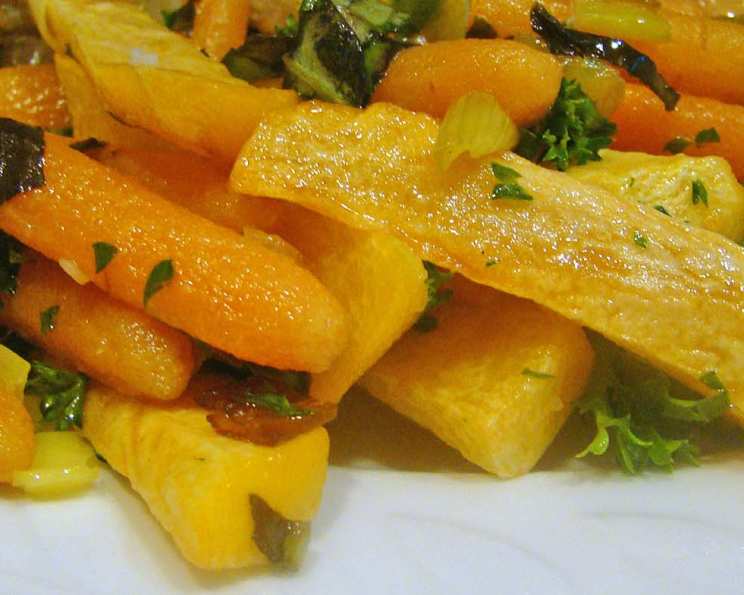
Carrot, Leek and Turnip Saute: A Symphony of Autumn Flavors
My grandmother, bless her heart, was a stickler for Sunday roasts. But even more than the perfectly bronzed chicken or the crispy potatoes, I remember fighting over the vegetable side dish – a humble yet incredibly flavorful medley of carrots, leeks, and turnips, all glistening with butter. She called it a “peasant’s delight,” but to me, it was pure magic. The sweetness of the carrots, the subtle oniony flavor of the leeks, and the earthy bite of the turnips, all melded together in a way that felt like a warm hug on a chilly autumn day. I’ve tweaked her recipe over the years, but the core remains the same – a celebration of simple, seasonal ingredients.
Recipe Overview
- Prep Time: 15 minutes
- Cook Time: 30 minutes
- Total Time: 45 minutes
- Servings: 4
- Dietary Type: Vegetarian
Ingredients
- 1 1/2 tablespoons olive oil
- 1 1/2 tablespoons unsalted butter
- 3 leeks, cut into 1/2-inch rings, separated
- 2 medium turnips, peeled, cut into 1/2-inch wedges
- 6 carrots, peeled and cut on the bias
- 2 tablespoons fresh parsley, chopped
- 1 tablespoon fresh basil, chopped (or tarragon)
- Salt, to taste
Equipment Needed
- Large skillet with a lid
- Cutting board
- Knife
Instructions
- Begin by prepping your vegetables. Thoroughly wash and dry the leeks, then slice them into half-inch rings, making sure to separate the rings. Peel the turnips and cut them into half-inch wedges. Peel the carrots and slice them on the bias (at an angle) for a more elegant presentation and even cooking.
- Place your large skillet over medium-low heat. Add the olive oil and butter to the skillet. Allow the butter to melt completely, creating a fragrant base for your vegetables.
- Add the leeks, turnips, and carrots to the skillet. Stir well to coat the vegetables evenly with the oil and butter mixture.
- Cook for about one minute, then season generously with salt to taste. Remember that salt enhances the natural sweetness of the vegetables.
- Cover the skillet with a lid. This will help the vegetables to steam and soften more quickly.
- Cook on medium-low heat for another 5 minutes, stirring occasionally to prevent sticking and ensure even cooking.
- Remove the lid and continue cooking for 25 minutes. During this time, the vegetables will reduce in volume and soften considerably, developing a beautiful caramelized color. Stir occasionally to prevent burning and encourage even browning.
- Reduce the heat to low and continue to cook for 5 minutes. This final cooking period allows the flavors to meld together even further, creating a harmonious balance.
- Remove the skillet from the heat. Stir in the chopped fresh parsley and basil (or tarragon, if using). The fresh herbs will add a vibrant burst of flavor and aroma to the dish.
- Serve warm. This sauteed vegetable dish is delicious on its own or as a side dish to your favorite main course.
Expert Tips & Tricks
- Elevate the flavors: A splash of balsamic vinegar at the end of cooking can add a delightful tanginess.
- Herb variations: Experiment with different fresh herbs like thyme, rosemary, or oregano to create unique flavor profiles.
- Perfect doneness: The turnips should be tender when pierced with a fork, but still retain a slight bite. Avoid overcooking, as they can become mushy.
- Prep ahead: You can chop the vegetables a day ahead and store them in the refrigerator in an airtight container. This will save you time during the cooking process.
- Even cooking: Cutting the vegetables into uniform sizes ensures that they cook evenly.
- Browning is your friend: Don’t be afraid to let the vegetables brown slightly; this caramelization adds depth of flavor.
Serving & Storage Suggestions
Serve the Carrot, Leek and Turnip Saute warm as a side dish to roasted meats, poultry, or fish. It also pairs well with vegetarian mains like lentil loaf or stuffed bell peppers. For an elegant presentation, garnish with a sprig of fresh parsley or a drizzle of balsamic glaze.
Leftovers can be stored in an airtight container in the refrigerator for up to 3 days. To reheat, gently warm in a skillet over medium heat or in the microwave. A splash of water or broth can help to prevent the vegetables from drying out. While freezing is not recommended due to changes in texture, the saute tastes great reheated within a few days.
Nutritional Information
| Nutrient | Amount per Serving | % Daily Value |
|---|---|---|
| Calories | 179 kcal | N/A |
| Total Fat | 9.9g | 15% |
| Saturated Fat | 3.5g | 17% |
| Cholesterol | 11.4mg | 3% |
| Sodium | 119.1mg | 4% |
| Total Carbohydrate | 22.3g | 7% |
| Dietary Fiber | 5g | 19% |
| Sugars | 9.1g | N/A |
| Protein | 2.5g | 5% |
Percent Daily Values are based on a 2,000 calorie diet.
Variations & Substitutions
- Sweet Potato Addition: Add diced sweet potato for a sweeter and more colorful variation.
- Spicy Kick: A pinch of red pepper flakes adds a subtle heat.
- Maple Glaze: Drizzle with maple syrup during the last few minutes of cooking for a sweet and savory glaze.
- Vegan Option: Substitute the butter with an equal amount of olive oil or a vegan butter alternative.
- Root Vegetable Medley: Incorporate other root vegetables like parsnips, celery root, or celeriac.
- Herbal Infusion: Infuse the olive oil with fresh herbs like rosemary or thyme before adding the vegetables.
FAQs (Frequently Asked Questions)
Q: Can I use dried herbs instead of fresh?
A: While fresh herbs provide the best flavor, you can use dried herbs in a pinch. Use about 1 teaspoon of dried basil or tarragon for every tablespoon of fresh.
Q: How do I prevent the leeks from being gritty?
A: Leeks tend to trap dirt between their layers. Make sure to wash them thoroughly by separating the rings and rinsing them under cold water.
Q: Can I make this dish ahead of time?
A: Yes, this dish can be made ahead of time. Store it in an airtight container in the refrigerator and reheat it before serving.
Q: What other vegetables can I add to this saute?
A: Feel free to experiment with other root vegetables like parsnips, celery root, or celeriac. Just adjust the cooking time accordingly.
Q: How do I know when the turnips are done?
A: The turnips should be tender when pierced with a fork, but still retain a slight bite. Avoid overcooking, as they can become mushy.
Final Thoughts
This Carrot, Leek and Turnip Saute is more than just a side dish; it’s a celebration of simple, seasonal ingredients and the comforting flavors of autumn. I encourage you to try this recipe and make it your own. Experiment with different herbs, spices, and variations to create a dish that perfectly suits your taste. Whether you’re a seasoned chef or a beginner cook, this recipe is sure to bring a smile to your face and warmth to your table. Don’t hesitate to share your creations and feedback – I’d love to hear how you’ve made this dish your own! Why not pair it with a hearty roasted chicken and a glass of crisp white wine for a truly memorable meal?