
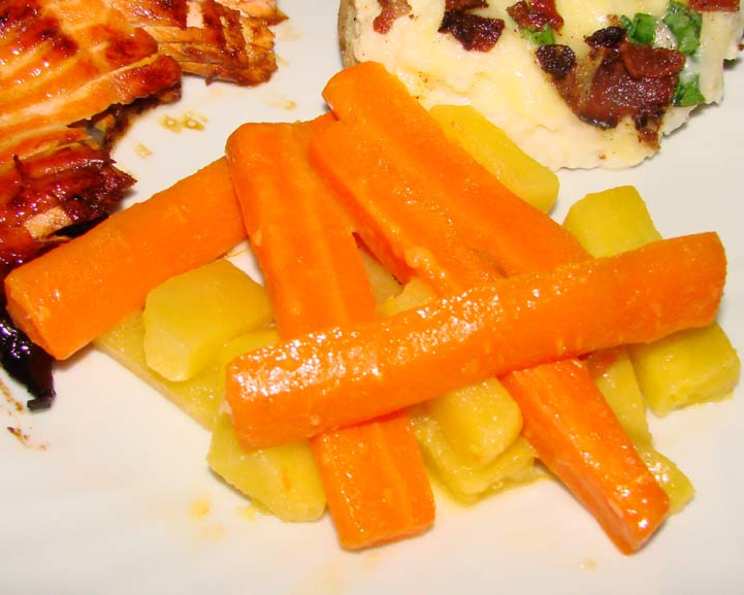
Carrots and Rutabagas With Lemon and Honey: A Sweet and Savory Symphony
The first time I tasted rutabaga, I was a skeptical child wrinkling my nose at yet another “healthy” vegetable my grandmother insisted I try. But then she prepared it alongside carrots, glazed with a vibrant lemon and honey dressing, and my perspective completely shifted. The sweetness of the carrots perfectly complemented the earthy rutabaga, all brightened by the citrus and honey – it was a revelation. That dish, a simple combination of humble root vegetables, became a beloved part of our family meals and a fond reminder of her love and culinary creativity.
Recipe Overview
- Prep Time: 10 minutes
- Cook Time: 14 minutes
- Total Time: 24 minutes
- Servings: 6
- Yield: Varies depending on the size of the vegetables
- Dietary Type: Gluten-Free
Ingredients
- 1 1⁄4 lbs rutabagas, peeled and cut into matchstick-size strips
- 1 lb carrots, peeled and cut into matchstick-size strips
- 1⁄4 cup butter
- 1⁄4 cup fresh lemon juice
- 3 tablespoons honey
- 1 teaspoon lemon peel, grated
- 1⁄2 cup fresh chives, chopped
- Salt and pepper, to taste
Equipment Needed
- Large pot
- Large saucepan
- Colander
Instructions
- Begin by preparing the vegetables. Peel the rutabagas and carrots. Cut both into matchstick-size strips, aiming for a consistent size for even cooking.
- Bring a large pot of water to a rolling boil.
- Add the rutabaga strips to the boiling water and cook for 2 minutes. This initial blanching helps to tenderize the rutabaga, which typically takes longer to cook than carrots.
- Add the carrot strips to the pot along with the partially cooked rutabaga. Continue to cook until both the rutabagas and carrots are tender, approximately 6 minutes more. Test for doneness by piercing a piece of each vegetable with a fork – they should be easily pierced but still retain a slight bite.
- Once the vegetables are cooked, immediately drain them using a colander. Set aside.
- In a large saucepan, melt the butter over medium-high heat.
- Once the butter is melted, add the fresh lemon juice, honey, and grated lemon peel to the saucepan. Stir to combine.
- Bring the mixture to a boil, stirring constantly to prevent scorching.
- Add the drained rutabagas and carrots to the saucepan.
- Cook the vegetables in the lemon-honey glaze until they are nicely coated and glazed, stirring occasionally. This will take about 6 minutes. Stirring is key to ensure that all the vegetable sticks get ample time in the glaze. The goal is to get the sauce to slightly thicken as it clings to the vegetables.
- Season the glazed vegetables with salt and pepper to taste. Be mindful of the salt, as the vegetables have already absorbed some during the boiling process.
- Remove the saucepan from the heat.
- Stir in the freshly chopped chives. The chives add a pop of fresh, herbaceous flavor that complements the sweetness of the dish.
- Serve immediately.
Expert Tips & Tricks
- Uniform Size Matters: Cutting the rutabagas and carrots into similar sizes is crucial for even cooking. Aim for consistent matchstick shapes.
- Don’t Overcook: Be careful not to overcook the vegetables during the boiling process. They should be tender-crisp, not mushy.
- Fresh is Best: Use freshly squeezed lemon juice and freshly grated lemon peel for the most vibrant flavor. Bottled lemon juice often lacks the bright, zesty notes of the fresh kind.
- Adjust the Sweetness: Taste the glaze and adjust the amount of honey to your preference. If you prefer a tangier flavor, add a bit more lemon juice.
- Herb Variations: If you don’t have chives, try other fresh herbs like parsley or thyme. Add the herbs at the end of cooking to preserve their flavor and color.
Serving & Storage Suggestions
Serve this dish immediately as a vibrant and flavorful side dish alongside roasted chicken, grilled fish, or a hearty vegetarian main course. It also pairs well with grains like quinoa or couscous.
Leftovers can be stored in an airtight container in the refrigerator for up to 3 days. To reheat, gently warm the vegetables in a skillet over medium heat, stirring occasionally, until heated through. A microwave can also be used, but the vegetables may become slightly softer. Reheating is best done using the stovetop method to help preserve the glazed texture and bring back a little bit of the magic. This dish is best eaten fresh. Freezing is not recommended, as the texture of the vegetables may become mushy upon thawing.
Nutritional Information
| Nutrient | Amount per Serving | % Daily Value |
|---|---|---|
| Calories | 172 kcal | 9% |
| Total Fat | 8g | 12% |
| Saturated Fat | 5g | 25% |
| Cholesterol | 20mg | 7% |
| Sodium | 126mg | 5% |
| Total Carbohydrate | 25g | 8% |
| Dietary Fiber | 4g | 16% |
| Sugars | 18g | – |
| Protein | 2g | 4% |
Note: Nutritional information is an estimate and may vary based on specific ingredients and portion sizes.
Variations & Substitutions
- Maple Syrup: Substitute maple syrup for honey for a slightly different flavor profile.
- Spice It Up: Add a pinch of red pepper flakes to the glaze for a touch of heat.
- Other Root Vegetables: Experiment with other root vegetables like parsnips or turnips. Adjust cooking times as needed.
- Vegan Option: Substitute the butter with a plant-based butter alternative.
- Ginger Zing: Add a small amount of grated fresh ginger to the glaze for a warm and spicy note.
- Citrus Blend: Try using a combination of lemon and orange juice for a more complex citrus flavor.
FAQs (Frequently Asked Questions)
Q: Can I use pre-cut carrots and rutabagas?
A: Yes, you can use pre-cut vegetables to save time, but ensure they are of good quality and cut into similar sizes for even cooking. Freshly cut vegetables will have better texture and flavor.
Q: How can I tell if the rutabagas are cooked enough?
A: The rutabagas should be tender when pierced with a fork, but still have a slight bite. Avoid overcooking them, as they can become mushy.
Q: Can I prepare this dish ahead of time?
A: You can peel and cut the vegetables ahead of time and store them in the refrigerator in an airtight container filled with water. However, it’s best to cook and glaze the vegetables just before serving for optimal flavor and texture.
Q: The glaze is too thick/thin. How do I fix it?
A: If the glaze is too thick, add a tablespoon of water or lemon juice at a time until you reach the desired consistency. If it’s too thin, simmer the vegetables for a few more minutes to allow the sauce to reduce and thicken.
Q: Can I use dried chives instead of fresh?
A: Fresh chives provide a brighter, more vibrant flavor. If you must use dried chives, use about 1/2 teaspoon and add them at the beginning of the glazing process.
Final Thoughts
This simple yet elegant combination of carrots and rutabagas, bathed in a fragrant lemon and honey glaze, is a testament to the beauty of fresh, seasonal ingredients. It’s a versatile dish that can brighten up any meal and is sure to become a new favorite in your kitchen. Don’t hesitate to experiment with variations to tailor it to your own tastes. So gather your ingredients, and get ready to experience a delicious and comforting culinary creation. Enjoy!