
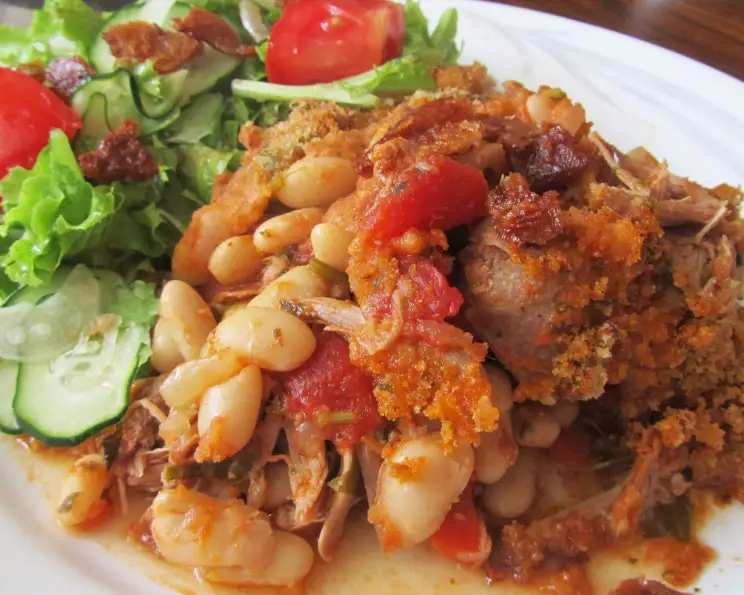
Cassoulet Oh Yeah Comfort
The first time I tasted a truly exceptional cassoulet was at a tiny bistro tucked away on a cobblestone street in Toulouse. The aroma alone, a heady mix of rendered duck fat, herbs, and slow-cooked beans, drew me in from the cold. I remember the earthenware pot arriving at the table, bubbling and fragrant, the crust of breadcrumbs a deep, inviting golden brown. One bite, and I was transported – the richness of the duck confit, the savory sausage, the creamy beans melding together in a symphony of flavors that warmed me from the inside out. It was more than just a meal; it was an experience, a memory I’ve carried with me ever since, and one I try to recreate with every cassoulet I make.
Recipe Overview
- Prep Time: 30 minutes
- Cook Time: 4 hours 30 minutes
- Total Time: 5 hours
- Servings: 12
- Yield: One 6 1/2 quart dutch oven
- Dietary Type: Not Gluten Free
Ingredients
- 2 lbs cannellini beans
- 28 ounces roast duck (Maple Leaf Farms Brand, discard the duck sauce)
- 4 ounces bacon, sliced into pieces
- 4 pork sausage links
- 4 ounces tomato paste
- 1 tablespoon olive oil or 1 tablespoon rendered duck fat
- 1 large onion, diced
- 1 carrot, diced
- 1 celery rib, sliced
- 1 jalapeno, minced (optional)
- 1 bulb of garlic, sliced
- 2 tablespoons chopped fresh parsley
- 1 tablespoon fresh thyme leaves
- 2 bay leaves
- 1 teaspoon salt
- 1 teaspoon pepper
- 28 ounces diced tomatoes
- 2-4 tablespoons butter
- 2 cups breadcrumbs
Equipment Needed
- Large pot
- 6 1/2 quart Dutch oven
- Large frying pan
- Strainer
Instructions
-
Begin by soaking the cannellini beans in water overnight. This crucial step rehydrates the beans, ensuring they cook evenly and achieve the desired creamy texture.
-
The next day, drain the soaked beans and place them in a large pot. Cover the beans with salted water, bring to a boil, and then reduce the heat to a simmer. Simmer for one hour, or until the beans are almost tender but still hold their shape.
-
Preheat your oven to 400 degrees Fahrenheit (200 degrees Celsius).
-
While the beans are simmering, prepare the duck. Remove the skin from the roast duck and place it in a large frying pan, fat side down. This is to render the fat, a key ingredient for authentic cassoulet flavor. Cook until the skin is crisp. Once cooled, break the crisp duck skin into bite-size pieces and set aside.
-
Remove the meat from the duck bones and break it into bite-size pieces as well. Set the duck meat aside.
-
Place the duck bones in a separate pot, cover them with salted water, and simmer. This will create a flavorful duck stock to enrich the cassoulet.
-
In a 6 1/2 quart Dutch oven, brown the bacon and sausage over medium heat. Cook until they are nicely browned and have rendered their fat.
-
Remove the cooked bacon and sausage from the Dutch oven and set aside to cool slightly. Once cool enough to handle, slice the meats into bite-size pieces.
-
In the same Dutch oven, with the rendered bacon and sausage fat, caramelize the tomato paste. This adds depth and sweetness to the sauce.
-
Add 1 tablespoon of olive oil or duck fat (if you’ve rendered enough) to the Dutch oven. Add the diced onion, carrots, celery, and minced jalapeno (if using). Cook for about 8 minutes, stirring occasionally, until the vegetables are softened and lightly browned.
-
Stir in the fresh parsley and thyme leaves. Season with salt and pepper.
-
Add the bite-size pieces of bacon, sausage, and duck to the Dutch oven. Top with the diced tomatoes and the strained cannellini beans.
-
Give the mixture a good stir to combine all the ingredients. Add enough of the simmered duck stock (strained) or water to cover the beans.
-
Place the lid on the Dutch oven and bake in the preheated oven for 1 1/2 hours. After this time, stir the cassoulet and check to see if additional stock is needed to keep the beans covered.
-
Bake for another 1 hour. Check the beans for tenderness. If they are not cooked to your liking, continue baking until they reach your desired tenderness.
-
Remove the Dutch oven from the oven and stir the cassoulet. Taste and adjust the seasoning with additional salt and pepper as needed.
-
Reduce the oven temperature to 350 degrees Fahrenheit (175 degrees Celsius).
-
Remove the crisp duck skin from the frying pan, leaving the rendered duck fat behind.
-
To the rendered duck fat in the frying pan, add 2-4 tablespoons of butter and the breadcrumbs. Brown the breadcrumbs for a couple of minutes, stirring constantly, until they are golden brown and crispy.
-
Top the cassoulet with half of the browned breadcrumbs. Bake uncovered for 15 minutes.
-
Top with the remaining breadcrumbs and place the cassoulet under the broiler to crisp and brown the top, being careful not to burn the breadcrumbs.
-
The crumbled duck skin can be sprinkled over the cassoulet for added flavor and texture, or served on the side with a crisp salad.
Expert Tips & Tricks
- For an even richer flavor, use homemade duck confit instead of roasted duck.
- If you don’t have duck stock, chicken stock can be used as a substitute.
- Don’t be afraid to experiment with different types of sausage. Andouille or chorizo would add a spicy kick.
- To prevent the breadcrumbs from burning under the broiler, keep a close eye on them and move the cassoulet to a lower rack if necessary.
- For a crustier topping, use panko breadcrumbs instead of regular breadcrumbs.
- If you prefer a smoother cassoulet, you can partially puree some of the beans before adding them back to the Dutch oven.
Serving & Storage Suggestions
Serve the cassoulet hot, straight from the oven, in its Dutch oven or individual bowls. A simple green salad and crusty bread are the perfect accompaniments. Leftovers can be stored in an airtight container in the refrigerator for up to 3 days. To reheat, gently warm in a saucepan over low heat or in the oven until heated through. You can also freeze the cassoulet for up to 3 months. Freeze before adding the breadcrumb topping. Defrost completely before reheating and topping with fresh breadcrumbs before baking or broiling.
Nutritional Information
| Nutrient | Amount per Serving | % Daily Value |
|---|---|---|
| Calories | 607.5 kcal | N/A |
| Calories from Fat | 396 g | 65% |
| Total Fat | 44 g | 67% |
| Saturated Fat | 14.9 g | 74% |
| Cholesterol | 86.2 mg | 28% |
| Sodium | 985 mg | 41% |
| Total Carbohydrate | 31.2 g | 10% |
| Dietary Fiber | 6.6 g | 26% |
| Sugars | 6.3 g | N/A |
| Protein | 21.6 g | 43% |
Variations & Substitutions
- Vegetarian Cassoulet: Substitute the duck, bacon, and sausage with smoked tofu or tempeh. Add extra vegetables like mushrooms, zucchini, and bell peppers.
- Spicy Cassoulet: Add a pinch of cayenne pepper or a dash of hot sauce to the vegetable mixture for a spicy kick. Use chorizo sausage for an extra layer of flavor.
- Seafood Cassoulet: Replace the meats with shrimp, scallops, and mussels for a Mediterranean-inspired twist.
- Duck Confit Cassoulet: Using duck confit makes for an incredibly rich dish. Prepare the duck confit ahead of time.
- Different Beans: While cannellini beans are classic, you can experiment with other types of beans, such as Great Northern beans or navy beans.
FAQs (Frequently Asked Questions)
Q: Can I use canned beans instead of dried beans?
A: Yes, you can use canned beans for a quicker preparation. However, be sure to drain and rinse them thoroughly. Reduce the initial baking time, as canned beans are already cooked.
Q: Can I make this cassoulet ahead of time?
A: Absolutely! Cassoulet is a great dish to make ahead of time, as the flavors meld together beautifully as it sits. Prepare the cassoulet up to the point of adding the breadcrumbs, then refrigerate for up to 2 days. Add the breadcrumbs just before baking.
Q: How do I know when the cassoulet is done?
A: The cassoulet is done when the beans are tender and the sauce has thickened. The top should be bubbly and golden brown.
Q: Can I freeze cassoulet?
A: Yes, cassoulet freezes well. Allow it to cool completely before transferring it to an airtight container. Freeze for up to 3 months. Thaw overnight in the refrigerator before reheating.
Q: What should I serve with cassoulet?
A: Cassoulet is traditionally served with a simple green salad and crusty bread. A robust red wine, such as a Cahors or Côtes du Rhône, is the perfect accompaniment.
Final Thoughts
Cassoulet is more than just a recipe; it’s an invitation to gather around the table with loved ones and share a meal that’s steeped in history and tradition. Don’t be intimidated by the long cooking time – the end result is well worth the effort. So, gather your ingredients, put on some music, and prepare to be transported to the French countryside with this soul-satisfying dish. I encourage you to try this recipe and share your feedback with me, and I hope this dish provides you and your family with much happiness and many more “Oh Yeah Comfort” moments. Bon appétit!