
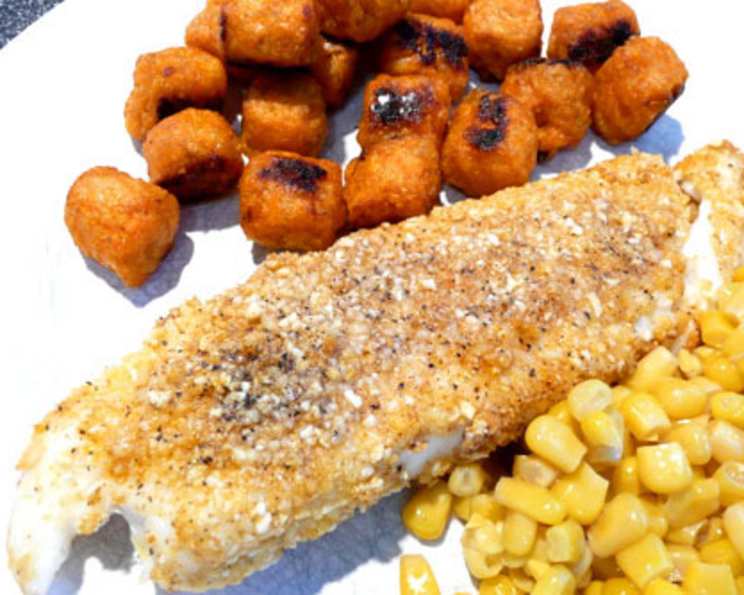
Baked Catfish with Parmesan Crust
I remember the first time I tasted baked catfish. It wasn’t some fancy restaurant creation, but a simple dish made by my grandmother in her cozy kitchen in Mississippi. The aroma of melted butter, parmesan, and perfectly cooked catfish filled the air, creating a memory that still warms my heart. I can still see her, humming a gospel tune as she pulled the golden-brown fish from the oven, a testament to Southern comfort and culinary love. This recipe, inspired by those cherished moments, brings a touch of that Southern hospitality to your table.
Recipe Overview
- Prep Time: 15 minutes
- Cook Time: 20 minutes
- Total Time: 35 minutes
- Servings: 6
- Dietary Type: Pescatarian
Ingredients
- 6 catfish fillets
- 1/2 cup Parmesan cheese, preferably freshly grated
- 1/4 cup All-purpose flour
- Salt, to taste
- Pepper, to taste
- 1 teaspoon Paprika
- 1 Egg, lightly beaten
- 1 tablespoon Milk
- 1/2 cup Butter, melted
- 1/4 cup Sliced almonds (optional)
Equipment Needed
- Baking dish
- Shallow dishes (2)
- Oven
Instructions
-
Preheat your oven to 350°F (175°C). Ensure the rack is positioned in the center for even baking.
-
Gently wipe the catfish fillets dry with a paper towel. This step helps the coating adhere properly, leading to a crisper, more flavorful crust.
-
In a shallow dish, combine the Parmesan cheese, all-purpose flour, salt, pepper, and paprika. Mix well to ensure the spices are evenly distributed throughout the coating. This mixture forms the flavorful, cheesy crust that makes this dish so special.
-
In a separate shallow dish, whisk together the egg and milk until lightly combined. This egg wash will help the flour mixture stick to the fish.
-
Dip each catfish fillet into the egg mixture, ensuring it’s fully coated. Allow any excess egg to drip off.
-
Immediately transfer the egg-coated catfish to the flour mixture, pressing gently to coat both sides. Ensure the fillets are evenly coated for a uniform crust.
-
Arrange the coated catfish fillets in a single layer in your prepared baking dish. Avoid overcrowding the dish, as this can lead to steaming instead of baking, resulting in a soggy crust. If needed, use two baking dishes.
-
Pour the melted butter evenly over the catfish fillets. Be generous; the butter adds richness and helps the fish bake to a beautiful golden brown.
-
If desired, sprinkle the sliced almonds over the top of the catfish. They add a delightful crunch and nutty flavor.
-
Bake for approximately 20 minutes, or until the catfish is cooked through and flakes easily with a fork. Cooking time may vary depending on the thickness of the fillets and your oven. The internal temperature should reach 145°F (63°C).
Expert Tips & Tricks
- Freshness is Key: Using the freshest catfish available will significantly enhance the flavor of this dish. Look for fillets that are firm, moist, and have a mild, clean scent.
- Parmesan Perfection: Freshly grated Parmesan cheese offers a superior flavor compared to pre-grated. The pre-grated often contains cellulose, which can inhibit melting and affect the texture.
- Prevent Soggy Bottoms: To avoid a soggy crust, you can lightly grease the baking dish before arranging the catfish. You can also try using a wire rack inside the baking dish to elevate the fish slightly.
- Spice it Up: For a touch of heat, add a pinch of cayenne pepper or a dash of hot sauce to the flour mixture.
- Doneness Check: The best way to ensure the catfish is cooked through is to use a meat thermometer. Insert it into the thickest part of the fillet; it should register 145°F (63°C). Alternatively, the fish should flake easily when gently pressed with a fork.
- Make-Ahead Tip: You can prepare the catfish fillets up to the point of baking. Coat them in the egg and flour mixture, arrange them in the baking dish, cover, and refrigerate for up to 2 hours before baking. Add the butter and almonds just before baking.
Serving & Storage Suggestions
Serve this baked catfish immediately for the best flavor and texture. It pairs beautifully with classic Southern sides like creamy grits, collard greens, coleslaw, or a simple green salad. A squeeze of fresh lemon juice can brighten the flavors.
Leftovers can be stored in an airtight container in the refrigerator for up to 3 days. To reheat, gently warm the catfish in a preheated oven at 300°F (150°C) until heated through. Be careful not to overheat, as this can dry out the fish. Microwaving is also an option, but the crust may lose some of its crispness. Freezing is not recommended, as it can significantly alter the texture of the fish.
Nutritional Information
| Nutrient | Amount per Serving | % Daily Value |
|---|---|---|
| Calories | 394.3 kcal | N/A |
| Calories from Fat | 253 g | 64% |
| Total Fat | 28.2 g | 43% |
| Saturated Fat | 13.6 g | 67% |
| Cholesterol | 166.8 mg | 55% |
| Sodium | 431.8 mg | 17% |
| Total Carbohydrate | 4.7 g | 1% |
| Dietary Fiber | 0.3 g | 1% |
| Sugars | 0.2 g | 0% |
| Protein | 29.3 g | 58% |
Note: Nutritional information is an estimate and may vary based on specific ingredients and portion sizes.
Variations & Substitutions
- Other Fish: While this recipe is fantastic with catfish, it also works well with other white fish like cod, tilapia, or flounder. Adjust the cooking time as needed based on the thickness of the fillets.
- Gluten-Free: Substitute the all-purpose flour with a gluten-free blend for a gluten-free version of this dish. Almond flour or a mixture of rice flour and tapioca starch also work well.
- Dairy-Free: While the Parmesan is a key element, you could try using a dairy-free Parmesan alternative. Nutritional yeast can also provide a cheesy flavor, although the texture will be different. Use dairy-free butter as well.
- Herb Variations: Experiment with adding different herbs to the flour mixture, such as dried thyme, oregano, or basil.
- Nut-Free: Omit the almonds for a nut-free version. You can add a sprinkle of breadcrumbs or crushed crackers for added texture.
- Lemon-Herb Twist: Add lemon zest and finely chopped fresh herbs like parsley or dill to the butter for a bright and flavorful twist.
FAQs (Frequently Asked Questions)
Q: Can I use frozen catfish fillets for this recipe?
A: Yes, you can use frozen catfish fillets. Make sure to thaw them completely before beginning the recipe, and pat them dry with paper towels to remove any excess moisture.
Q: How do I know when the catfish is done?
A: The catfish is done when it flakes easily with a fork and the internal temperature reaches 145°F (63°C).
Q: Can I use salted butter instead of unsalted?
A: Yes, you can use salted butter, but be mindful of the amount of additional salt you add to the flour mixture. You may want to reduce the amount of salt slightly to avoid an overly salty dish.
Q: Can I bake this recipe in a convection oven?
A: Yes, you can bake this recipe in a convection oven. Reduce the baking time by a few minutes and keep a close eye on the fish to prevent it from drying out.
Q: What can I serve with this baked catfish?
A: This baked catfish pairs well with a variety of side dishes, such as creamy grits, collard greens, coleslaw, roasted vegetables, or a simple green salad.
Final Thoughts
I sincerely hope this Baked Catfish with Parmesan Crust recipe brings as much joy to your kitchen as it has to mine. It’s a dish that embodies comfort, flavor, and the simple pleasures of home cooking. Don’t be afraid to experiment with variations and make it your own. If you try this recipe, please share your feedback and let me know how it turns out! This pairs wonderfully with a crisp glass of Sauvignon Blanc or a light-bodied Chardonnay, enhancing the flavors of the fish and creating a delightful culinary experience. Happy cooking!