
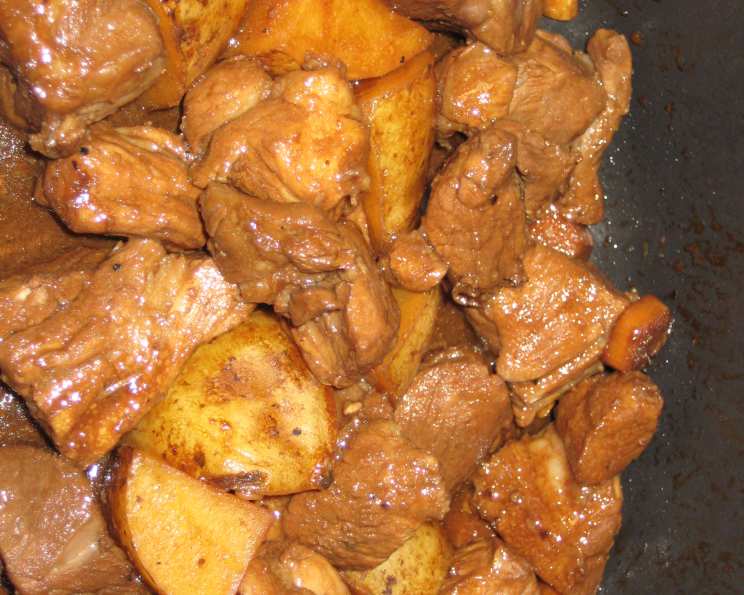
Cathy’s Pork Adobo: A Taste of Home
There’s something magical about the aroma of adobo simmering on the stove. It instantly transports me back to my childhood, to my Lola’s (grandmother’s) kitchen, where the air hung thick with the savory-sour scent of vinegar, soy sauce, and garlic. I remember sitting at her worn wooden table, impatiently waiting for a taste of the tender pork, its rich flavors clinging to every grain of rice. This particular version, “Cathy’s Pork Adobo,” embodies that same comforting warmth and depth of flavor, a true taste of home that I’m excited to share.
Recipe Overview
- Prep Time: 15 minutes
- Cook Time: 1 hour
- Total Time: 1 hour 15 minutes
- Servings: 4
- Dietary Type: Not Gluten Free
Ingredients
- 1 kg pork loin, cut into chunks
- 1 head garlic, crushed
- 1/4 cup soy sauce
- 1/2 cup vinegar (white or apple cider vinegar work well)
- 1 cup water
- 1 teaspoon black pepper, ground
- 1 bay leaf
- 1/2 tablespoon sugar
- 2 tablespoons oil (vegetable or canola oil are good choices)
Equipment Needed
- Large pan or pot with a lid
- Frying pan
Instructions
-
In a large pan or pot, combine the pork chunks, crushed garlic, soy sauce, vinegar, water, ground black pepper, and bay leaf.
-
Bring the mixture to a boil over medium heat. Once boiling, reduce the heat to low, cover the pan, and let it simmer until approximately half the water has evaporated and the pork is tender. This typically takes about 45 minutes to 1 hour. Check the pork for tenderness by piercing it with a fork; it should be easily pierced. If the pork needs more time to become tender and the liquid has already reduced significantly, add a little more water to prevent burning.
-
Once the pork is tender and the sauce has thickened slightly, carefully remove the pork chunks from the pan, leaving the sauce behind.
-
Sprinkle the sugar evenly over the cooked pork chunks.
-
Heat the oil in a frying pan over medium-high heat. Once the oil is hot, carefully add the pork chunks and fry them until they are nicely browned on all sides. This usually takes about 5-7 minutes, flipping occasionally to ensure even browning. Be careful not to overcrowd the pan; if necessary, fry the pork in batches.
-
After the pork is browned, return it to the pan with the remaining adobo sauce. Simmer the pork in the sauce for an additional 10 minutes, allowing the flavors to meld together beautifully. Stir occasionally to prevent sticking.
Expert Tips & Tricks
- For a richer, more complex flavor, marinate the pork in the soy sauce, vinegar, garlic, and pepper mixture for at least 30 minutes, or even overnight, before cooking. This allows the flavors to penetrate the pork more deeply.
- Don’t be afraid to adjust the soy sauce and vinegar ratio to suit your taste. Some people prefer a tangier adobo, while others prefer a saltier one. Start with the recipe as written, then adjust accordingly in future batches.
- To achieve a truly fall-apart tender pork, you can use a slow cooker. Simply combine all the ingredients in the slow cooker and cook on low for 6-8 hours, or on high for 3-4 hours.
- If the sauce is too thin after simmering, remove the pork and continue simmering the sauce over medium heat until it reaches your desired consistency.
- For a spicier kick, add a pinch of crushed red pepper flakes to the marinade or a few slices of fresh chili peppers during the simmering process.
- To add depth to the adobo, lightly brown the garlic in the oil before adding the pork, soy sauce and vinegar. Be careful not to burn the garlic, as it will turn bitter.
- If you accidentally add too much vinegar, you can balance it out with a touch more sugar.
- Feel free to use pork belly or pork shoulder instead of pork loin for a fattier and more flavorful adobo.
Serving & Storage Suggestions
Serve Cathy’s Pork Adobo hot, over a bed of freshly steamed white rice. The flavorful sauce is perfect for soaking into the rice, making every bite a delight. Garnish with chopped green onions for a pop of color and freshness.
Leftover adobo can be stored in an airtight container in the refrigerator for up to 3-4 days. It can also be frozen for longer storage, up to 2-3 months. To reheat, simply warm the adobo in a saucepan over medium heat, or microwave until heated through. You may need to add a splash of water if the sauce has thickened too much during storage.
Nutritional Information
| Nutrient | Amount per Serving | % Daily Value |
|---|---|---|
| Calories | 633.6 kcal | N/A |
| Calories from Fat | 377 g | 60% |
| Total Fat | 41.9 g | 64% |
| Saturated Fat | 13.2 g | 65% |
| Cholesterol | 150 mg | 50% |
| Sodium | 1115 mg | 46% |
| Total Carbohydrate | 7.9 g | 2% |
| Dietary Fiber | 0.6 g | 2% |
| Sugars | 2 g | 8% |
| Protein | 52.6 g | 105% |
Variations & Substitutions
- Chicken Adobo: Substitute pork with an equal amount of chicken thighs or drumsticks. Adjust cooking time as needed, as chicken cooks faster than pork.
- Vegetarian Adobo: Use firm tofu or mushrooms (like shiitake or portobello) instead of meat. Marinate for at least 30 minutes before cooking.
- Adobo with Coconut Milk: Add 1 can (13.5 oz) of coconut milk during the simmering process for a richer, creamier sauce.
- Spicy Adobo: Add a few sliced jalapeños or serrano peppers to the marinade for a spicy kick.
- Gluten-Free Adobo: Use a gluten-free soy sauce or tamari to make this dish gluten-free.
FAQs (Frequently Asked Questions)
Q: Can I use other types of vinegar?
A: Yes, you can experiment with different types of vinegar, such as apple cider vinegar, rice vinegar, or even cane vinegar for a more traditional flavor.
Q: How do I prevent the garlic from burning?
A: To prevent the garlic from burning, keep the heat at medium-low and stir frequently. You can also add a splash of oil to help distribute the heat more evenly.
Q: Can I make this ahead of time?
A: Absolutely! Adobo is even better the next day as the flavors have had time to meld together. Simply store it in the refrigerator and reheat when ready to serve.
Q: What if my sauce is too sour?
A: If your sauce is too sour, you can add a little more sugar to balance the flavors. Start with a small amount and taste as you go.
Q: Can I use dried bay leaves instead of fresh?
A: Yes, you can use dried bay leaves. Use 1 dried bay leaf in place of 1 fresh one.
Final Thoughts
Cathy’s Pork Adobo is more than just a recipe; it’s a journey to the heart of Filipino cuisine and a celebration of simple yet profound flavors. I encourage you to try this recipe and experience the comforting warmth it brings. Share it with your loved ones, experiment with variations, and create your own memories around this classic dish. Pair it with a side of steamed rice and a refreshing glass of iced tea for a truly unforgettable meal. Enjoy!