
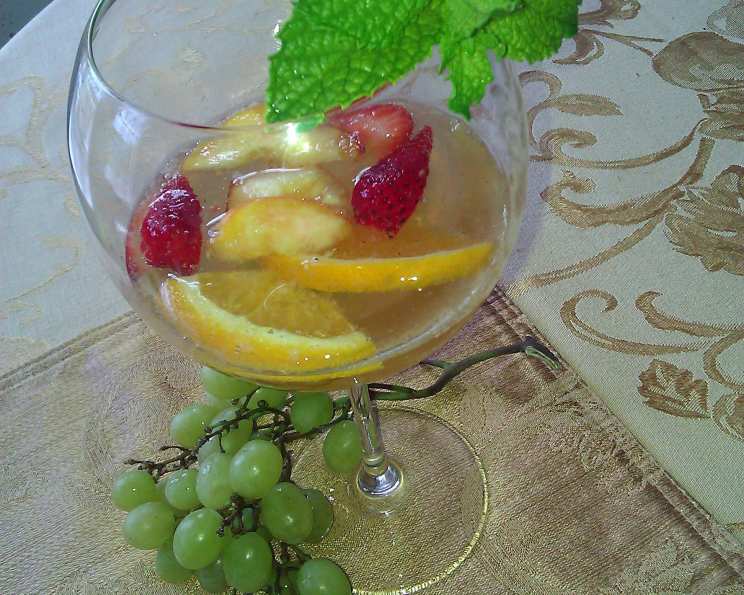
Cava Sangria: A Taste of Spanish Sunshine
The first time I tasted Cava Sangria, I was in Barcelona, perched on a rooftop terrace overlooking the Gothic Quarter. The sun was warm on my skin, the air thick with the scent of orange blossoms, and the sangria, a bubbly, fruity concoction, was pure magic. It wasn’t just the drink itself, but the entire experience – the laughter, the view, the feeling of being utterly present in that moment. Now, whenever I make Cava Sangria, it transports me back to that vibrant city, a reminder of sunny days and carefree evenings. It’s a simple drink, but one that holds a special place in my heart.
Recipe Overview
- Prep Time: 15 minutes
- Chill Time: 1 hour (minimum), up to 3 hours
- Total Time: 1 hour 15 minutes
- Servings: 8
- Dietary Type: Gluten-Free
Ingredients
- 4 cups fresh fruit, diced (such as strawberries, peaches, and grapes)
- 2 small oranges, thinly sliced and seeded
- 1/2 cup brandy
- 1/2 cup peach liqueur
- 1/2 cup white grape juice
- 4 small mint sprigs
- 2 (750 ml) bottles sparkling white wine, chilled (Cava)
Equipment Needed
- Large pitcher
- Knife
- Cutting board
Instructions
- In a large pitcher, combine the diced fresh fruit, thinly sliced oranges, brandy, peach liqueur, and white grape juice.
- Add the mint sprigs to the pitcher.
- Cover the pitcher tightly.
- Chill in the refrigerator for at least one hour, or up to three hours. This allows the fruit to infuse the liquids with its flavor.
- Just before serving, gently pour the chilled Cava over the fruit mixture in the pitcher.
- Stir gently to combine. Be careful not to over-stir, as you don’t want to lose the Cava’s bubbles.
- Serve immediately, ensuring each glass gets a mix of fruit and liquid.
Expert Tips & Tricks
- Fruit Selection is Key: Choose ripe but firm fruits. Overripe fruit will become mushy during the chilling process. Berries, stone fruits (peaches, nectarines, plums), apples, and pears all work beautifully. Feel free to experiment with seasonal fruits!
- Chill Time Matters: The chilling period allows the fruit to macerate and release its juices, creating a more complex and flavorful sangria. Don’t skip this step!
- Timing is Everything: Add the Cava right before serving to preserve its effervescence. Adding it too early will result in a flat sangria.
- Sweetness Adjustment: Taste the sangria after it has chilled. If it’s not sweet enough for your liking, add a tablespoon or two of simple syrup or agave nectar, stirring well until dissolved.
- Don’t Overcrowd the Pitcher: Use a pitcher that is large enough to comfortably hold all the ingredients without being overly full. This makes stirring easier and prevents spills.
- Infuse with Other Herbs: Beyond mint, consider adding rosemary or thyme sprigs for an interesting herbal twist.
- Enhance the Presentation: Garnish each glass with a fresh sprig of mint or a slice of orange for an elegant touch.
Serving & Storage Suggestions
Serve Cava Sangria chilled in wine glasses or clear pitchers. It’s best enjoyed immediately after mixing with the Cava to maintain its bubbly character.
If you have leftovers, strain the sangria to remove the fruit. Store the liquid in an airtight container in the refrigerator for up to 24 hours. The fruit will become soggy and is best discarded. The remaining sangria may lose some of its carbonation, but it will still be delicious.
I don’t recommend freezing Cava Sangria, as the texture and flavor will be significantly altered upon thawing.
Nutritional Information
| Nutrient | Amount per Serving | % Daily Value |
|---|---|---|
| Calories | 235 kcal | 12% |
| Total Fat | 0.1g | 0% |
| Saturated Fat | 0g | 0% |
| Cholesterol | 0mg | 0% |
| Sodium | 10.6mg | 0% |
| Total Carbohydrate | 15.6g | 5% |
| Dietary Fiber | 0.6g | 2% |
| Sugars | 11.9g | 47% |
| Protein | 0.5g | 0% |
Note: Nutritional information is an estimate and may vary based on specific ingredients used.
Variations & Substitutions
- Non-Alcoholic Sangria: Substitute the brandy and peach liqueur with sparkling cider or grape juice. Use non-alcoholic sparkling wine or club soda in place of the Cava.
- Seasonal Variations: Adapt the fruit to the season. In the fall, try apples, pears, and cranberries. In the winter, use citrus fruits like oranges, grapefruits, and mandarins.
- Berry Sangria: Focus on using a variety of berries such as raspberries, blueberries, and blackberries.
- Tropical Sangria: Use tropical fruits like pineapple, mango, and kiwi. Coconut rum can be used in place of the brandy for an extra tropical flavor.
- Rosé Sangria: Substitute the Cava with chilled rosé wine for a pink-hued variation.
- Spice It Up: Add a cinnamon stick or a few star anise to the pitcher while chilling for a warm, spiced flavor.
- Citrus Boost: Add lime and lemon slices in addition to the oranges for a more complex citrus flavor.
FAQs (Frequently Asked Questions)
Q: Can I use different types of sparkling wine besides Cava?
A: Yes! While Cava is a traditional choice, Prosecco or other dry sparkling white wines can be used as a substitute. Just ensure it’s well-chilled.
Q: How long can I store the Cava Sangria after mixing it with the Cava?
A: It’s best to consume it immediately after adding the Cava to maintain the bubbles. However, you can store it in the refrigerator for up to a few hours, but it will lose some of its carbonation.
Q: Can I make this ahead of time?
A: Yes, you can prepare the fruit mixture and chill it in the refrigerator for up to 3 hours. Add the Cava just before serving to prevent it from going flat.
Q: What if I don’t have peach liqueur?
A: You can substitute it with another fruit liqueur like apricot liqueur or even a bit more brandy or white grape juice.
Q: Is it necessary to seed the oranges?
A: Yes, seeding the oranges will prevent any bitter seeds from ending up in your sangria. It also makes it easier to eat the orange slices.
Final Thoughts
Cava Sangria is more than just a drink; it’s an invitation to relax, celebrate, and savor the simple pleasures in life. Whether you’re hosting a summer barbecue, enjoying a quiet evening on the patio, or simply craving a taste of sunshine, this recipe is sure to delight. Don’t be afraid to experiment with different fruits and flavors to create your own signature sangria. I encourage you to give this recipe a try and share your creations with friends and family. And if you find any exciting variations, please let me know – I’m always eager to try new twists on this classic beverage! Cheers!