
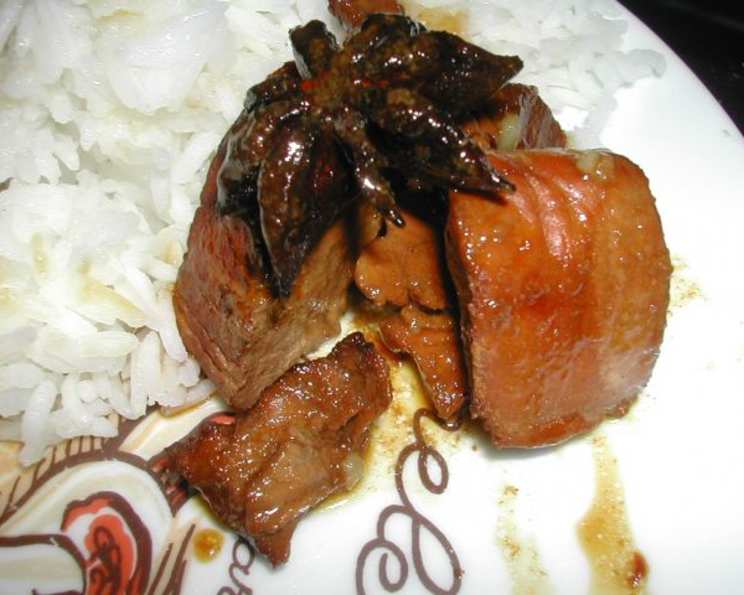
Chairman Mao’s Red-Braised Pork: A Culinary Journey Through History
The first time I tasted Red-Braised Pork, I was a wide-eyed culinary student, intimidated by the depth and complexity of Chinese cuisine. My professor, a venerable chef with decades of experience, simply smiled and said, “This, my friend, is more than just pork; it’s a story.” That first bite – the tender, melt-in-your-mouth pork, the sweet and savory dance of flavors, the subtle warmth of spices – transported me. It wasn’t just a dish; it was an experience, a whisper of history and culture that ignited my lifelong passion for exploring the world through food. It remains a cherished memory, and I’m thrilled to share this iconic dish with you.
Recipe Overview
- Prep Time: 15 minutes
- Cook Time: 50-60 minutes
- Total Time: 65-75 minutes
- Servings: 4
- Dietary Type: Not Gluten-Free
Ingredients
- 1 lb lean pork (pork belly is traditional, but this is a lighter version)
- 1 tablespoon peanut oil
- 2 tablespoons white sugar
- 1 tablespoon shaoxing wine or 1 tablespoon sherry wine
- ¾ inch piece fresh ginger, skin left on and sliced
- 1 star anise
- 2 dried red chilies
- 1 cinnamon stick (or 1 piece of cassia bark)
- Light soy sauce, to taste
- Salt, to taste
- Sugar, to taste
- Scallion, to garnish (green parts only)
Equipment Needed
- Large pot or wok
- Knife
- Cutting board
Instructions
- Begin by preparing the pork. Plunge the pork into a pot of boiling water and simmer for 3-4 minutes until it is partially cooked. This step helps to remove impurities and tighten the meat.
- Remove the pork from the boiling water and allow it to cool slightly until it’s cool enough to handle safely. Then, using a sharp knife, cut the pork into bite-sized chunks, about 1-inch pieces.
- In a wok or large pot, heat the peanut oil over low heat. Add the white sugar and stir constantly until the sugar melts.
- Increase the heat to medium and continue to stir the melted sugar until it turns a rich, caramel brown color. This is a crucial step for achieving the signature reddish gloss and deep flavor of Red-Braised Pork. Be careful not to burn the sugar; it should be a dark amber color.
- Add the pork chunks to the wok and stir to coat them evenly with the caramelized sugar. Immediately splash in the shaoxing wine or sherry wine. The wine will deglaze the pot and add another layer of flavor.
- Pour in enough water to just cover the pork. Add the sliced ginger, star anise, dried red chilies, and cinnamon stick.
- Bring the mixture to a boil, then immediately reduce the heat to low, cover the pot, and simmer gently for 40-50 minutes. This long, slow simmering process is what makes the pork incredibly tender.
- Toward the end of the cooking time, about 10 minutes before serving, turn up the heat to medium-high to reduce the sauce. Watch it carefully to prevent burning.
- Season the sauce with light soy sauce, salt, and a little sugar to taste. Remember that soy sauce adds saltiness, so adjust the salt accordingly. The goal is to achieve a balanced sweet and savory flavor.
- Just before serving, garnish with chopped scallion greens.
Expert Tips & Tricks
- Achieving the Perfect Caramel: The caramelization process is key. Low and slow is the way to go at first, then increase the heat gradually. The sugar should be a deep amber, almost reddish-brown. If it turns black, it’s burnt and you’ll need to start over.
- Pork Belly vs. Lean Pork: While pork belly is traditional, using leaner pork is a healthier option. To compensate for the lack of fat, you can add a touch more oil during the caramelization process and ensure the pork is cooked low and slow to maintain its tenderness.
- Spice Level Adjustment: Adjust the number of dried red chilies to your preference. Remove the seeds for a milder flavor.
- Make-Ahead Tip: This dish tastes even better the next day. You can make it a day in advance and store it in the refrigerator. The flavors will meld and deepen.
- Tenderizing Tough Cuts: If you are using a tougher cut of pork, marinate it in a mixture of shaoxing wine, soy sauce, and a little cornstarch for at least 30 minutes before cooking. This will help to tenderize the meat.
Serving & Storage Suggestions
Serve Chairman Mao’s Red-Braised Pork hot, ideally over steamed rice to soak up the flavorful sauce. It also pairs well with stir-fried vegetables, such as bok choy or Chinese broccoli. For a truly authentic experience, serve it with a side of pickled mustard greens.
Leftovers can be stored in an airtight container in the refrigerator for up to 3-4 days. To reheat, gently warm it in a saucepan over low heat, adding a splash of water or broth if needed to prevent it from drying out. You can also reheat it in the microwave, but be careful not to overcook the pork.
This dish is not suitable for freezing, as the texture of the pork may change upon thawing.
Nutritional Information
| Nutrient | Amount per Serving | % Daily Value* |
|---|---|---|
| Calories | 380 kcal | 19% |
| Total Fat | 20g | 31% |
| Saturated Fat | 6g | 30% |
| Cholesterol | 80mg | 27% |
| Sodium | 400mg | 17% |
| Total Carbohydrate | 15g | 5% |
| Dietary Fiber | 1g | 4% |
| Sugars | 10g | – |
| Protein | 30g | 60% |
*Percent Daily Values are based on a 2,000 calorie diet. Your daily values may be higher or lower depending on your calorie needs.
Variations & Substitutions
- Dark Soy Sauce Substitution: For an even deeper color and slightly sweeter flavor, substitute 1 tablespoon of dark soy sauce for some of the light soy sauce.
- Vegetarian Option: While this recipe is traditionally made with pork, you can adapt it for vegetarians by using firm tofu or seitan. Marinate the tofu or seitan in a mixture of soy sauce, shaoxing wine, and ginger before cooking.
- Adding Vegetables: For a heartier meal, add other vegetables to the braise, such as water chestnuts, bamboo shoots, or shiitake mushrooms. Add them during the last 20 minutes of cooking to prevent them from becoming mushy.
- Spicier Version: If you like it extra spicy, add more dried red chilies or a pinch of chili flakes.
- Sweetness Level: Adjust the amount of sugar to your personal preference. Some people prefer a sweeter sauce, while others prefer a more savory one.
FAQs (Frequently Asked Questions)
Q: Can I use a different cut of pork?
A: Yes, you can use other cuts of pork, such as pork shoulder or pork loin. However, be aware that these cuts may require longer cooking times to become tender.
Q: What if I don’t have shaoxing wine?
A: Dry sherry is a good substitute for shaoxing wine. You can also use rice wine vinegar, but use it sparingly as it is more acidic.
Q: Can I make this in a slow cooker?
A: Yes, you can adapt this recipe for a slow cooker. After browning the pork and caramelizing the sugar, transfer everything to a slow cooker and cook on low for 6-8 hours, or on high for 3-4 hours.
Q: How do I know when the pork is done?
A: The pork is done when it is fork-tender and easily pulls apart. The sauce should also be thickened and reduced.
Q: Can I add other spices?
A: Yes, feel free to experiment with other spices, such as cloves, Sichuan peppercorns, or five-spice powder. Just be sure to add them in moderation so they don’t overpower the other flavors.
Final Thoughts
Chairman Mao’s Red-Braised Pork is a truly special dish that deserves a place in every home cook’s repertoire. It’s a testament to the power of simple ingredients transformed by time and technique into something extraordinary. I encourage you to try this recipe and experience the magic for yourself. Don’t be afraid to experiment and adjust the flavors to your liking. Share your creations with friends and family, and let them savor the taste of history. Pair it with a crisp, dry white wine or a refreshing Chinese beer for the perfect complement. And please, let me know what you think! I’m always eager to hear about your culinary adventures. Happy cooking!