
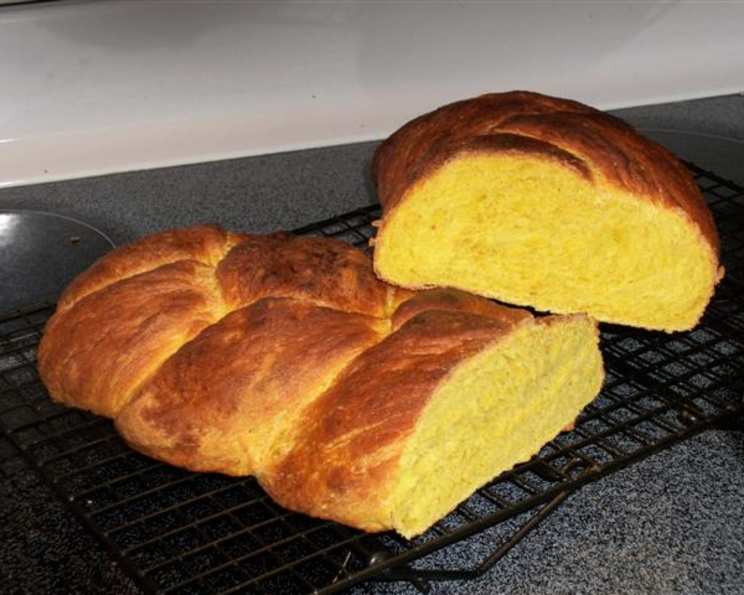
Challah II With Maple Syrup Glaze (Eggless Version)
The smell of baking challah always transports me back to my grandmother’s kitchen. Though she’s no longer with us, the memory of her gentle hands kneading dough, the warm, yeasty aroma filling her cozy apartment, and the sweet taste of her challah, especially when slathered with butter, remains a cherished part of my culinary heritage. She would make an eggless version for my cousin who had allergies. While her recipe involved eggs, this challah, equally delicious, evokes those same comforting feelings with a unique, maple-infused twist.
Recipe Overview
- Prep Time: 20 minutes
- Rise Time (x3): Approximately 1-1.5 hours each
- Cook Time: 30 minutes
- Total Time: 3-4 hours (including rising)
- Servings: 6-8
- Yield: 1 large challah
- Dietary Type: Vegetarian, Dairy-Free (if using dairy-free oil)
Ingredients
- 1⁄2 cup warm water
- 3 tablespoons sugar
- 3 teaspoons yeast
- 4 1⁄4 cups flour
- 1 cup warm water
- 2 teaspoons salt
- 2 tablespoons oil
- Maple syrup (for glaze)
Equipment Needed
- Mixing bowl (or KitchenAid mixer with dough hook)
- Measuring cups and spoons
- Oiled bowl
- Towel
- Baking sheet
Instructions
-
Preheat your oven to 400°F (200°C). This initial blast of heat helps create a beautiful crust.
-
In the bowl of your mixer (or a large mixing bowl if kneading by hand), dissolve the sugar in 1/2 cup of warm water. Make sure the water isn’t too hot, as it can kill the yeast. Aim for lukewarm.
-
Sprinkle the yeast over the sugar water and mix gently. Let this mixture stand for about 10 minutes, or until it becomes foamy. This step is crucial; it proves that your yeast is active and ready to leaven the dough. If it doesn’t foam, your yeast might be old or the water was too hot, and you’ll need to start again.
-
Add the remaining ingredients – flour, 1 cup of warm water, salt, and oil – into the mixing bowl. If using a KitchenAid mixer, attach the dough hook.
-
Mix with the dough hook on medium speed for approximately 6 minutes. The dough should come together into a smooth, elastic ball. If kneading by hand, turn the ingredients out onto a floured surface and knead for 8-10 minutes, until the dough is smooth and elastic. Add flour a tablespoon at a time if the dough is too sticky.
-
Place the dough in a lightly oiled bowl, turning to coat. Cover the bowl with a clean towel or plastic wrap. Let the dough rise in a warm place until it has doubled in bulk. This usually takes about 1 to 1.5 hours, depending on the temperature of your kitchen.
-
Once the dough has doubled, punch it down gently to release the air. This step helps to redistribute the yeast and ensures an even texture.
-
Let the dough rise a second time until it doubles in bulk again. This second rise develops the flavour further. Again, it should take about 1 to 1.5 hours.
-
Punch down the dough again. This time, it’s ready to be shaped.
-
Divide the dough into 3 equal parts. Use a kitchen scale for accuracy if you want even strands.
-
Roll each piece of dough into a long strand, about 12-14 inches long and roughly the same thickness.
-
Braid the strands together, starting in the middle and working your way to the ends. Pinch the ends together and tuck them underneath the loaf to create a neat, finished look.
-
Place the braided challah on a baking sheet lined with parchment paper. Cover it loosely with a towel and let it rise for a final time until it has doubled in bulk – about 1 to 1.5 hours.
-
Gently glaze the challah with maple syrup. The maple syrup adds sweetness and helps create a beautiful golden-brown crust. Brush gently to avoid deflating the risen dough.
-
Bake in the preheated oven at 400°F (200°C) for approximately 30 minutes, or until the challah is golden brown and sounds hollow when thumped on the bottom. Begin checking for doneness at 25 minutes; oven times can vary.
-
Remove the challah from the oven and let it cool on a wire rack before slicing and serving.
Expert Tips & Tricks
- Warmth is key for rising: The warmer the environment, the faster the dough will rise. If your kitchen is cold, you can place the bowl in a slightly warmed oven (turned off, of course!) or near a radiator.
- Don’t over-knead: Over-kneading can result in a tough challah. Stop kneading as soon as the dough becomes smooth and elastic.
- Perfect braiding: For a more intricate braid, try using 4 or even 6 strands of dough.
- Shiny glaze: For an extra-shiny glaze, whisk a tablespoon of water into the maple syrup before brushing it on the challah.
- Adding flavour: Enhance the flavour of your challah by adding spices like cinnamon or cardamom to the dough. You can also incorporate dried fruits or chocolate chips.
Serving & Storage Suggestions
Serve the challah warm or at room temperature. It’s delicious on its own, with butter or jam, or as a side for soups and stews. Leftover challah can be stored at room temperature in an airtight container for up to 2 days. For longer storage, wrap it tightly in plastic wrap and freeze it for up to 2 months. To reheat, thaw completely and then warm in a low oven (300°F/150°C) for about 10-15 minutes. To revive challah that has staled slightly, lightly sprinkle with water and bake as described above.
Nutritional Information
| Nutrient | Amount per Serving | % Daily Value |
|---|---|---|
| Calories | 392.6 kcal | N/A |
| Calories from Fat | N/A | N/A |
| Total Fat | 5.5g | 8% |
| Saturated Fat | 0.7g | 3% |
| Cholesterol | 0mg | 0% |
| Sodium | 779.1mg | 32% |
| Total Carbohydrate | 74.6g | 24% |
| Dietary Fiber | 2.8g | 11% |
| Sugars | 6.5g | N/A |
| Protein | 9.9g | 19% |
Note: Nutritional information is an estimate and may vary based on specific ingredients and serving size.
Variations & Substitutions
- Gluten-free: Substitute the all-purpose flour with a gluten-free bread flour blend. You may need to adjust the amount of liquid depending on the blend you use.
- Vegan option: This recipe is already naturally vegan (eggless). Ensure you’re using a plant-based oil.
- Sweetener variations: You can use honey or agave nectar instead of sugar, but be mindful that this may alter the flavour slightly.
- Oil variations: Instead of vegetable oil, you can use olive oil or melted coconut oil for a different flavour profile.
- Seed Topping: Sprinkle sesame, poppy, or sunflower seeds on top of the challah before baking for added texture and visual appeal.
FAQs (Frequently Asked Questions)
Q: Why is my yeast not foaming?
A: The water may have been too hot, killing the yeast, or the yeast may be expired. Ensure the water is lukewarm (around 105-115°F or 40-46°C) and that your yeast is fresh.
Q: Can I make this challah in a bread machine?
A: Yes, you can! Add all ingredients to your bread machine according to the manufacturer’s instructions, and set it to the dough cycle. Once the cycle is complete, proceed with shaping, rising, and baking as instructed in the recipe.
Q: My challah is browning too quickly. What should I do?
A: Tent the challah with aluminum foil during the last 10-15 minutes of baking to prevent it from browning too much.
Q: Can I freeze the dough before baking?
A: Yes, you can freeze the dough after the first rise. Punch it down, shape it, and then wrap it tightly in plastic wrap and freeze for up to 2 months. Thaw completely in the refrigerator before letting it rise a second time and baking.
Q: How do I know when the challah is done?
A: The challah is done when it’s golden brown and sounds hollow when you tap it on the bottom. An internal temperature of 200-210°F (93-99°C) also indicates doneness.
Final Thoughts
This eggless challah, with its subtly sweet maple syrup glaze, is a delightful twist on a classic bread. It’s surprisingly simple to make, yielding a soft, flavorful loaf that’s perfect for any occasion. Whether you’re sharing it with family and friends or enjoying a slice all to yourself, I hope this recipe brings a touch of warmth and joy to your kitchen. Don’t be afraid to experiment with variations and make it your own. And, most importantly, enjoy the process and savor the delicious results!