
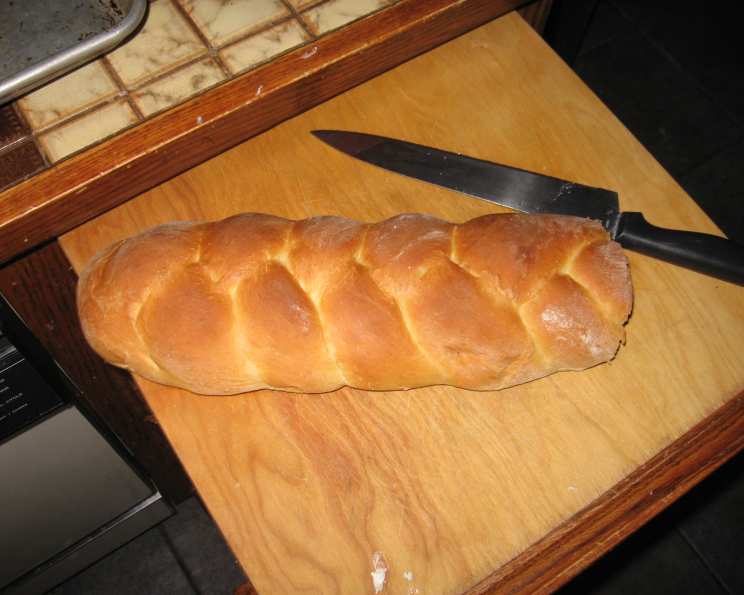
The Golden Embrace of Challah: A Friday Night Tradition
I can almost smell it now – the sweet, yeasty aroma that would fill my grandmother’s kitchen every Friday afternoon. It was the unmistakable scent of challah, rising and baking to a perfect golden brown. As a child, I’d sit mesmerized, watching her hands expertly braid the dough, a rhythmic dance passed down through generations. Each loaf felt like a warm hug, a promise of family, laughter, and the joy of Shabbat.
Recipe Overview
- Prep Time: 30 minutes
- Cook Time: 40 minutes
- Total Time: 2 hours 10 minutes (including rising time)
- Servings: 4-6
- Yield: 2 small loaves or 1 large loaf
- Dietary Type: Kosher
Ingredients
- 3 cups unsifted all-purpose flour
- 1 cup warm water (110-115 degrees F.)
- 2 1/4 teaspoons active dry yeast
- 1/4 cup vegetable oil
- 1/3 cup sugar
- 1 large egg
- 1/2 teaspoon salt
- 1 teaspoon water
- Sesame seeds (optional) or poppy seeds (optional)
Equipment Needed
- Large mixing bowl
- Blender
- Lightly greased bowl
- 9 5/8 x 5 ½ x 2 ¾ inch loaf pans (for 2 small challahs) or 9 x 13 x 2-inch baking pan (for 1 large challah) or 9-inch round pan
- Cooling rack
Instructions
- In a large bowl, measure out 2 cups of the flour and set aside. This creates a well for the wet ingredients.
- In a blender jar, pour the warm water, yeast, and remaining 1 cup of flour. Cover and blend at low speed. This step activates the yeast, ensuring a good rise.
- Uncover the blender and continue blending while adding the oil, sugar, large egg, and salt. Blend until the mixture is smooth, creating a homogenous base for the dough.
- Pour the blended batter over the reserved flour in the large bowl. Mix thoroughly with a spoon until a ball of dough forms. The dough will initially be sticky, but keep mixing until it comes together.
- Place the dough in a lightly greased bowl, turning it to grease all sides. This prevents the dough from sticking and drying out during the rising process.
- Cover the bowl and let it rise in a warm, draft-free place for 1 ½ hours or until doubled in bulk. Patience is key here! A good rise is crucial for a light and airy challah.
- Once doubled, stir down the dough. This releases the built-up carbon dioxide and prepares the dough for shaping.
- Shape the dough into challahs, either braided or unbraided. For two small braided challahs, divide the dough in half. Then, divide each half into 3 equal parts. Roll each part into a long coil of even thickness. Aim for consistency in thickness for even baking.
- Pinch together the tops of all 3 pieces. Start to braid by taking the outer right strip and crossing it over the center strip, bringing it to the center. Then, take the outer left strip and cross it over the middle strip, bringing it to the center. Repeat this procedure, alternately bringing the right strip to the center until all are braided. This creates the classic challah braid.
- Pinch the ends together to secure the braid and tuck the ends in carefully. This prevents the braid from unraveling during baking.
- Transfer the braided bread to a greased loaf pan (9 5/8 x 5 ½ x 2 ¾ inches). Repeat with the remaining dough to make the second challah.
- If you choose to make one large challah, use a 9 x 13 x 2-inch baking pan. For a round challah, shape the dough round with your cupped hands and place it in a greased 9-inch round pan.
- Cover the shaped challahs and let them rise in a warm place until doubled in bulk, about 1 hour. This second rise allows the dough to develop further flavor and lightness.
- Preheat oven to 375 degrees F. This is the optimal temperature for baking challah to achieve a golden-brown crust and fully cooked interior.
- In a small bowl, beat the remaining egg with the 1 teaspoon of water just to blend, creating an egg wash.
- Brush the top of the breads generously with the egg wash. This gives the challah its beautiful sheen and color.
- Sprinkle with sesame seeds or poppy seeds, if desired. These add a delightful flavor and textural contrast.
- Bake for about 40 minutes, or until the breads are well browned and sound hollow when tapped with a knife handle or spoon. The hollow sound indicates that the challah is cooked through.
- Remove the challahs from the oven and transfer them to a cooling rack to cool completely. Cooling on a rack prevents the bottom from becoming soggy.
Expert Tips & Tricks
- Proof your yeast: Before adding the yeast to the blender, you can proof it by mixing it with a small amount of warm water and sugar. If it foams within 5-10 minutes, it’s active and ready to use.
- Don’t overmix: Overmixing can lead to a tough challah. Mix just until the dough comes together.
- Control the temperature: Maintaining a consistent warm temperature during rising is crucial. If your kitchen is cold, try placing the dough in a slightly warmed oven (turned off) or near a warm stove.
- Egg wash secrets: For an extra glossy finish, brush the challah with egg wash twice – once before the final rise and again right before baking.
- Freezing for later: Baked challah freezes beautifully. Wrap it tightly in plastic wrap and then in foil for up to 2 months. Thaw at room temperature before serving.
Serving & Storage Suggestions
Challah is best served fresh, ideally on the same day it’s baked. Slice it and enjoy it plain, with butter, or alongside your favorite Shabbat meal. It also makes incredible French toast!
Store leftover challah at room temperature in an airtight container or wrapped tightly in plastic wrap. It will stay fresh for 2-3 days. For longer storage, freeze it as described above. To reheat, wrap the challah in foil and warm it in a 350°F oven for 10-15 minutes.
Nutritional Information
| Nutrient | Amount per Serving | % Daily Value |
|---|---|---|
| Calories | 551.3 kcal | N/A |
| Calories from Fat | 143 g | 26% |
| Total Fat | 15.9 g | 24% |
| Saturated Fat | 2.3 g | 11% |
| Cholesterol | 46.5 mg | 15% |
| Sodium | 313.4 mg | 13% |
| Total Carbohydrate | 89.2 g | 29% |
| Dietary Fiber | 3.1 g | 12% |
| Sugars | 16.7 g | 66% |
| Protein | 12.2 g | 24% |
Variations & Substitutions
- Whole Wheat Challah: Substitute up to half of the all-purpose flour with whole wheat flour for a nuttier flavor and denser texture.
- Sweet Challah: Add a tablespoon or two of honey to the dough for a sweeter challah.
- Savory Challah: Omit the sugar and add herbs like rosemary, thyme, or garlic powder for a savory twist.
- Gluten-Free Challah: Use a gluten-free all-purpose flour blend and follow the recipe as directed. Be aware that the texture might be slightly different.
- Raisin Challah: Add 1/2 cup of raisins or dried cranberries to the dough after the first rise for a fruity challah.
FAQs (Frequently Asked Questions)
Q: Why is my challah dense and not airy?
A: This could be due to several factors: the yeast might not be fresh, the dough might not have risen enough, or the oven temperature might be too low. Ensure your yeast is active, allow ample time for rising in a warm place, and preheat your oven properly.
Q: Can I use a stand mixer instead of a blender?
A: Yes, you can. Instead of blending the wet ingredients, whisk them together in a bowl and then add them to the dry ingredients in the stand mixer. Knead with the dough hook until a smooth dough forms.
Q: My challah is browning too quickly. What should I do?
A: If the challah is browning too quickly, tent it with aluminum foil for the last 15-20 minutes of baking. This will prevent the top from burning while the inside continues to cook.
Q: How can I make the challah dough ahead of time?
A: After the first rise, punch down the dough, wrap it tightly in plastic wrap, and refrigerate it for up to 24 hours. Let it come to room temperature for about an hour before shaping and baking.
Q: Can I freeze the unbaked challah dough?
A: Yes, you can. After the first rise, punch down the dough, wrap it tightly in plastic wrap, and freeze it for up to 2 months. Thaw it overnight in the refrigerator before shaping and baking.
Final Thoughts
Now it’s your turn to experience the joy of baking challah. Gather your ingredients, clear your kitchen, and let the comforting aroma fill your home. Don’t be intimidated by the braiding – it’s easier than it looks, and even imperfect braids are beautiful. Share your challah with loved ones, and let it be a symbol of warmth, tradition, and togetherness. I’d love to hear how it turns out, so feel free to share your baking experiences or pair it with your favorite Shabbat dishes!