
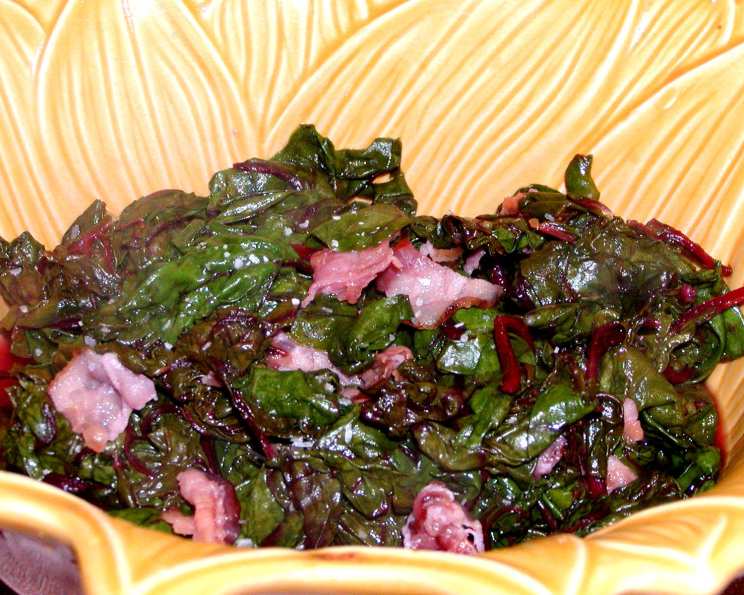
Chard With Bacon Dressing: A Taste of Home
My grandmother’s kitchen was a place of constant activity, filled with the comforting aroma of roasting vegetables and simmering sauces. One dish, in particular, stands out in my memory: chard with bacon dressing. It wasn’t just a simple side dish; it was a testament to resourceful cooking, using the freshest ingredients from her garden and transforming them into something extraordinary. The slightly bitter chard, perfectly balanced by the salty bacon and tangy vinegar, was a revelation, a reminder that simple ingredients, prepared with love, can create the most memorable meals. This recipe is my humble attempt to recreate that cherished flavor, to bring a little bit of my grandmother’s kitchen to your table.
Recipe Overview
- Prep Time: 10 minutes
- Cook Time: 5 minutes
- Total Time: 15 minutes
- Servings: 3-4
- Dietary Type: Gluten-Free
Ingredients
- 1 lb chard leaves, chopped coarsely (can substitute kale, spinach or other greens such as mustard or turnip)
- 2-3 slices bacon
- 1⁄4 cup white vinegar
- 1 tablespoon white sugar
Equipment Needed
- Large frying pan or skillet
- Paper towels
- Cutting board
- Knife
Instructions
- Begin by thoroughly rinsing and draining the chard to remove any grit or dirt. This is crucial for a pleasant eating experience. Cut away and discard the tough stems, focusing on the leafy greens.
- In a large frying pan or skillet, fry the bacon slices over medium heat until they are crisp and golden brown. The rendered fat will be the base of our flavorful dressing.
- Once the bacon is cooked, transfer the slices to a plate lined with paper towels to drain excess fat. Let the bacon cool slightly, then crumble it into small pieces. Set the crumbled bacon aside for later. Be sure to reserve the bacon fat in the frying pan.
- With the pan still over medium-high heat, add the white vinegar and white sugar to the bacon fat. Carefully bring the mixture to a boil, stirring constantly to prevent burning.
- Boil the vinegar and sugar mixture for approximately 30 seconds, allowing the flavors to meld together. Monitor closely and reduce the heat if necessary to prevent burning.
- Reduce the heat to medium, then add the chopped chard to the pan. Sauté the chard for 2-3 minutes, until it is slightly wilted but still retains some texture. Avoid overcooking, which can result in slimy greens.
- Finally, add the crumbled bacon to the pan with the chard. Stir well to ensure that the chard is evenly coated with the delicious bacon dressing.
- Transfer the chard with bacon dressing to a serving platter and serve warm.
Expert Tips & Tricks
- Don’t overcrowd the pan: When sautéing the chard, make sure there’s enough space in the pan. Overcrowding can lead to steaming instead of sautéing, resulting in soggy greens. Cook in batches if necessary.
- Bacon fat is gold: The bacon fat is a key component of this recipe, adding depth and richness to the dressing. Don’t be tempted to discard it! If you’re concerned about the fat content, you can use a smaller amount of bacon.
- Vinegar balance: The amount of vinegar can be adjusted to your taste. Start with the recommended amount and add more if you prefer a tangier dressing.
- Sugar substitute: If you’re looking to reduce your sugar intake, you can substitute the white sugar with a natural sweetener like honey or maple syrup. Start with a smaller amount and adjust to taste.
- Make ahead: The bacon can be cooked and crumbled ahead of time. Store it in an airtight container in the refrigerator until ready to use.
Serving & Storage Suggestions
This chard with bacon dressing is best served warm as a side dish to complement a variety of main courses, such as roasted chicken, grilled pork, or a hearty omelet. Its savory and slightly tangy flavor profile makes it a versatile addition to any meal.
Leftovers can be stored in an airtight container in the refrigerator for up to 3 days. To reheat, gently warm the chard in a skillet over medium heat, stirring occasionally, until heated through. Avoid overheating, which can cause the chard to become mushy. Freezing is not recommended, as the chard will lose its texture upon thawing.
Nutritional Information
| Nutrient | Amount per Serving | % Daily Value |
|---|---|---|
| Calories | 73.6 kcal | N/A |
| Calories from Fat | 24 kcal | 33% |
| Total Fat | 2.7 g | 4% |
| Saturated Fat | 0.8 g | 4% |
| Cholesterol | 3.6 mg | 1% |
| Sodium | 367.8 mg | 15% |
| Total Carbohydrate | 10.1 g | 3% |
| Dietary Fiber | 2.4 g | 9% |
| Sugars | 5.9 g | N/A |
| Protein | 3.3 g | 6% |
Variations & Substitutions
- Vegetarian Option: For a vegetarian version, omit the bacon and use olive oil or vegetable broth to sauté the chard. Add a sprinkle of smoked paprika to mimic the smoky flavor of bacon.
- Different Greens: Feel free to experiment with other leafy greens, such as kale, spinach, or mustard greens. Adjust the cooking time accordingly, as some greens may require longer to wilt.
- Add Nuts: To add some crunch and nutritional value, consider adding toasted nuts like pecans or walnuts to the finished dish.
- Spice it Up: For a spicier kick, add a pinch of red pepper flakes to the bacon fat along with the vinegar and sugar.
FAQs (Frequently Asked Questions)
Q: Can I use pre-cooked bacon for this recipe?
A: Yes, you can use pre-cooked bacon to save time. However, freshly cooked bacon will provide the best flavor.
Q: What if I don’t have white vinegar?
A: Apple cider vinegar or red wine vinegar can be used as substitutes for white vinegar, but they will slightly alter the flavor profile.
Q: How do I prevent the chard from becoming slimy?
A: Avoid overcooking the chard. Sauté it just until it wilts, and don’t overcrowd the pan.
Q: Can I add garlic to this recipe?
A: Absolutely! Mince a clove or two of garlic and sauté it in the bacon fat before adding the vinegar and sugar for added flavor.
Q: Is this recipe suitable for a low-carb diet?
A: The sugar content may make this recipe unsuitable for a strict low-carb diet. You can reduce the sugar or use a sugar substitute, but be mindful of the overall carbohydrate count.
Final Thoughts
This chard with bacon dressing recipe is more than just a simple side dish; it’s a celebration of fresh, wholesome ingredients and the simple pleasures of home cooking. I encourage you to try it, experiment with different variations, and make it your own. Share your creations with friends and family, and let them experience the joy of a delicious and heartwarming meal. And if you do, please come back and share your thoughts. Bon appétit!