
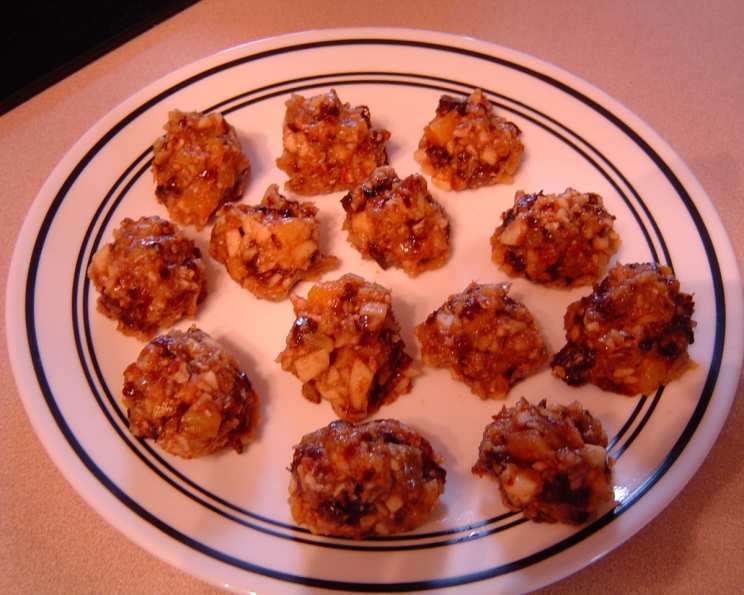
Grandpa’s Charosets: A Passover Tradition
The scent of cinnamon, apples, and wine always takes me back to my childhood Passovers. I remember sitting at the long Seder table, mesmerized by the stories and songs, but secretly anticipating the moment when we could finally dig into the charosets. My grandfather, with a twinkle in his eye, would always make a huge batch, meticulously chopping each ingredient with a focus that hinted at centuries of tradition. It wasn’t just a dish; it was a connection to our past, a sweet symbol of hope and freedom. And this is his recipe, passed down through generations, ready for you to enjoy.
Recipe Overview
- Prep Time: 1 hour
- Total Time: 1 hour
- Servings: 44
- Yield: 1 large bowl
- Dietary Type: Gluten-Free, Vegan
Ingredients
- 6 large Red Delicious apples, cored and peeled
- 10 ounces dried apricots
- 14 ounces pitted prunes
- 5 ounces raisins (golden or regular, to taste)
- 8 ounces pecans
- Cinnamon (to taste)
- Lemon juice (to taste)
- Passover wine (to taste)
Equipment Needed
- Large bowl
- Double-bladed chopper (optional)
- Food processor
- Spatula or large spoon
Instructions
-
Begin by preparing the apples. Coarsely chop the cored and peeled Red Delicious apples in a large bowl. Traditionally, a double-bladed chopper and wooden bowl were used, but any large bowl and knife will work.
-
Next, process the dried fruits and nuts. Use a food processor to chop the dried apricots, pitted prunes, raisins, and pecans until they are finely ground. Be careful not to over-process into a paste. Pulse the food processor in short bursts to maintain control.
-
Combine the ingredients. Add the chopped apricots, prunes, raisins, and pecans to the large bowl with the chopped apples.
-
Blend the mixture. Chop all the ingredients together very well to blend. This step requires some elbow grease, whether you are using a double-bladed chopper or mixing with a large spoon. The goal is to ensure all the flavors meld together.
-
Season to taste. Add cinnamon, lemon juice, and Passover wine to taste. Start with a small amount of each and gradually increase until you reach your desired flavor profile. Remember, the flavors will intensify as the charosets sits.
-
Mix thoroughly. Mix everything together very well, ensuring that the cinnamon, lemon juice, and wine are evenly distributed throughout the mixture.
-
Chill before serving. Cover the bowl and refrigerate for at least a few hours, or preferably overnight, to allow the flavors to meld and deepen.
Expert Tips & Tricks
- Don’t over-process: When using the food processor, pulse the dried fruits and nuts instead of running it continuously. This will prevent them from turning into a paste and maintain a slightly chunky texture.
- Taste as you go: The amount of cinnamon, lemon juice, and wine you need will depend on your personal preference and the sweetness of the fruit. Taste the charosets after each addition and adjust accordingly.
- Adjust the texture: If you prefer a smoother charosets, you can process the apples in the food processor as well. However, for a more traditional texture, keep them coarsely chopped.
- Make it ahead: Charosets actually tastes better after it has had a chance to sit and the flavors have melded. Make it a day or two in advance for the best results. This is a great way to save time on the day of the Seder.
- Wine Choice: The type of Passover wine you use will impact the overall flavor. Opt for a sweet, fruity wine for a more traditional taste. Manischewitz is a common choice.
Serving & Storage Suggestions
Serve the charosets as part of the Passover Seder plate, using a spoon or small serving dish. It is traditionally eaten with matzah. Leftover charosets can be stored in an airtight container in the refrigerator for up to a week. It can also be frozen for longer storage. To thaw, simply transfer it to the refrigerator overnight. You can also enjoy charosets as a spread on matzah throughout the Passover holiday. The flavor improves after the first day, as the spices and fruits meld together.
Nutritional Information
Please note that these values are estimates and may vary based on specific ingredients and serving size.
| Nutrient | Amount per Serving | % Daily Value |
|---|---|---|
| Calories | 99 kcal | N/A |
| Calories from Fat | 34 kcal | N/A |
| Total Fat | 3.8 g | 5% |
| Saturated Fat | 0.3 g | 1% |
| Cholesterol | 0 mg | 0% |
| Sodium | 1.5 mg | 0% |
| Total Carbohydrate | 17.5 g | 5% |
| Dietary Fiber | 2.5 g | 9% |
| Sugars | 12.3 g | N/A |
| Protein | 1.1 g | 2% |
Variations & Substitutions
- Nut-Free Option: Replace the pecans with sunflower seeds or pumpkin seeds for a nut-free version.
- Spice It Up: Add a pinch of ground ginger or cloves along with the cinnamon for a warmer, spicier flavor.
- Apple Variety: While Red Delicious apples are traditional, you can use other varieties such as Honeycrisp or Gala for a different flavor profile.
- Dried Fruit Medley: Experiment with different combinations of dried fruits, such as dried cranberries, figs, or dates.
- Wine Alternative: If you prefer not to use Passover wine, you can substitute it with grape juice or apple cider.
FAQs (Frequently Asked Questions)
Q: Can I make this charosets ahead of time?
A: Absolutely! In fact, it’s recommended to make it at least a few hours or even a day in advance to allow the flavors to meld together.
Q: How long does charosets last?
A: Stored in an airtight container in the refrigerator, charosets will last for up to a week.
Q: Can I freeze charosets?
A: Yes, you can freeze it for longer storage. Thaw it in the refrigerator overnight before serving.
Q: What if I don’t have a food processor?
A: You can chop all the ingredients by hand, but it will take considerably longer. A double-bladed chopper can also be a helpful tool.
Q: Can I adjust the sweetness of the charosets?
A: Yes, you can adjust the sweetness by adding more or less wine or by using a sweeter variety of apples. You can also add a touch of honey or maple syrup if needed.
Final Thoughts
More than just a recipe, this charosets is a taste of history, a symbol of family, and a celebration of tradition. I encourage you to try this recipe and create your own memories around the Seder table. Feel free to adjust the ingredients to your liking and make it your own. And most importantly, share it with loved ones and enjoy the sweet taste of freedom. Bon appétit, or as we say, Chag Sameach!