
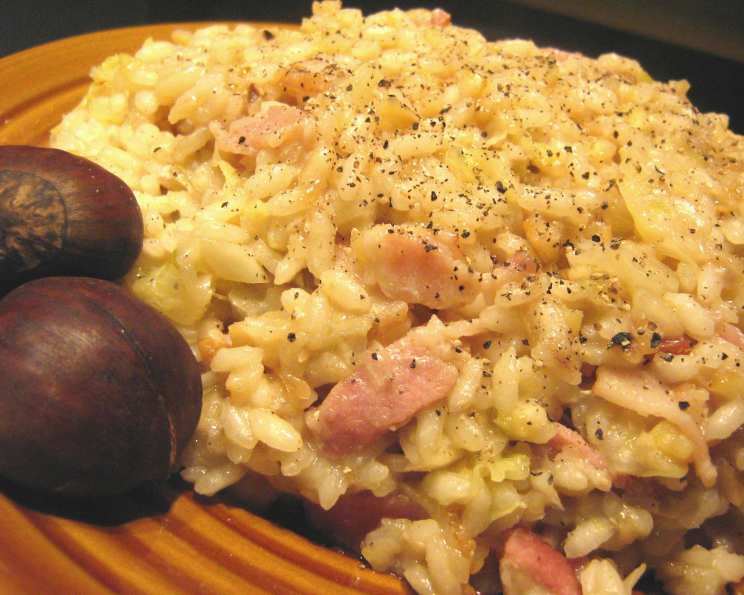
Chestnut and Bacon Risotto With Savoy Cabbage
The first time I tasted chestnuts roasted over an open fire, I was transported. The smoky, sweet aroma mingled with the crisp autumn air, and the warm, nutty flavor was unlike anything I’d ever experienced. It was pure comfort, a taste of the season itself. Years later, that memory comes flooding back whenever I prepare this risotto. The combination of salty bacon, earthy chestnuts, and the gentle bite of Savoy cabbage creates a symphony of textures and flavors that’s both comforting and sophisticated – a true celebration of autumn on a plate.
Recipe Overview
- Prep Time: 15 minutes
- Cook Time: 30 minutes
- Total Time: 45 minutes
- Servings: 2-4
- Dietary Type: Gluten-Free (check stock ingredients)
Ingredients
- 3 cups chicken stock
- 1 tablespoon olive oil
- 3 1/2 ounces side bacon, cut into 1-inch pieces
- 1 small onion, finely diced
- 4 celery ribs, finely diced
- 3/4 cup arborio rice
- 2 tablespoons dry vermouth
- 7 ounces cooked chestnuts
- 1 cup Savoy cabbage, finely shredded
- Salt & freshly ground black pepper to taste
- 1 tablespoon unsalted butter
- Parmesan cheese, freshly grated, for serving
Equipment Needed
- Medium saucepan
- Large saucepan or pot
- Wooden spoon or spatula
Instructions
-
First, pour the chicken stock into a saucepan and bring to a boil. Once boiling, reduce the heat to low and keep the stock simmering gently. This ensures it’s readily available and hot when added to the rice, maintaining the cooking temperature.
-
While the stock is heating, heat the olive oil in a medium saucepan over medium heat.
-
Add the bacon, onion, and celery to the saucepan. Cook gently, stirring occasionally, until the onion is translucent and the bacon is cooked through but not overly crispy, about 5-7 minutes. The goal is to render some of the fat from the bacon and infuse the vegetables with its savory flavor.
-
Add the arborio rice to the saucepan. Stir constantly for about a minute, ensuring that each grain is thoroughly coated in the oil and bacon fat. This step, known as “toasting” the rice, helps to develop its nutty flavor and creates a protective barrier that prevents the rice from becoming mushy during cooking.
-
Pour in the dry vermouth. Stir continuously until the rice has absorbed all the liquid. The vermouth adds a subtle acidity and aromatic complexity to the risotto.
-
Now, the crucial part begins: adding the stock. Add a ladleful of the hot chicken stock to the rice mixture. Stir continuously until all the liquid has been absorbed. It’s essential to stir constantly to release the starches from the rice, which creates the creamy texture characteristic of risotto.
-
Continue this process for approximately 15 minutes, adding stock by the ladleful and stirring continuously as each addition is absorbed. The rice should be simmering gently, not boiling vigorously. If it’s boiling too rapidly, reduce the heat slightly.
-
After 15 minutes of adding stock, add the cooked chestnuts and shredded Savoy cabbage to the risotto. Continue to cook, adding stock by the ladleful, until the rice is creamy but still has a slight bite at the center – about another 5 minutes. This is known as al dente, and it’s the perfect texture for risotto. The cabbage should be tender-crisp.
-
Once the rice is cooked to your liking, season generously with salt and freshly ground black pepper to taste. Don’t be shy with the seasoning; risotto needs a good amount of salt to bring out its flavors.
-
Stir in the unsalted butter. The butter adds richness and shine to the risotto, emulsifying the sauce and creating an even more luxurious texture.
-
Divide the risotto between serving bowls. Serve immediately, passing the Parmesan cheese at the table for grating over each portion.
Expert Tips & Tricks
- Warm stock is key: Always use hot stock. Cold stock will lower the temperature of the rice and slow down the cooking process, potentially leading to unevenly cooked risotto.
- Don’t overcrowd the pan: Make sure the saucepan you are using is large enough to accommodate all the ingredients. Overcrowding the pan can prevent the rice from cooking evenly.
- Use a good quality Parmesan: Freshly grated Parmesan cheese adds a distinct flavor and texture to the dish. Avoid using pre-grated cheese, as it often contains cellulose and other additives that can affect the quality of the risotto.
- Chestnut variations: If you can’t find pre-cooked chestnuts, you can roast your own. Score an “X” on the flat side of each chestnut, then roast them in a preheated oven at 400°F (200°C) for 20-30 minutes, or until the skins split open. Let them cool slightly before peeling.
- Make Ahead: You can cook the risotto up until the point of adding the chestnuts and cabbage. Cool it quickly and store in the refrigerator for up to 24 hours. When ready to serve, reheat gently in a saucepan with a little extra stock, then proceed with the recipe.
Serving & Storage Suggestions
Serve the risotto immediately after cooking for the best flavor and texture. Garnish with extra grated Parmesan cheese and a sprinkle of freshly ground black pepper. A drizzle of good quality olive oil can also add a touch of richness.
Leftover risotto can be stored in an airtight container in the refrigerator for up to 2 days. To reheat, add a splash of chicken stock or water to a saucepan and heat over medium-low heat, stirring frequently, until warmed through. You may need to add a little more liquid to restore the creamy texture. Freezing is not recommended as it can alter the texture of the rice.
Nutritional Information
| Nutrient | Amount per Serving (estimated) | % Daily Value (approximate) |
|---|---|---|
| Calories | 550 kcal | 28% |
| Total Fat | 25g | 38% |
| Saturated Fat | 10g | 50% |
| Cholesterol | 40mg | 13% |
| Sodium | 700mg | 30% |
| Total Carbohydrate | 60g | 20% |
| Dietary Fiber | 4g | 16% |
| Sugars | 5g | N/A |
| Protein | 15g | 30% |
Note: Nutritional information is an estimate and may vary based on specific ingredients and portion sizes.
Variations & Substitutions
- Vegetarian: Omit the bacon entirely or substitute with smoked tofu or tempeh for a smoky flavor. Use vegetable stock instead of chicken stock.
- Vegan: In addition to the above, use a vegan butter alternative and nutritional yeast in place of Parmesan cheese.
- Different Vegetables: Feel free to experiment with other seasonal vegetables, such as butternut squash, mushrooms, or kale.
- Herbs: Add fresh herbs like thyme, sage, or rosemary for an extra layer of flavor.
- Cheese: Pecorino Romano can be used instead of Parmesan for a slightly sharper flavor.
FAQs (Frequently Asked Questions):
Q: Can I use brown rice for this risotto?
A: While you can, it’s not recommended. Arborio rice has a high starch content, which is essential for creating the creamy texture of risotto. Brown rice requires more liquid and a longer cooking time and won’t achieve the same result.
Q: My risotto is too thick. How can I fix it?
A: Simply add more hot chicken stock, a little at a time, until you reach your desired consistency. Stir well to incorporate the stock and ensure the risotto remains creamy.
Q: The rice is still hard after adding all the stock. What should I do?
A: Add more hot chicken stock and continue cooking, stirring frequently, until the rice is cooked through. It’s possible that your heat was too high, causing the stock to evaporate too quickly, or that your rice is simply taking longer to cook.
Q: Can I use white wine instead of vermouth?
A: Yes, a dry white wine like Pinot Grigio or Sauvignon Blanc can be used as a substitute for dry vermouth.
Q: How do I store leftover risotto?
A: Store leftover risotto in an airtight container in the refrigerator for up to 2 days. Reheat gently in a saucepan with a little extra stock or water, stirring frequently, until warmed through.
Final Thoughts
This Chestnut and Bacon Risotto with Savoy Cabbage is more than just a recipe; it’s an experience. The earthy aroma, the creamy texture, and the harmonious blend of flavors make it a perfect dish for a cozy autumn evening. Don’t be afraid to experiment with variations and make it your own. I encourage you to try this recipe and share your feedback. It pairs beautifully with a crisp white wine or a light-bodied red. Enjoy!