
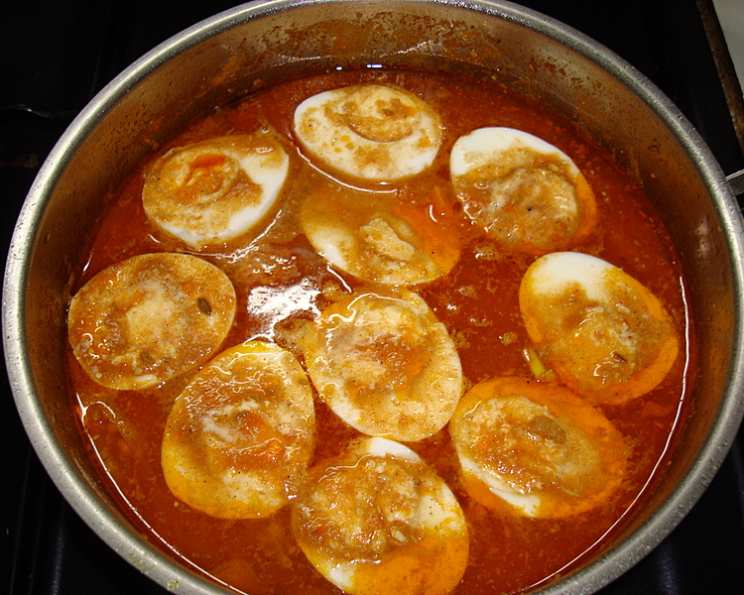
Chettinad Curry Eggs: Aromatic Spice Meets Comfort Food
The first time I tasted Chettinad cuisine, it was a revelation. The depth of flavor, the complex layering of spices, and the subtle heat – it was an explosion of culinary artistry. I was in a tiny, bustling restaurant in Chennai, and the owner, a kind woman with a twinkle in her eye, insisted I try her family’s Chettinad Chicken. The rich, dark curry clung to the tender chicken, perfuming the air with cinnamon, fennel, and a dozen other spices I couldn’t quite identify. That memory sparked a lifelong passion for Chettinad cooking and the endless possibilities it holds – which led me to experimenting and creating this stunning Chettinad Curry Eggs. This recipe brings that same vibrant spice profile to a comforting, simple dish: hard-boiled eggs in a rich, fragrant curry sauce.
Recipe Overview
- Prep Time: 15 minutes
- Cook Time: 25 minutes
- Total Time: 40 minutes
- Servings: 4
- Dietary Type: Vegetarian
Ingredients
- 6 hard-boiled eggs, shelled
- 3 teaspoons coriander powder
- 1 1/2 teaspoons chili powder
- 1 teaspoon fennel seed
- 1 teaspoon cumin seed
- 1/2 teaspoon turmeric
- 1/2 inch fresh ginger
- 2 garlic cloves
- 400 ml coconut milk
- 2 tablespoons oil (vegetable or coconut oil recommended)
- 1/2 teaspoon fenugreek seeds
- 2 inches cinnamon sticks
- 8 ounces onions, chopped (approximately 1 medium-large onion)
- 8 ounces tomatoes, chopped (approximately 2 medium tomatoes)
- Salt, to taste
- 1/2 lime, juice of
Equipment Needed
- Blender or food processor
- Large skillet or pot
- Measuring spoons and cups
- Knife
- Cutting board
Instructions
-
Begin by preparing the spice paste. Combine the coriander powder, chili powder, cumin seeds, turmeric, ginger, and garlic in a blender or food processor. Add 2 tablespoons of water and blend until a smooth paste forms. If the mixture is too thick, add a teaspoon of water at a time until you achieve the desired consistency. The paste should be easily pourable.
-
Heat the oil in a large skillet or pot over medium heat. Once the oil is hot, add the fennel seeds, fenugreek seeds, and cinnamon sticks. Fry for approximately 10 seconds, or until the spices become fragrant and the fennel seeds start to sizzle. Be careful not to burn the spices, as this will impart a bitter taste to the curry.
-
Add the chopped onions to the skillet. Cook, stirring occasionally, until the onions are softened and lightly browned, about 5-7 minutes. The onions should be just beginning to caramelize.
-
Add the prepared spice paste to the skillet with the onions. Cook, stirring constantly, for approximately 8 minutes. This step is crucial for developing the flavor of the curry. If the mixture begins to stick to the pan, add a tablespoon of water at a time to prevent burning. The paste should become fragrant and deepen in color.
-
Add the chopped tomatoes to the skillet. Cook for an additional 2 minutes, stirring occasionally, until the tomatoes soften and begin to break down. This will help to create a richer, smoother sauce.
-
Pour in 3 cups of warm water, and add salt to taste. Bring the mixture to a simmer, then reduce the heat to low and simmer gently for 20 minutes, or until the sauce has thickened and become smooth. Stir occasionally to prevent sticking. This slow simmering process allows the flavors to meld together beautifully.
-
Stir in the coconut milk and bring the curry back to a gentle boil. Immediately reduce the heat to low. Add the lime juice, and stir well to combine. Taste and adjust the seasoning with more salt or lime juice as needed.
-
Gently halve the hard-boiled eggs. Carefully place the halved eggs into the simmering curry, yolk-side up. Simmer for another 2-3 minutes to warm the eggs through and allow them to absorb some of the curry flavor. Be gentle, to avoid breaking the egg yolks.
-
Serve hot with plain boiled rice and, if desired, a side of Chettinad Chicken curry for a complete Chettinad feast.
Expert Tips & Tricks
- For a more intense flavor, dry roast the whole spices (coriander seeds, cumin seeds, fennel seeds, fenugreek seeds, and cinnamon sticks) in a dry skillet over medium heat for a few minutes before grinding them into a powder. This will release their essential oils and enhance their aroma.
- If you don’t have fresh ginger and garlic, you can substitute with ginger and garlic paste. Use approximately 1 teaspoon of ginger paste and 2 teaspoons of garlic paste.
- To make the curry richer, add a tablespoon of cashew paste (made by grinding soaked cashews) along with the coconut milk.
- If you prefer a thicker gravy, you can blend a small portion of the curry (about 1/2 cup) and then return it to the pot.
Serving & Storage Suggestions
Serve Chettinad Curry Eggs hot, garnished with fresh cilantro or curry leaves. It pairs perfectly with plain boiled rice, basmati rice, or even naan bread. The vibrant flavors also complement other South Indian dishes like sambar or rasam.
Leftovers can be stored in an airtight container in the refrigerator for up to 3 days. Reheat gently on the stovetop or in the microwave until heated through. If the curry becomes too thick during storage, add a splash of water or coconut milk when reheating.
I don’t recommend freezing this dish, as the texture of the eggs may change upon thawing.
Nutritional Information
| Nutrient | Amount per Serving | % Daily Value |
|---|---|---|
| Calories | 380 kcal | 19% |
| Total Fat | 28g | 43% |
| Saturated Fat | 18g | 90% |
| Cholesterol | 210mg | 70% |
| Sodium | 250mg | 10% |
| Total Carbohydrate | 15g | 5% |
| Dietary Fiber | 3g | 12% |
| Sugars | 6g | |
| Protein | 12g | 24% |
Note: Nutritional information is an estimate and may vary based on specific ingredients and preparation methods.
Variations & Substitutions
- Vegan Option: Replace the hard-boiled eggs with tofu cubes. Pan-fry the tofu until golden brown before adding them to the curry.
- Spicier Version: Increase the amount of chili powder or add a pinch of cayenne pepper to the spice paste. You can also add a few slit green chilies to the curry while simmering.
- Milder Version: Reduce the amount of chili powder and remove the seeds from the green chilies (if using).
- Vegetable Additions: Feel free to add other vegetables to the curry, such as potatoes, cauliflower, or peas. Add them along with the tomatoes and cook until tender.
- Cashew Cream: Add a few spoons of cashew cream towards the end for a rich, decadent twist.
FAQs (Frequently Asked Questions)
Q: Can I use store-bought spice blends instead of making my own spice paste?
A: While it’s always best to make your own spice paste for the freshest flavor, you can use a pre-made Chettinad masala blend. Adjust the quantity to taste.
Q: How do I prevent the spice paste from burning while cooking?
A: Keep the heat at medium and stir constantly. If the paste starts to stick, add a tablespoon of water at a time.
Q: Can I use evaporated milk instead of coconut milk?
A: Coconut milk gives the curry a distinct flavor and richness, but evaporated milk can be used as a substitute in a pinch. It will alter the taste profile slightly.
Q: Can I make this curry ahead of time?
A: Yes, the curry can be made 1-2 days in advance and stored in the refrigerator. Add the eggs just before serving to prevent them from becoming rubbery.
Q: What kind of rice goes best with this dish?
A: Plain boiled rice or basmati rice are excellent choices. Their subtle flavors allow the curry’s complex spices to shine.
Final Thoughts
Chettinad Curry Eggs is a dish that effortlessly blends comfort and complexity. The simple hard-boiled egg is elevated by the aromatic and flavorful Chettinad spice blend. It’s an invitation to explore the rich culinary heritage of South India, a taste of tradition made accessible in your own kitchen. I encourage you to try this recipe and experiment with the spice levels and variations to create your own signature version. Share your culinary creations with friends and family, and let the flavors of Chettinad transport you to a world of culinary delight! I can’t wait to hear what you think!