
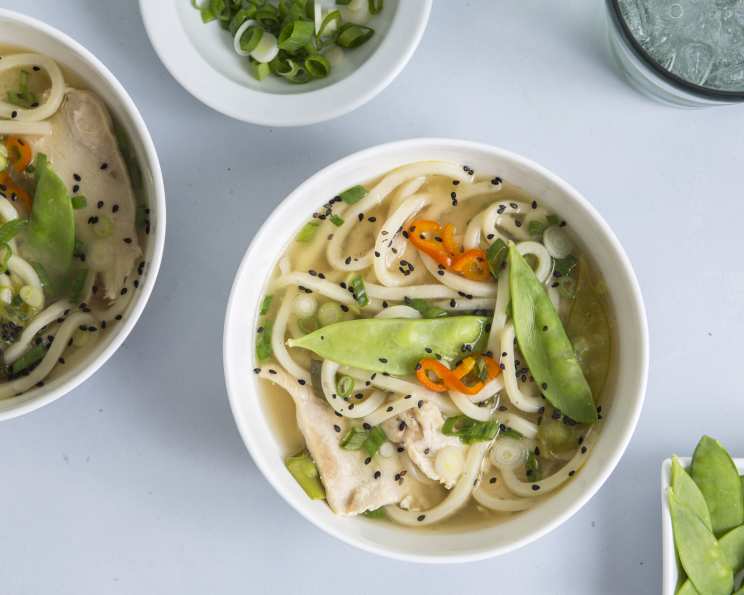
Chicken and Noodle Miso Soup: A Bowl of Comfort
The first time I tasted a truly great miso soup, it was on a rainy day in Kyoto. I remember shivering slightly, the humid air clinging to my clothes, as I ducked into a small, unassuming ramen shop. The aroma of the broth – savory, earthy, and subtly sweet – was an instant balm. But it wasn’t just the warmth that captivated me; it was the complexity of flavors, the perfect balance of umami, and the satisfying slurp of the noodles. That experience sparked a lifelong love affair with miso soup, and this Chicken and Noodle Miso Soup, inspired by Donna Hay’s approach, is my quick and comforting weeknight version.
Recipe Overview
- Prep Time: 10 minutes
- Cook Time: 25 minutes
- Total Time: 35 minutes
- Servings: 4-6
- Yield: About 8 cups
- Dietary Type: Dairy-Free
Ingredients
- 1/4 cup miso paste (white or red, your preference)
- 1/4 cup warm water
- 6 cups water
- 1 large red chile, sliced
- 1 tablespoon finely grated ginger
- 3 green onions, thinly sliced
- 2 chicken breasts, trimmed and thinly sliced
- 100g snow peas, halved
- 250g udon noodles
- 3 green onions, thinly sliced for garnish
Equipment Needed
- Small bowl
- Large saucepan
Instructions
-
Begin by preparing the miso paste. In a small bowl, combine the 1/4 cup of miso paste with the 1/4 cup of warm water. Stir vigorously until the miso is completely dissolved and the mixture is smooth. Set aside. This ensures the miso distributes evenly throughout the soup without clumping.
-
In a large saucepan, pour in the 6 cups of water. Add the sliced red chile, finely grated ginger, and 3 thinly sliced green onions. Place the saucepan over high heat and bring the mixture to a rolling boil. The chile and ginger will infuse the water with a subtle spice and warmth, creating a flavorful base for the soup.
-
Once the water is boiling, add the thinly sliced chicken breasts, halved snow peas, and udon noodles. Cook for 3-4 minutes, or until the chicken is cooked through and the noodles are tender. The chicken should no longer be pink inside, and the noodles should be pliable and easy to separate. Avoid overcooking, as the chicken can become tough.
-
Reduce the heat to low. Gently stir in the miso mixture, ensuring it is fully incorporated into the soup. Simmer for another minute or two, allowing the flavors to meld together. Do not boil the soup after adding the miso, as this can diminish its delicate flavor and nutritional benefits.
-
To serve, ladle the Chicken and Noodle Miso Soup into bowls. Garnish with the extra 3 thinly sliced green onions. Serve immediately and enjoy the comforting warmth.
Expert Tips & Tricks
- Miso Selection: Experiment with different types of miso to find your preferred flavor profile. White miso (shiro miso) is milder and sweeter, while red miso (aka miso) is bolder and more savory.
- Spice Level: Adjust the amount of red chile to control the spiciness of the soup. For a milder flavor, remove the seeds from the chile before slicing. Or simply omit the chilli.
- Noodle Choice: Udon noodles are traditionally used in this recipe, but you can substitute them with ramen, soba, or even rice noodles, depending on your preference. Fresh noodles will cook more quickly than dried noodles, so adjust the cooking time accordingly.
- Vegetable Boost: Feel free to add other vegetables to the soup, such as sliced mushrooms, spinach, or bok choy. Add them along with the snow peas for the last few minutes of cooking.
- Make-Ahead Tip: The soup base (water, chile, ginger, and green onions) can be prepared ahead of time and stored in the refrigerator for up to 2 days. Add the chicken, vegetables, and noodles just before serving.
Serving & Storage Suggestions
Serve Chicken and Noodle Miso Soup hot, garnished with fresh green onions. A sprinkle of toasted sesame seeds or a drizzle of sesame oil can add extra flavor and visual appeal.
Leftover soup can be stored in an airtight container in the refrigerator for up to 2 days. Be aware that the noodles may absorb some of the broth as it sits. To reheat, gently warm the soup on the stovetop over low heat, or microwave in individual servings.
Freezing is not recommended, as the noodles and vegetables can become mushy upon thawing.
Nutritional Information
Note: Nutritional information is an estimate and may vary based on specific ingredients and serving size.
| Nutrient | Amount per Serving | % Daily Value |
|---|---|---|
| Calories | 350 kcal | 18% |
| Total Fat | 10g | 13% |
| Saturated Fat | 2g | 10% |
| Cholesterol | 50mg | 17% |
| Sodium | 1500mg | 65% |
| Total Carbohydrate | 50g | 17% |
| Dietary Fiber | 5g | 20% |
| Sugars | 5g | N/A |
| Protein | 25g | 50% |
Variations & Substitutions
- Vegetarian/Vegan: Substitute the chicken with firm tofu or extra vegetables like mushrooms and spinach. Use a vegetable broth instead of water. Ensure your miso paste is vegan-friendly, as some may contain fish products.
- Gluten-Free: Use gluten-free noodles, such as rice noodles or glass noodles. Be sure to check the ingredient list of your miso paste, as some may contain wheat.
- Spicy Miso: Add a dash of sriracha or chili oil for an extra kick.
- Protein Boost: Add a cooked egg (soft-boiled or poached) to each bowl for added protein and richness.
- Winter Greens: Kale or chard make a fantastic substitute for snow peas in the cooler months.
FAQs (Frequently Asked Questions)
Q: Can I use chicken broth instead of water?
A: Yes, you can use chicken broth for a richer flavor, but be mindful of the sodium content, as miso paste is already quite salty.
Q: Can I make this soup ahead of time?
A: Yes, you can prepare the soup base (water, chile, ginger, and green onions) ahead of time. Add the chicken, vegetables, and noodles just before serving to prevent them from becoming overcooked.
Q: What if I don’t have udon noodles?
A: You can substitute udon noodles with ramen, soba, or rice noodles. Adjust the cooking time accordingly.
Q: Is miso paste salty?
A: Yes, miso paste is a fermented soybean paste and has a naturally salty flavor. Start with a smaller amount and add more to taste.
Q: Can I freeze this soup?
A: Freezing is not recommended, as the noodles and vegetables can become mushy upon thawing.
Final Thoughts
This Chicken and Noodle Miso Soup is more than just a recipe; it’s a warm hug in a bowl. It’s a testament to the power of simple ingredients combined with care and intention. So, gather your ingredients, embrace the process, and create a comforting and nourishing meal for yourself and your loved ones. I encourage you to try this recipe, personalize it to your taste, and share your creations. Bon appétit!