
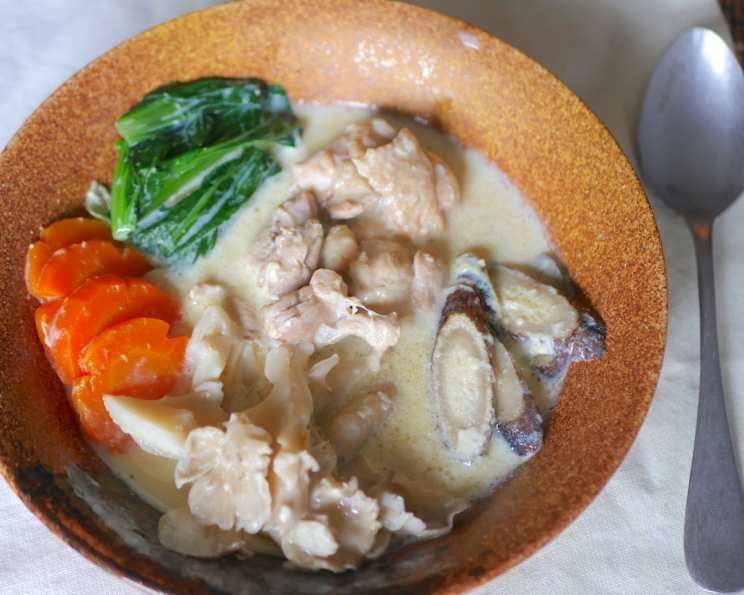
Chicken and Vegetable Soy Milk Stew: A Taste of Japanese Comfort
The first time I tasted a dish like this, I was backpacking through Kyoto. It was a chilly autumn evening, and I stumbled into a tiny, unassuming restaurant tucked away on a quiet side street. The aroma of simmering dashi and miso hung in the air, a promise of warmth and nourishment. The kind woman behind the counter served me a steaming bowl of what she called “Okan no Aji” – Mother’s Flavor. It was a soy milk stew with chicken and vegetables, simple yet deeply comforting, a taste that has stayed with me ever since. I’ve spent years trying to recreate that feeling, and this recipe is my humble attempt to bring a little bit of that Kyoto magic to your kitchen.
Recipe Overview
- Prep Time: 20 minutes
- Cook Time: 30 minutes
- Total Time: 50 minutes
- Servings: 2
- Yield: 2 bowls
- Dietary Type: Dairy-Free
Ingredients
- ½ piece carrot
- ¼ piece burdock root (gobo)
- 2 bunches Japanese mustard spinach (komatsuna)
- 75 g maitake mushrooms
- 300 g chicken thighs
- 1 cup dashi stock (1 cup water with 1 teaspoon dashi stock powder)
- 2 cups soymilk (non-adjusted)
- 1 tablespoon sake
- 3 tablespoons miso
Equipment Needed
- Cutting board
- Knife
- Large pot
- Bowl
Instructions
-
Begin by preparing the carrot. Peel it and then slice it thinly along its width, creating round pieces.
-
Next, prepare the burdock root (gobo). Wash it thoroughly to remove any dirt. Then, slice it thinly on a diagonal. This helps to maximize the surface area and release its earthy flavor.
-
Prepare the Japanese mustard spinach (komatsuna). Bring a pot of water to a boil. Place the komatsuna, with its root end first, into the boiling water. Boil for approximately 2 minutes. Immediately remove the komatsuna from the boiling water and transfer it to a bowl filled with cold water. This step, known as blanching, stops the cooking process and helps to preserve the vibrant green color.
-
Return the pot of water to a boil. Add the carrot and gobo slices and cook them for 1-2 minutes. Then, remove them from the pot and set aside.
-
Cut off the root end of the komatsuna. Then, slice the komatsuna into approximately 5-cm pieces. Separate the stems from the leaves; the stems require slightly longer cooking.
-
Prepare the maitake mushrooms. Using your hands, tear the maitake into several bite-sized pieces. This enhances their texture and allows them to absorb the flavors of the stew.
-
Prepare the chicken thighs. Wash the chicken thighs thoroughly with hot water. This helps to remove any impurities. Then, dry them thoroughly with paper towels. Slice the chicken into bite-sized pieces.
-
In the large pot, pour in the dashi stock. Add the chicken to the pot and bring the liquid to a boil.
-
Once the liquid is boiling, add the carrot, burdock root, the komatsuna stems, and the maitake mushrooms to the pot. Cover the pot and reduce the heat to medium. Cook for 10 minutes, or until the chicken is cooked through and the vegetables are tender. Check for doneness by ensuring the chicken is no longer pink inside.
-
In a separate bowl, combine the soymilk and the sake. Pour this mixture into the pot once the chicken and vegetables are cooked.
-
Bring the liquid in the pot to a gentle boil. Then, reduce the heat to low. Add the miso paste. Dissolve the miso completely by gently stirring it into the stew. Ensure that the miso is thoroughly incorporated to prevent any clumps. Be careful not to boil the stew vigorously after adding the soymilk, as it can sometimes curdle.
-
Once the miso is fully dissolved and the stew is heated through, turn off the heat. Serve the stew immediately.
Expert Tips & Tricks
- For a richer flavor, consider using homemade dashi stock. The depth of flavor will elevate the entire dish.
- If you prefer a smoother stew, you can blend a small portion of the cooked vegetables with some of the soy milk before adding it to the pot.
- Don’t overcook the soy milk. High heat can cause it to curdle, resulting in an undesirable texture.
- Adjust the amount of miso to your taste. Start with less and add more until you reach your preferred level of saltiness and umami. Different types of miso will also impart different flavors.
- A touch of grated ginger or a small piece of kombu (dried kelp) added to the dashi stock can further enhance the umami notes of the stew.
Serving & Storage Suggestions
Serve the Chicken and Vegetable Soy Milk Stew hot, garnished with a sprinkle of fresh scallions or a drizzle of sesame oil for added aroma. This stew is best enjoyed fresh, but leftovers can be stored in an airtight container in the refrigerator for up to 3 days. To reheat, gently warm the stew on the stovetop over low heat, stirring occasionally, until heated through. Avoid boiling, as this can cause the soy milk to separate. Freezing is not recommended, as the texture of the soy milk may change upon thawing.
Nutritional Information
| Nutrient | Amount per Serving | % Daily Value |
|---|---|---|
| Calories | 593.5 kcal | N/A |
| Calories from Fat | 270 g | 46% |
| Total Fat | 30.1 g | 46% |
| Saturated Fat | 7.4 g | 37% |
| Cholesterol | 126 mg | 42% |
| Sodium | 1431.7 mg | 59% |
| Total Carbohydrate | 35.8 g | 11% |
| Dietary Fiber | 10.7 g | 42% |
| Sugars | 13.4 g | 53% |
| Protein | 47.7 g | 95% |
Variations & Substitutions
- Vegetarian/Vegan: Substitute the chicken with firm or extra-firm tofu, pressed to remove excess water and cubed. Add the tofu at the same time as the vegetables. Ensure your dashi stock is vegetarian; use shiitake mushroom dashi instead of a fish-based one.
- Gluten-Free: Ensure your miso paste is gluten-free, as some varieties contain barley or other grains. Tamari soy sauce can be used in place of miso, although the flavor will be different.
- Spicy: Add a pinch of red pepper flakes or a dash of chili oil to the stew for a touch of heat.
- Other Vegetables: Feel free to experiment with other vegetables such as shiitake mushrooms, daikon radish, or kabocha squash. Adjust cooking times accordingly.
FAQs (Frequently Asked Questions)
Q: What is non-adjusted soy milk, and why is it recommended for this stew?
A: Non-adjusted soy milk is pure soy milk with no additives. It has a richer, slightly thicker consistency compared to adjusted soy milk, which often contains added sweeteners and flavorings. The thicker consistency makes it less likely to curdle in the stew.
Q: Can I use another type of mushroom instead of maitake?
A: Yes, you can substitute maitake with other mushrooms like shiitake, enoki, or even cremini mushrooms. Each type will impart a slightly different flavor to the stew.
Q: How can I tell if the chicken is cooked through?
A: The chicken is cooked through when it is no longer pink in the center and the juices run clear when pierced with a fork. An internal temperature of 165°F (74°C) is recommended.
Q: What if my soy milk curdles in the stew?
A: Curdling can happen if the soy milk is overheated or if the stew is too acidic. To prevent this, use non-adjusted soy milk, avoid boiling the stew after adding the soy milk, and add a small amount of cornstarch slurry (1 tablespoon cornstarch mixed with 2 tablespoons cold water) to the stew before adding the soy milk.
Q: Can I make this stew ahead of time?
A: Yes, you can prepare the stew ahead of time, but it’s best to add the soy milk just before serving to prevent curdling. Store the cooked chicken and vegetables in an airtight container in the refrigerator for up to 2 days, then add the soy milk and reheat gently before serving.
Final Thoughts
This Chicken and Vegetable Soy Milk Stew is more than just a recipe; it’s a warm hug in a bowl, a taste of simple, nourishing comfort. I encourage you to try it, experiment with your favorite vegetables, and make it your own. Share your creations and any variations you discover – I’d love to hear about your culinary journey. Pair this delightful stew with a side of steamed rice and a crisp green salad for a complete and satisfying meal. Enjoy!