
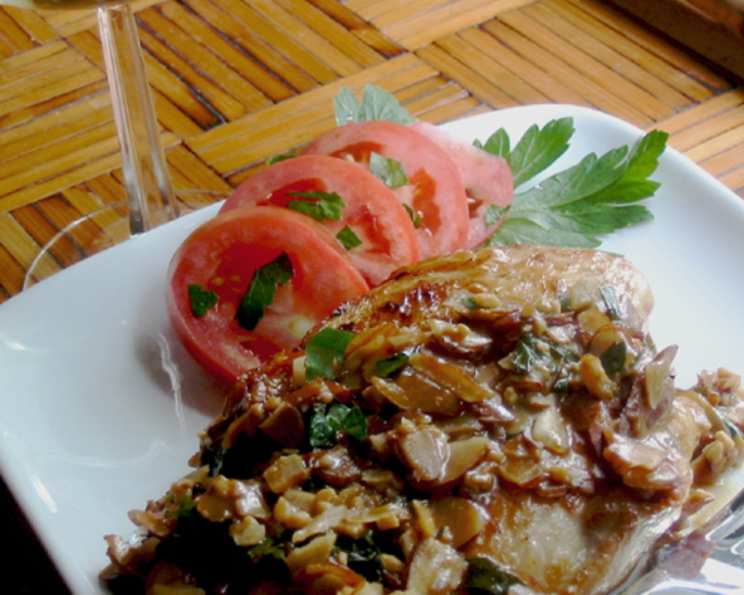
Chicken Breast Amandine: A Weeknight Elegance
I remember the first time I tasted Chicken Amandine. It was at a small bistro in Paris, tucked away on a quiet side street. The aroma of toasted almonds and white wine filled the air, and the tender chicken, bathed in that luscious sauce, was a revelation. It tasted like something I could only dream of creating, but over the years, I’ve learned that this classic dish is surprisingly simple to make at home. It’s become a go-to for busy weeknights when I want something elegant and delicious without spending hours in the kitchen.
Recipe Overview
- Prep Time: 5 minutes
- Cook Time: 15 minutes
- Total Time: 20 minutes
- Servings: 2
- Dietary Type: Gluten-Free (naturally)
Ingredients
- 1 tablespoon olive oil
- 2 boneless chicken breasts, about 1 lb (with skin)
- 1/4 cup sliced almonds
- 1/4 cup dry white wine
- 1/4 cup water
- 1 garlic clove, minced and mashed to a paste with 1 pinch salt
- 1 tablespoon butter
- 2 tablespoons minced fresh parsley
- Lemon juice, to taste
Equipment Needed
- Large skillet
- Paper towels
- Cutting board
- Knife
- Small bowl
Instructions
-
Heat the olive oil in a large skillet over moderately-high heat until it shimmers and is hot but not smoking. This is key to getting a good sear on the chicken.
-
Pat the chicken breasts dry with paper towels. Season generously with salt and pepper. This step is crucial for developing a flavorful crust.
-
Carefully place the chicken breasts in the hot skillet, skin-side down (if they have skin). Brown the chicken for approximately 2 minutes on each side. This initial searing locks in the juices and gives the chicken a beautiful color.
-
Reduce the heat to moderately-low. Continue to cook the chicken for another 6 minutes on each side, or until it is cooked through. The internal temperature should reach 165°F (74°C). Use a meat thermometer to ensure accuracy.
-
Once the chicken is cooked through, transfer it to 2 plates and keep warm.
-
In the same skillet, add the sliced almonds and cook over moderate heat, stirring constantly, for about 1 minute, or until they are golden brown and fragrant. Be careful not to burn them; they can go from golden to burnt very quickly!
-
Immediately transfer the toasted almonds to a paper towel-lined plate to drain and prevent them from continuing to cook in the residual heat.
-
Pour the dry white wine and water into the skillet. Add the garlic paste (minced garlic mashed with a pinch of salt).
-
Bring the mixture to a boil and continue to boil until the liquid has reduced by half. This will concentrate the flavors and create a richer sauce.
-
Remove the skillet from the heat. Stir in the butter until it is melted and emulsified into the sauce. This will add a velvety texture and richness.
-
Stir in the minced fresh parsley and the toasted almonds. Season the sauce to taste with lemon juice, salt, and pepper. The lemon juice brightens the sauce and balances the richness of the butter.
-
Spoon the Amandine sauce generously over the chicken breasts on the plates.
-
Serve immediately and enjoy!
Expert Tips & Tricks
- Pounding the Chicken: For even cooking, consider pounding the chicken breasts to an even thickness before searing. Place the chicken between two sheets of plastic wrap and gently pound with a meat mallet or rolling pin.
- Wine Selection: Choose a dry white wine that you would enjoy drinking, such as Sauvignon Blanc, Pinot Grigio, or Chardonnay.
- Garlic Paste: Mashing the garlic with salt helps to release its flavor and create a smoother paste that blends more easily into the sauce.
- Make-Ahead Tip: You can prepare the garlic paste and measure out all the ingredients ahead of time. This will make the cooking process even faster.
Serving & Storage Suggestions
Serve Chicken Amandine immediately while it’s hot and the sauce is at its peak flavor. It pairs beautifully with buttered orzo and steamed broccoli, as suggested, or with rice pilaf, roasted asparagus, or a simple green salad.
Leftovers can be stored in an airtight container in the refrigerator for up to 3 days. To reheat, gently warm the chicken in a skillet over low heat or in the microwave. Be careful not to overcook it, or it will become dry. The sauce may separate slightly upon reheating, but it will still be delicious. I don’t recommend freezing this dish, as the sauce’s texture may change.
Nutritional Information
| Nutrient | Amount per Serving | % Daily Value |
|---|---|---|
| Calories | 453.8 kcal | N/A |
| Calories from Fat | 284 g | 63% |
| Total Fat | 31.6 g | 48% |
| Saturated Fat | 8.9 g | 44% |
| Cholesterol | 108.1 mg | 36% |
| Sodium | 224.6 mg | 9% |
| Total Carbohydrate | 4 g | 1% |
| Dietary Fiber | 1.6 g | 6% |
| Sugars | 0.8 g | 3% |
| Protein | 33 g | 65% |
Note: Nutritional information is an estimate and may vary based on specific ingredients and portion sizes.
Variations & Substitutions
- Dairy-Free: Substitute the butter with a dairy-free butter alternative or additional olive oil.
- Herb Variations: Experiment with different fresh herbs, such as thyme, rosemary, or chives, in place of or in addition to the parsley.
- Nut Variations: Use other nuts, like slivered almonds, pecans, or walnuts, instead of sliced almonds.
- Vegetable Additions: Add sliced mushrooms or shallots to the skillet when cooking the almonds for extra flavor.
FAQs (Frequently Asked Questions)
Q: Can I use chicken thighs instead of chicken breasts?
A: Yes, you can! Chicken thighs will take slightly longer to cook. Make sure they reach an internal temperature of 175°F (80°C) for optimal tenderness.
Q: What if I don’t have dry white wine?
A: You can substitute chicken broth or vegetable broth in place of the wine. The flavor will be slightly different, but it will still be delicious. You can also add a tablespoon of lemon juice for extra acidity.
Q: How do I know when the chicken is cooked through?
A: The best way to ensure the chicken is cooked through is to use a meat thermometer. Insert it into the thickest part of the breast, and it should read 165°F (74°C).
Q: Can I make this dish ahead of time?
A: While it’s best served fresh, you can prepare the sauce ahead of time and store it in the refrigerator for up to 2 days. Reheat gently before serving over freshly cooked chicken.
Q: What can I serve with Chicken Amandine?
A: Chicken Amandine pairs well with a variety of sides, such as rice pilaf, roasted vegetables, mashed potatoes, or a simple green salad. Buttered orzo and steamed broccoli are classic choices.
Final Thoughts
Chicken Amandine is a testament to how simple ingredients, when combined with careful technique, can create something truly special. Don’t be intimidated by the fancy name; this dish is surprisingly easy to make and perfect for a weeknight dinner or a special occasion. So, gather your ingredients, put on some music, and enjoy the process of creating this elegant and flavorful dish. I’d love to hear your feedback, and feel free to pair this dish with a crisp Sauvignon Blanc. Bon appétit!