
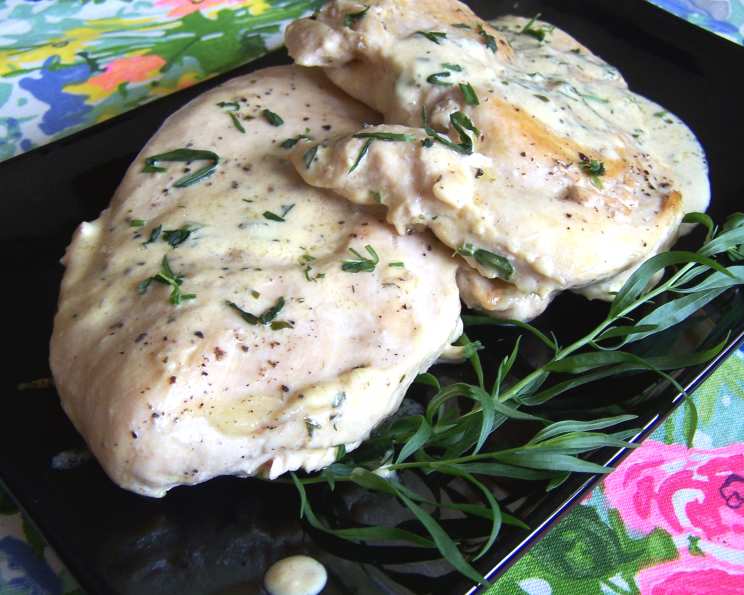
Chicken Breasts With Fresh Tarragon-Dijon Mustard Pan Sauce
I remember the first time I tasted tarragon. It was in a small bistro in Paris, tucked away on a cobblestone street. The chef, a gruff but kind man, served me a simple chicken dish with a creamy, fragrant sauce. The anise-like aroma of the tarragon was intoxicating, and the taste – bright, herbal, and slightly sweet – was unforgettable. Ever since, I’ve been on a quest to recreate that magic, and this recipe for Chicken Breasts with Fresh Tarragon-Dijon Mustard Pan Sauce comes incredibly close. It’s elegant enough for a dinner party, yet simple enough for a weeknight meal.
Recipe Overview
- Prep Time: 5 minutes
- Cook Time: 17 minutes
- Total Time: 22 minutes
- Servings: 4
- Yield: 4 chicken breasts
- Dietary Type: Gluten-Free
Ingredients
- 4 boneless, skinless chicken breasts
- 1 tablespoon olive oil (use more or less, depending on your pan)
- Salt and pepper
- ½ cup chicken stock
- ⅓ cup half-and-half or ⅓ cup heavy cream
- 1 tablespoon Dijon mustard
- 2-3 teaspoons finely chopped fresh French tarragon
- Whole French tarragon leaf, for garnish
Equipment Needed
- Heavy frying pan large enough to hold all the chicken breasts without crowding
- Meat mallet (optional, for pounding chicken)
- Cutting board
- Chef’s knife
- Whisk
- Plate
Instructions
-
If your chicken breasts are quite thick (more than 3/4 inch), place them between two sheets of plastic wrap and pound them with a meat mallet or other heavy object until they are about 3/4 inch thick. This ensures even cooking.
-
Using a sharp chef’s knife, finely chop the fresh French tarragon leaves. Set aside.
-
Heat the olive oil over medium-high heat in your heavy frying pan. Ensure the pan is large enough to hold all the chicken without overcrowding, as overcrowding will lower the pan temperature and result in steamed, rather than browned, chicken.
-
While the oil heats, season the chicken breasts generously with salt and pepper. Don’t be shy with the seasoning – it’s crucial for flavor.
-
Carefully add the seasoned chicken breasts to the hot pan. Sauté the chicken until it is cooked through and well-browned on both sides, approximately 10 minutes total. Use a meat thermometer to ensure the internal temperature reaches 165°F (74°C) in the thickest part of the breast.
-
Remove the cooked chicken from the pan and transfer it to a plate. Tent the plate loosely with foil to keep the chicken warm while you prepare the sauce. This prevents the chicken from drying out.
-
Pour the chicken stock into the same pan, being careful as it may splatter. Use a spatula or wooden spoon to scrape up any browned bits from the bottom of the pan. These browned bits, known as fond, are packed with flavor and will add depth to your sauce.
-
Cook the chicken stock, scraping occasionally, until it has reduced by half. This usually takes about 2-3 minutes. Reducing the stock concentrates its flavor.
-
Remove the pan from the heat temporarily. Add the Dijon mustard, finely chopped fresh tarragon, and half-and-half (or heavy cream) to the pan. Also add any juices that have accumulated on the plate from the chicken. These juices contain valuable flavor.
-
Return the pan to medium-low heat. Whisk all the ingredients together thoroughly until well combined.
-
Cook the sauce, stirring occasionally, until it has slightly thickened, about 2 minutes more. Be careful not to boil the sauce, as this can cause it to separate. The sauce should be thick enough to coat the back of a spoon.
-
Arrange the cooked chicken breasts attractively on a platter or individual plates.
-
Generously drizzle the tarragon-Dijon mustard sauce evenly over each piece of chicken.
-
Garnish each portion with a few fresh whole French tarragon leaves for visual appeal and an extra burst of fresh herb flavor.
-
Serve immediately.
Expert Tips & Tricks
- Pounding the chicken: Pounding the chicken breasts to an even thickness ensures that they cook evenly and quickly. If you don’t have a meat mallet, you can use a rolling pin or the bottom of a heavy pan.
- Don’t overcrowd the pan: Overcrowding the pan will lower the temperature and result in the chicken steaming instead of browning. Cook the chicken in batches if necessary.
- Use fresh tarragon: Dried tarragon simply doesn’t have the same bright, fresh flavor as fresh tarragon. If you absolutely must substitute, use only 1 teaspoon of dried tarragon.
- Deglazing the pan: Don’t skip the step of deglazing the pan with chicken stock. This is where all the flavorful browned bits from the chicken are incorporated into the sauce.
- Adjusting the sauce: If the sauce is too thin, continue to cook it over low heat until it thickens to your desired consistency. If it’s too thick, add a splash of chicken stock or cream to thin it out.
- Adding acidity: For a touch of brightness, consider adding a squeeze of lemon juice or a splash of white wine vinegar to the sauce at the end.
Serving & Storage Suggestions
This Chicken Breasts with Fresh Tarragon-Dijon Mustard Pan Sauce is delicious served with a variety of side dishes. Consider pairing it with roasted asparagus, steamed green beans, mashed potatoes, rice pilaf, or a simple green salad. The bright, herbal flavors of the sauce complement these sides beautifully.
Leftover chicken can be stored in an airtight container in the refrigerator for up to 3 days. The sauce may thicken as it cools, so you may need to add a splash of chicken stock or cream when reheating.
To reheat, gently warm the chicken and sauce in a skillet over low heat or in the microwave. Avoid overheating, as this can dry out the chicken. Freezing is not recommended, as the sauce may separate upon thawing.
Nutritional Information
| Nutrient | Amount per Serving | % Daily Value |
|---|---|---|
| Calories | 199 kcal | N/A |
| Calories from Fat | 68 kcal | N/A |
| Total Fat | 7.6 g | 11% |
| Saturated Fat | 2.4 g | 12% |
| Cholesterol | 76.8 mg | 25% |
| Sodium | 169.9 mg | 7% |
| Total Carbohydrate | 2.2 g | 0% |
| Dietary Fiber | 0.1 g | 0% |
| Sugars | 0.6 g | 2% |
| Protein | 28.8 g | 57% |
Variations & Substitutions
- Dairy-Free: Substitute coconut cream or cashew cream for the half-and-half or heavy cream. Use a dairy-free butter alternative to sauté the chicken.
- Herb Variations: While fresh tarragon is the star of this dish, you can experiment with other herbs. Try adding a pinch of fresh thyme, chives, or parsley to the sauce.
- Wine Reduction: For a richer sauce, deglaze the pan with white wine instead of chicken stock. Allow the wine to reduce by half before adding the Dijon mustard and cream.
- Mushroom Addition: Sauté sliced mushrooms in the pan after cooking the chicken and before adding the chicken stock. This adds earthy notes to the sauce.
- Spicy Kick: Add a pinch of red pepper flakes to the sauce for a subtle heat.
FAQs (Frequently Asked Questions)
Q: Can I use dried tarragon instead of fresh?
A: While fresh tarragon is highly recommended for its superior flavor, you can use 1 teaspoon of dried tarragon if necessary. Add it to the sauce along with the Dijon mustard.
Q: How do I know when the chicken is cooked through?
A: The internal temperature of the chicken should reach 165°F (74°C) in the thickest part. Use a meat thermometer for accurate results.
Q: Can I make this sauce ahead of time?
A: The sauce is best made fresh, but you can prepare it up to a few hours in advance. Reheat gently over low heat before serving.
Q: What if my sauce is too thin?
A: Continue cooking the sauce over low heat, stirring occasionally, until it thickens to your desired consistency.
Q: Can I use chicken thighs instead of chicken breasts?
A: Yes, you can substitute boneless, skinless chicken thighs. They may require a slightly longer cooking time.
Final Thoughts
This Chicken Breasts with Fresh Tarragon-Dijon Mustard Pan Sauce is a delightful and elegant dish that’s perfect for any occasion. The combination of tender chicken, creamy sauce, and the bright, anise-like flavor of fresh tarragon is simply irresistible. I encourage you to try this recipe and experience the magic for yourself. Don’t hesitate to experiment with variations and substitutions to make it your own. Serve it with a crisp white wine like Sauvignon Blanc or Pinot Grigio for a truly memorable meal. Bon appétit!