
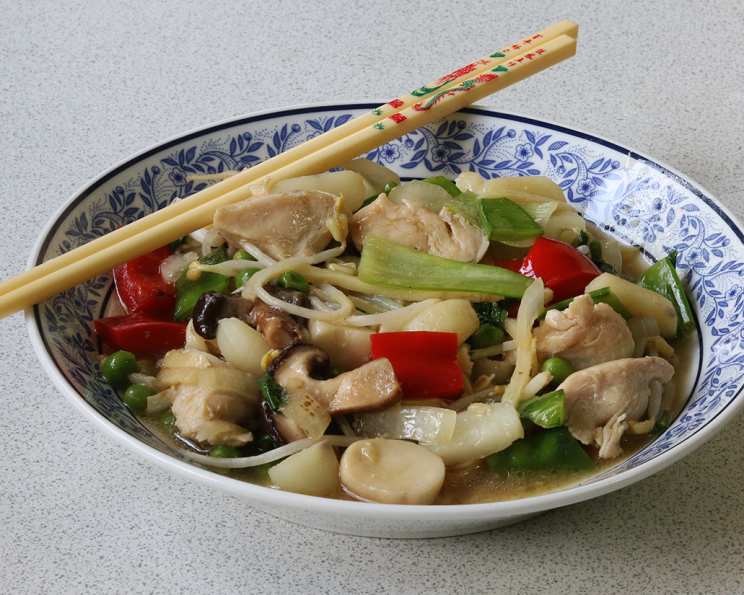
Chicken Chop Suey: A Symphony of Flavors and Textures
The aroma of sizzling garlic, the vibrant colors of crisp vegetables, and the savory depth of umami – these are the elements that immediately transport me back to my childhood. My grandfather, a chef who had traveled the world, would often make Chicken Chop Suey on Sunday evenings. It wasn’t just a meal; it was a culinary adventure, a story told through the language of flavors. He’d let me “help” by carefully arranging the colorful vegetables on a platter before he added the chicken and sauce. It was a simple dish, but his love made it extraordinary.
Recipe Overview
- Prep Time: 2 hours 30 minutes (includes marinating time)
- Cook Time: 20 minutes
- Total Time: 2 hours 50 minutes
- Servings: 4
- Dietary Type: Adaptable (see variations)
Ingredients
- 3 teaspoons garlic, pureed
- 1 tablespoon oyster sauce
- ½ tablespoon soy sauce
- 1 teaspoon salt
- ½ teaspoon cornflour
- 400 g chicken breasts, sliced
- 200 g garden peas
- 200 g bok choy, stalks and leaves sliced separately
- 200 g mushrooms, sliced
- 200 g water chestnuts, sliced
- 1 red capsicum, sliced
- 1 medium onion, sliced
- 150 g bamboo shoots, sliced
- 150 g bean sprouts
- 1 tablespoon cornflour
- 1 teaspoon oyster sauce
- ½ liter chicken stock
- 1 teaspoon salt & freshly ground black pepper
Equipment Needed
- Large bowl
- Large wok or skillet
- Jug or mixing bowl
Instructions
-
In a large bowl, mix the pureed garlic, oyster sauce, soy sauce, salt, and ½ teaspoon cornflour thoroughly. This creates the marinade for the chicken.
-
Add the sliced chicken breasts to the marinade and mix well, ensuring each piece is evenly coated. This ensures maximum flavor penetration.
-
Refrigerate the marinated chicken for at least 2 hours. This allows the flavors to meld and tenderizes the chicken.
-
Prepare the vegetables. Ensure all vegetables are washed thoroughly. Keep the bok choy stalks and leaves separate, as they cook at different rates.
-
Heat a little olive oil in a large wok or skillet over high heat. The wok should be smoking hot for best results.
-
Stir-fry each of the vegetables (except the bean sprouts) separately for approximately 2 minutes each. This ensures even cooking and prevents the wok from becoming overcrowded. Fry in the following order: onions, red capsicum, mushrooms, bok choy stalks, water chestnuts, bamboo shoots, and finally the garden peas. After stir-frying, transfer each vegetable to a separate bowl to keep them from overcooking.
-
Stir-fry the bean sprouts for only 1 minute. They cook very quickly and should remain crisp. Add the bean sprouts to the bowl with the other vegetables.
-
Remove the marinated chicken from the refrigerator.
-
Heat a little more olive oil in the wok.
-
Stir-fry the chicken in the hot oil until cooked through, approximately 3 to 4 minutes. The chicken should be opaque and slightly browned. Avoid overcrowding the wok; cook in batches if necessary.
-
Return all the stir-fried vegetables to the wok with the cooked chicken. Mix well to combine.
-
In a separate jug or mixing bowl, combine the remaining 1 tablespoon cornflour, 1 teaspoon oyster sauce, and ½ liter chicken stock. Whisk until the cornflour is fully dissolved to prevent lumps.
-
Pour the chicken stock mixture into the wok with the chicken and vegetables.
-
Season with the remaining 1 teaspoon salt and freshly ground black pepper to taste. Adjust the seasoning as needed.
-
Bring the mixture to a simmer over medium heat, stirring constantly. The sauce will thicken as it simmers.
-
Continue to simmer for a few minutes, until the sauce reaches your desired consistency. Avoid overcooking, as the vegetables should remain crisp-tender.
-
Serve immediately over rice or noodles.
Expert Tips & Tricks
- For a richer flavor, use homemade chicken stock. If using store-bought, opt for a low-sodium variety.
- To ensure the vegetables stay crisp-tender, stir-fry them in small batches over high heat. Avoid overcrowding the wok.
- If you don’t have oyster sauce, a mix of soy sauce and a touch of brown sugar can be used as a substitute.
- For added depth of flavor, add a few drops of sesame oil to the wok during the final minute of cooking.
- If the sauce becomes too thick, add a splash of chicken stock or water to thin it out.
- Marinating the chicken overnight will result in a more flavorful and tender dish.
Serving & Storage Suggestions
Serve Chicken Chop Suey hot over steamed white rice or chow mein noodles. Garnish with chopped green onions or sesame seeds for added visual appeal.
Leftovers can be stored in an airtight container in the refrigerator for up to 3 days. Reheat gently in a wok or skillet over medium heat, adding a splash of chicken stock or water if needed. While you can freeze it, the vegetables will lose some of their crispness upon thawing. Therefore, it’s best enjoyed fresh or within a few days.
Nutritional Information
| Nutrient | Amount per Serving | % Daily Value |
|---|---|---|
| Calories | 382.9 kcal | N/A |
| Calories from Fat | 104 g | 27% |
| Total Fat | 11.6 g | 17% |
| Saturated Fat | 3.2 g | 16% |
| Cholesterol | 67.8 mg | 22% |
| Sodium | 1351.2 mg | 56% |
| Total Carbohydrate | 38.9 g | 12% |
| Dietary Fiber | 8 g | 31% |
| Sugars | 13.8 g | 55% |
| Protein | 32.7 g | 65% |
Nutritional information is an estimate and may vary based on specific ingredients and portion sizes.
Variations & Substitutions
- Vegetarian Chop Suey: Substitute the chicken with firm tofu or tempeh. Add more variety of vegetables like broccoli florets, snap peas, and carrots.
- Shrimp Chop Suey: Replace the chicken with peeled and deveined shrimp. Be careful not to overcook the shrimp; they should be pink and opaque.
- Gluten-Free Chop Suey: Use gluten-free soy sauce and ensure the oyster sauce is also gluten-free. You can also use tapioca starch instead of cornflour as a thickening agent.
- Spicy Chop Suey: Add a pinch of red pepper flakes or a drizzle of chili oil to the wok for a spicy kick.
- Seasonal Chop Suey: Adapt the recipe to use seasonal vegetables. For example, in the fall, you could add butternut squash or Brussels sprouts.
FAQs (Frequently Asked Questions)
Q: Can I prepare the vegetables ahead of time?
A: Yes, you can wash and chop the vegetables a day in advance. Store them in airtight containers in the refrigerator to maintain their freshness.
Q: What if I don’t have a wok?
A: A large skillet or frying pan can be used as a substitute for a wok. Just make sure it’s large enough to accommodate all the ingredients.
Q: How do I prevent the chicken from drying out?
A: Avoid overcooking the chicken. Stir-fry it until it’s just cooked through, and ensure it’s coated in the sauce to keep it moist.
Q: Can I use frozen vegetables?
A: Yes, frozen vegetables can be used, but they may not be as crisp as fresh vegetables. Thaw them slightly before stir-frying.
Q: What’s the best way to reheat leftovers?
A: Reheat leftovers gently in a wok or skillet over medium heat, adding a splash of chicken stock or water to prevent them from drying out. You can also microwave it, but the texture may be slightly altered.
Final Thoughts
Chicken Chop Suey is more than just a recipe; it’s a canvas for culinary creativity. Feel free to experiment with different vegetables, proteins, and sauces to create your own unique version of this classic dish. Embrace the vibrant colors, enticing aromas, and delightful flavors. Share this dish with loved ones, and let it become a cherished memory, just as it is for me. I hope you enjoy creating this dish as much as I enjoy sharing it with you. Don’t hesitate to share your experiences and variations – I’m always eager to learn new twists on old favorites!