
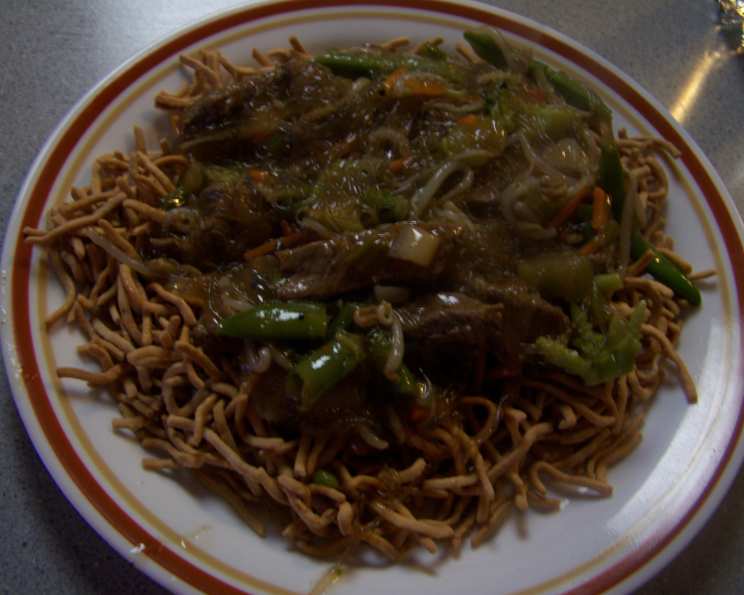
Sizzling Nostalgia: My Take on Chicken Chow Mein
The clatter of woks, the fragrant steam rising from bubbling sauces, the symphony of sizzling vegetables – these are the sounds and smells that transport me back to my childhood. My grandfather owned a small Chinese takeout restaurant, and Chicken Chow Mein was a staple. Not just on the menu, but in my life. Every family gathering seemed to feature a mountain of those savory noodles, a dish that felt like a warm hug. This recipe is my attempt to capture that comforting flavor, with a few personal tweaks inspired by years of culinary exploration.
Recipe Overview
- Prep Time: 20 minutes
- Cook Time: 15 minutes
- Total Time: 35 minutes
- Servings: 4-6
- Dietary Type: Adaptable (see variations)
Ingredients
- 3 ounces dried soba noodles (fresh or produce dept) or 3 ounces other chinese noodles (fresh or produce dept)
- ¼ cup peanut oil
- 2 tablespoons peanut oil
- Kosher salt, to taste
- ½ cup chicken broth, homemade or ½ cup canned low sodium chicken broth
- 3 tablespoons oyster sauce
- 1 tablespoon dark soy sauce
- Dark soy sauce, to serve
- 2 teaspoons cornstarch
- 1 teaspoon sugar
- 2 boneless skinless chicken breasts, cut into thin 1-inch pieces
- 1 teaspoon dark sesame oil
- 1 tablespoon minced peeled fresh ginger
- 3 garlic cloves, minced
- 2 ounces fresh snow peas, trimmed
- 3 scallions, white & green, minced
- Freshly ground coarse black pepper, to taste
- Crushed red pepper flakes, to taste
- ½ medium yellow onion, thinly sliced
- 1 stalk celery, thinly sliced on diagonal
- 6 ounces button mushrooms, thinly sliced
- ⅓ cup thinly sliced canned water chestnuts
- 8-10 ounces bean sprouts
- ¾ cup cashews, sliced
- 3 cups cooked white rice
Equipment Needed
- Large pot
- Colander
- Large seasoned wok or non-stick skillet
- Small bowl
- Paper towels
Instructions
- Boil the noodles according to package instructions. This is crucial; avoid overcooking them, as they will be stir-fried later. Aim for al dente.
- Drain the cooked noodles in a colander in the sink, and rinse under cold running water. This stops the cooking process and prevents them from sticking together.
- Shake the colander vigorously to drain off excess water. Then, pat the noodles dry with a towel. Excess moisture will hinder the frying process.
- Heat ¼ cup of peanut oil in a large seasoned wok or non-stick skillet over high heat. The wok should be smoking hot before adding the noodles.
- Add the noodles, spreading them out to evenly cover the skillet. Fry, turning once, until golden brown and crispy, about 8 minutes. To achieve even browning, avoid overcrowding the pan. If necessary, fry in batches. Break the noodles up by stirring near the end of cooking.
- Transfer the fried noodles to a paper towel-lined plate and season with salt to taste. This will help absorb excess oil and keep them crispy. Set aside.
- Discard any excess oil from the wok/skillet and wipe it out. This creates a clean surface for the next stage of cooking.
- Whisk together the chicken broth, oyster sauce, dark soy sauce (or Tamari), cornstarch, and sugar in a small bowl. The cornstarch acts as a thickening agent, creating a glossy sauce. Set aside.
- Season the chicken with the dark sesame oil, salt, black pepper, and crushed red pepper flakes. The sesame oil adds a nutty depth of flavor, while the red pepper flakes provide a touch of heat. Set aside.
- Heat the skillet over high heat.
- Heat the remaining 2 tablespoons peanut oil until very hot.
- Add the minced ginger, garlic, and scallions, and stir-fry until fragrant, about 30 seconds. Be careful not to burn the garlic, as it will become bitter.
- Add the chicken and stir-fry until lightly browned, about 1-1/2 minutes. Ensure the chicken is cooked through but still tender.
- Add the onion, celery, and mushrooms, and stir-fry until crisp-tender, about 2 minutes. The vegetables should retain a slight crunch.
- Add the water chestnuts.
- Spread the ingredients to the outside of the pan to form a well in the center.
- Pour the chicken broth mixture into the well, bring to a boil, and stir to coat the chow mein mixture. The sauce will thicken as it simmers.
- Stir in the bean sprouts and snow peas.
- Sprinkle with cashew pieces.
- Season generously with salt and pepper. Taste and adjust seasonings as needed.
- Serve over cooked white rice, and serve the chow mein noodles on the side.
- Enjoy!
Expert Tips & Tricks
- Noodle Perfection: The key to great chow mein is perfectly cooked noodles. Avoid overcooking at all costs! Soggy noodles will ruin the texture of the dish.
- Wok Hei: The characteristic “wok hei” or smoky flavor of authentic Chinese stir-fries comes from using a very hot wok and tossing the ingredients vigorously. If you don’t have a wok, a large, heavy-bottomed skillet will work.
- Prep is Key: As the original recipe author mentioned, having all your ingredients prepped and ready to go before you start cooking is essential for a successful stir-fry. The cooking process happens quickly, so you won’t have time to chop vegetables or measure out sauces while things are sizzling in the wok. This is often called “mise en place.”
- Low-Sodium Option: Using low-sodium chicken broth and Tamari (low-sodium soy sauce) helps control the salt content of the dish.
Serving & Storage Suggestions
Serve your Chicken Chow Mein hot, right out of the wok or skillet. The crispy noodles are best served on the side to prevent them from becoming soggy in the sauce. Leftovers can be stored in an airtight container in the refrigerator for up to 3 days. To reheat, stir-fry in a wok or skillet with a little oil until heated through. The noodles may lose some of their crispness upon reheating.
Nutritional Information
| Nutrient | Amount per Serving | % Daily Value |
|---|---|---|
| Calories | 730 kcal | N/A |
| Calories from Fat | 314 g | 43% |
| Total Fat | 35 g | 53% |
| Saturated Fat | 6.3 g | 31% |
| Cholesterol | 34.2 mg | 11% |
| Sodium | 1104.3 mg | 46% |
| Total Carbohydrate | 79.2 g | 26% |
| Dietary Fiber | 3.8 g | 15% |
| Sugars | 7.3 g | N/A |
| Protein | 28.8 g | 57% |
Note: Nutritional information is an estimate and may vary based on specific ingredients and portion sizes.
Variations & Substitutions
- Vegetarian Chow Mein: Substitute tofu or tempeh for the chicken. Use vegetable broth instead of chicken broth and omit the oyster sauce, or substitute with a vegetarian oyster sauce made from mushrooms.
- Gluten-Free Chow Mein: Use gluten-free noodles, Tamari (gluten-free soy sauce), and ensure your oyster sauce is gluten-free.
- Spicy Chow Mein: Increase the amount of crushed red pepper flakes or add a drizzle of chili oil for extra heat.
- Seafood Chow Mein: Substitute shrimp or scallops for the chicken.
FAQs (Frequently Asked Questions)
Q: Can I use dried chow mein noodles instead of frying my own?
A: Absolutely! Using pre-made chow mein noodles is a great time-saver. Simply add them to the wok at the end, along with the bean sprouts and snow peas.
Q: What can I substitute for oyster sauce?
A: If you don’t have oyster sauce or prefer not to use it, you can substitute with hoisin sauce or a combination of soy sauce and a touch of brown sugar.
Q: Can I make this ahead of time?
A: You can prep all the ingredients ahead of time, but it’s best to cook the chow mein fresh for optimal flavor and texture. The noodles tend to get soggy if stored for too long.
Q: What other vegetables can I add?
A: Feel free to customize the vegetable mix based on your preferences and what you have on hand. Broccoli, carrots, and bell peppers are all great additions.
Q: How can I prevent the noodles from sticking together while frying?
A: Make sure the wok is very hot before adding the noodles, and don’t overcrowd the pan. Frying in batches will help ensure even browning and prevent sticking.
Final Thoughts
Chicken Chow Mein is more than just a dish; it’s a culinary canvas for creativity and personal expression. Whether you follow this recipe to the letter or use it as a springboard for your own flavor adventures, I hope it brings as much joy to your table as it has to mine. Don’t be afraid to experiment with different ingredients, adjust the seasonings to your liking, and share your creations with loved ones. After all, the best recipes are the ones that are shared and enjoyed together. So, grab your wok, gather your ingredients, and get ready to create a sizzling masterpiece!