
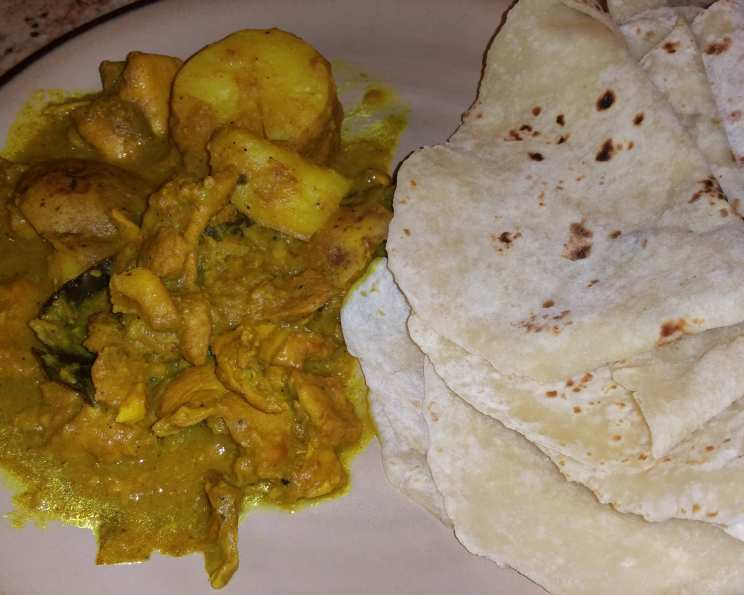
Chicken Curry and Roti: A Taste of Home
The scent of curry simmering on the stove instantly transports me back to my childhood kitchen. My mother, a culinary wizard with spices, would spend hours creating this masterpiece. The aroma of garlic, ginger, and a symphony of other spices would fill the house, promising a feast that nourished both body and soul. Even now, decades later, I can almost see her, apron-clad, expertly kneading the roti dough while the chicken curry bubbled invitingly.
Recipe Overview
- Prep Time: 30 minutes
- Cook Time: 50 minutes
- Total Time: 1 hour 20 minutes
- Servings: 4-6
- Dietary Type: Spicy
Ingredients
For the Curried Chicken:
- 3 lbs boneless skinless chicken thighs, cut into bite-size pieces
- 1 bulb of garlic, minced (or more, to taste)
- 4 bay leaves
- 1 teaspoon ground cloves
- 3 teaspoons ground ginger
- 2 teaspoons cumin
- 1 teaspoon marjoram
- 1/4 teaspoon ground coriander
- 1/4 teaspoon turmeric
- 1/4 teaspoon yellow mustard seeds, grounded
- 2-3 ounces curry powder (adjust to your taste and desired color)
- 1 chicken bouillon cube (optional, for added saltiness)
- 2 potatoes, peeled and cubed
- 1 eggplant, cubed
For the Roti:
- 4 cups flour
- Hot water (as needed)
- 1/4 cup butter, room temperature
- 1 teaspoon salt
Equipment Needed
- Large pot or Dutch oven
- Large bowl
- Wooden rolling pin
- Frying pan or griddle
- Paper towels
- Dish towel
Instructions
-
Begin by preparing the chicken. Cut the chicken thighs into bite-sized pieces. In a large bowl, combine the chicken with the minced garlic. Mix well to ensure the garlic is evenly distributed.
-
In a separate bowl, prepare the spice mixture. Combine the ground cloves, ground ginger, cumin, marjoram, ground coriander, turmeric, and ground yellow mustard seeds. Add the curry powder to the spice mixture. Adjust the amount of curry powder according to your preference for color and flavor intensity.
-
Gradually add the spice mixture to the chicken and garlic, mixing thoroughly by hand to ensure that all the pieces are evenly coated. Set the marinated chicken aside while you prepare the roti.
-
For the roti, start by boiling water. Allow the water to cool slightly until it is warm enough to handle comfortably with your hands. This temperature is crucial for achieving the right consistency in the dough.
-
In a large bowl, combine the flour and salt. Gradually add the hot water to the flour mixture, mixing continuously until a moist but not sticky dough forms. The dough should be pliable and easy to work with, resembling a flat dough that can be easily rolled out.
-
Add the softened butter to the flour and water mixture. The butter helps to keep the dough from sticking to your hands and itself, resulting in a smoother and more manageable dough.
-
Knead the dough for a few minutes until it comes together into a soft, pliable ball. Add more flour if the dough is too sticky, or more water if it is too dry.
-
Lightly flour a flat surface and your rolling pin. Divide the dough into small balls, about 2-3 inches in diameter. Roll each ball out into a thin, flat circle, about 6-7 inches in diameter. Aim for a consistent thickness to ensure even cooking.
-
Heat a frying pan or griddle over medium-high heat. Once the pan is hot, use a paper towel to rub a small amount of oil onto the surface. This will prevent the roti from sticking.
-
Cook each roti in the hot pan, one at a time. Cook for about 1-2 minutes per side, or until small brown spots begin to appear. Do not overcook the roti, as this will make it stiff and dry. The roti should remain soft and pliable.
-
As each roti is cooked, remove it from the pan and place it on a plate lined with paper towels. Cover the roti with a clean dish towel to keep it warm and soft.
-
Once the roti is complete, you can begin cooking the curry. Pour just enough oil to cover the bottom of a large pot or Dutch oven. Place the bay leaves into the pot and warm the oil over medium heat for a few minutes, until the bay leaves release their aroma but before they turn brown.
-
Increase the heat to high and add the marinated chicken to the pot. Cook the chicken at high heat, stirring frequently, for about 10 minutes. This will help to sear the chicken and develop a rich, flavorful crust. Be careful not to let the chicken stick or burn. If the pot becomes too dry, add small amounts of water or chicken stock as needed.
-
After 10 minutes, reduce the heat to medium-low. As the chicken cooks, it will release its juices. Allow the chicken to simmer gently in its own juices, stirring occasionally.
-
Five minutes after reducing the heat, add the cubed potatoes and eggplant to the pot. Continue to simmer the curry until the potatoes are tender and the eggplant has softened and almost dissolved into the sauce.
-
The curry is done when the potatoes are cooked through and the eggplant has broken down, thickening the sauce. Taste and adjust the seasoning as needed. If you prefer a spicier curry, you can add more curry powder or a pinch of chili flakes.
-
Serve the chicken curry hot with the warm roti.
Expert Tips & Tricks
- Marinating the chicken for longer (even overnight) will result in a more flavorful curry.
- If you don’t have yellow mustard seeds, you can substitute with a pinch of ground mustard.
- To make the roti extra soft, try adding a tablespoon of yogurt to the dough.
- If you’re short on time, you can use store-bought roti or naan bread as a substitute.
- For a richer curry, use coconut milk instead of water or chicken stock.
Serving & Storage Suggestions
Serve the chicken curry hot, alongside the warm roti. The roti is traditionally used to scoop up the curry, eliminating the need for silverware. Garnish with fresh cilantro for added flavor and visual appeal.
Leftover chicken curry can be stored in an airtight container in the refrigerator for up to 3 days. Cooked roti can be stored in a sealed plastic bag at room temperature for up to 2 days.
To reheat the chicken curry, simply warm it gently in a saucepan over medium heat, or microwave until heated through. To reheat the roti, warm it in a dry frying pan or microwave for a few seconds.
The roti can also be frozen individually wrapped in foil for longer storage. Defrost at room temperature before reheating. The curry can be frozen in individual plastic bags for convenient single-serving meals.
Nutritional Information
| Nutrient | Amount per Serving | % Daily Value |
|---|---|---|
| Calories | 650 kcal | 33% |
| Total Fat | 30g | 46% |
| Saturated Fat | 12g | 60% |
| Cholesterol | 150mg | 50% |
| Sodium | 800mg | 35% |
| Total Carbohydrate | 60g | 20% |
| Dietary Fiber | 8g | 32% |
| Sugars | 5g | N/A |
| Protein | 40g | 80% |
Note: Nutritional information is an estimate and may vary based on specific ingredients and preparation methods.
Variations & Substitutions
- Vegetarian Curry: Substitute the chicken with chickpeas, lentils, or paneer cheese for a vegetarian option.
- Spicy Curry: Add a chopped chili pepper or a pinch of chili flakes to the curry for extra heat.
- Coconut Curry: Replace the water or chicken stock with coconut milk for a richer, creamier curry.
- Gluten-Free Roti: Use a gluten-free flour blend to make the roti gluten-free.
- Seasonal Vegetables: Adapt the curry to incorporate seasonal vegetables such as cauliflower, green beans, or spinach.
FAQs (Frequently Asked Questions)
Q: Can I make the roti ahead of time?
A: Yes, you can make the roti ahead of time and store it in the refrigerator or freezer. Reheat before serving.
Q: How do I prevent the roti from becoming too dry?
A: Covering the cooked roti with a dish towel will help to keep it warm and soft. Avoid overcooking the roti in the pan.
Q: Can I use store-bought curry powder?
A: Yes, you can use store-bought curry powder, but be sure to adjust the amount to your taste.
Q: How can I make the curry less spicy?
A: Reduce the amount of curry powder or omit the chili pepper (if using). Adding a dollop of yogurt or sour cream to the curry can also help to cool it down.
Q: Can I freeze the chicken curry?
A: Yes, the chicken curry freezes well. Store it in an airtight container or freezer bag for up to 3 months.
Final Thoughts
Chicken Curry and Roti is more than just a recipe; it’s a journey back to the warmth and comfort of home. I encourage you to try this recipe and experience the rich flavors and aromas for yourself. Don’t be afraid to experiment with the spices and adapt the recipe to your own taste. Feel free to share your feedback and let me know how it turns out! This dish pairs perfectly with a refreshing glass of iced tea or a light, crisp beer. Enjoy!