
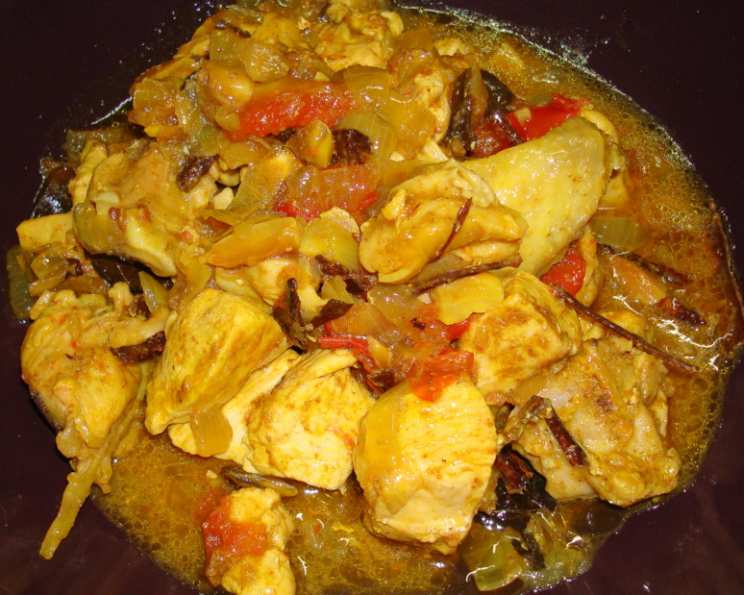
Tamil Nadu Chicken Curry: A Taste of Home
My grandmother, a fiery Tamil woman with a heart as big as her spice cabinet, used to make this chicken curry every Sunday. The aroma alone was enough to draw the whole family into the kitchen, a fragrant blend of toasted spices and simmering chicken that promised warmth and comfort. It wasn’t just a meal; it was a ritual, a connection to our heritage, and a reminder of the love that only a home-cooked meal can provide. Now, I recreate it, not just for the delicious taste, but to relive those treasured memories and pass on a piece of my family’s history.
Recipe Overview
- Prep Time: 15 minutes
- Cook Time: 20 minutes
- Total Time: 35 minutes
- Servings: 2-4
- Dietary Type: Non-Vegetarian
Ingredients
- 2 lbs chicken, cubed
- 2 tablespoons oil
- 1 large onion, chopped
- 2 cinnamon sticks, broken
- 4 cloves
- 5 cashew nuts or 5 blanched almonds, chopped
- 10 curry leaves
- 1 tablespoon fresh gingerroot, grated
- 1 tablespoon garlic, crushed and finely chopped
- 1 teaspoon turmeric powder
- 1 tomato, chopped
- 1⁄2 tablespoon chili powder
- 1 chicken stock cube
Equipment Needed
- Large pan or pot with lid
Instructions
- Begin by heating the oil in a large pan or pot over medium heat. Once the oil is shimmering, add the chopped onion, broken cinnamon sticks, cloves, chopped cashew nuts (or almonds), and curry leaves.
- Sauté the ingredients, stirring frequently, until the onion begins to soften and turn translucent, about 5-7 minutes. Be careful not to burn the spices; lower the heat if necessary.
- Add the cubed chicken to the pan and fry for approximately 4 minutes, stirring occasionally to ensure the chicken is evenly browned on all sides.
- Introduce the remaining ingredients: grated fresh gingerroot, crushed and finely chopped garlic, turmeric powder, chopped tomato, and chili powder.
- Crumble the chicken stock cube over the mixture. This will add depth and richness to the gravy.
- Stir all the ingredients together well to ensure the chicken is coated evenly with the spice mixture.
- Reduce the heat to its lowest setting. This slow cooking process is key to developing the rich flavors of the curry.
- Cover the pan tightly with a lid. Allow the chicken to cook in the simmering juices until it is cooked through and tender. This will take approximately 15-20 minutes, depending on the size of the chicken cubes.
- Check the chicken periodically to ensure it is not sticking to the bottom of the pan. If necessary, add a small amount of water to prevent burning. The goal is to allow the chicken to cook in its own juices, creating a rich and flavorful gravy.
- Once the chicken is fully cooked and tender, and the juices have thickened into a rich gravy, remove the pan from the heat. The curry is now ready to serve.
Expert Tips & Tricks
- Spice Level Adjustment: Adjust the amount of chili powder according to your spice preference. Start with a smaller amount and add more to taste. Remember, you can always add more spice, but you can’t take it away!
- Browning the Chicken: Don’t overcrowd the pan when browning the chicken. Brown it in batches if necessary to ensure even browning, which adds depth of flavor to the curry.
- The Secret to Tender Chicken: Low and slow cooking is key. Resist the urge to crank up the heat. Allowing the chicken to simmer gently in its own juices will result in the most tender and flavorful curry.
- Make-Ahead Tip: This curry can be made a day ahead of time. In fact, the flavors often meld and improve overnight. Simply store it in an airtight container in the refrigerator and reheat gently before serving.
- Ingredient Quality: Use fresh, high-quality ingredients whenever possible. Freshly grated gingerroot and crushed garlic will make a significant difference in the final flavor of the curry.
Serving & Storage Suggestions
Serve the Tamil Nadu Chicken Curry hot, preferably with steamed rice or naan bread. The rich gravy is perfect for soaking into the rice, providing a burst of flavor with every bite. A side of cooling raita (yogurt dip) can help balance the spiciness of the curry.
Leftovers can be stored in an airtight container in the refrigerator for up to 3 days. To reheat, gently warm the curry in a pan over low heat, stirring occasionally, until heated through. You may need to add a splash of water if the gravy has thickened too much.
The curry can also be frozen for longer storage. Allow the curry to cool completely before transferring it to a freezer-safe container. It can be frozen for up to 2 months. Thaw overnight in the refrigerator before reheating.
Nutritional Information
| Nutrient | Amount per Serving | % Daily Value (Approximate) |
|---|---|---|
| Calories | 650 kcal | 33% |
| Total Fat | 45g | 58% |
| Saturated Fat | 12g | 60% |
| Cholesterol | 180mg | 60% |
| Sodium | 700mg | 29% |
| Total Carbohydrate | 12g | 4% |
| Dietary Fiber | 2g | 7% |
| Sugars | 4g | N/A |
| Protein | 50g | 100% |
Please note: Nutritional information is an estimate and can vary based on specific ingredients and portion sizes.
Variations & Substitutions
- Coconut Milk Curry: For a richer, creamier curry, substitute a can of coconut milk for some of the water during the simmering process. This will add a subtle sweetness and a velvety texture.
- Vegetable Additions: Feel free to add other vegetables to the curry, such as potatoes, carrots, or peas. Add them along with the tomatoes and cook until tender.
- Spice Blends: Experiment with different spice blends to create your own unique flavor profile. Garam masala or Madras curry powder can add depth and complexity to the curry.
- Bone-in Chicken: Using bone-in chicken pieces, like thighs or drumsticks, will add more flavor and richness to the curry.
- Vegan Option: Replace the chicken with firm tofu or chickpeas for a delicious vegan alternative. Ensure the tofu is pressed to remove excess water before adding it to the curry.
FAQs (Frequently Asked Questions)
Q: Can I use chicken thighs instead of chicken breast?
A: Absolutely! Chicken thighs will result in a richer and more flavorful curry due to their higher fat content. Just be sure to adjust the cooking time accordingly.
Q: How can I make this curry less spicy?
A: Reduce or eliminate the chili powder. You can also add a dollop of yogurt or a squeeze of lemon juice at the end to help balance the flavors.
Q: Can I use dried curry leaves instead of fresh?
A: While fresh curry leaves are ideal, dried curry leaves can be used in a pinch. Use about half the amount of dried leaves as you would fresh.
Q: How do I know when the chicken is cooked through?
A: The chicken is cooked through when it is no longer pink inside and the juices run clear when pierced with a fork. An internal temperature of 165°F (74°C) is recommended.
Q: My curry is too watery. How can I thicken it?
A: Remove the lid from the pan and allow the curry to simmer over medium heat until the sauce reduces to your desired consistency. You can also mix a teaspoon of cornstarch with a tablespoon of water and stir it into the curry to thicken it quickly.
Final Thoughts
This Tamil Nadu Chicken Curry is more than just a recipe; it’s a journey to the heart of South Indian cuisine. It’s an invitation to connect with the warmth and flavors of a culture that celebrates food as an expression of love and community. I encourage you to try this recipe, adapt it to your own tastes, and share it with those you cherish. Let the aroma of spices fill your kitchen and transport you to a place of comfort and connection. Don’t hesitate to experiment with different variations and share your feedback – I’d love to hear how you made this dish your own! Pair it with a refreshing glass of mango lassi for a truly authentic and satisfying meal.