
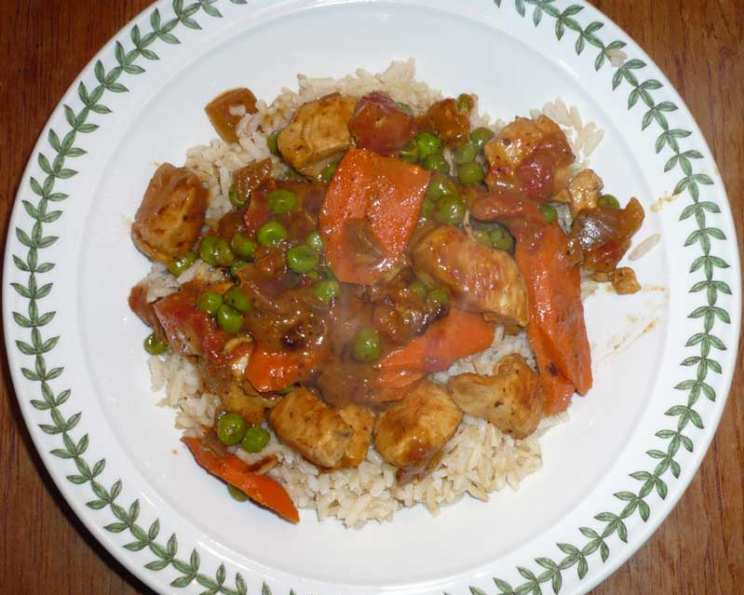
Chicken Curry with Coconut Milk: A Culinary Comfort
The first time I tasted a truly exceptional chicken curry with coconut milk, I was backpacking through Southeast Asia. Forget the street food stalls overflowing with noodles and the exotic fruits I couldn’t pronounce – it was a small, family-run restaurant in Chiang Mai, Thailand, where I discovered the magic of this dish. The aroma alone – a heady mix of warming spices and creamy coconut – drew me in. The tender chicken, simmered in that luscious sauce and served with fragrant jasmine rice, was a revelation. It was more than just a meal; it was a hug in a bowl, a taste of home even thousands of miles away. That memory is forever etched in my culinary heart, and it’s what I try to recreate every time I make this comforting dish.
Recipe Overview
- Prep Time: 15 minutes
- Cook Time: 30 minutes
- Total Time: 45 minutes
- Servings: 4
- Dietary Type: Dairy-Free
Ingredients
- 1 tablespoon vegetable oil
- 2 large onions, sliced
- Salt, to taste
- Fresh ground pepper, to taste
- 2 teaspoons curry powder
- 1 can (13.5 oz) unsweetened coconut milk
- 1 lb boneless skinless chicken breast
- 1 cup diced canned tomato
- 1 cup frozen peas
- 1 cup sliced carrot
Equipment Needed
- Large non-stick skillet
- Steamer (optional, for carrots)
Instructions
-
Begin by preparing the carrots. You can either steam them until they are just tender, or microwave them with a little water for a few minutes. The goal is to slightly soften them so they cook evenly with the other ingredients later on.
-
Next, prepare the chicken. Cut the boneless, skinless chicken breast into 1-inch pieces. This size ensures they cook quickly and evenly, absorbing the delicious curry flavors.
-
Now, let’s build the flavor base. Pour the 1 tablespoon of vegetable oil into a large non-stick skillet. Place the skillet over medium-high heat.
-
Add the sliced onions to the hot oil, along with a pinch of salt and some freshly ground pepper. The salt will help draw out the moisture from the onions, encouraging them to soften.
-
Reduce the heat to medium and cook the onions, stirring occasionally, until they are very soft, almost falling apart. This process should take about 15 minutes or more. Patience is key here; well-caramelized onions form the foundation of a rich and flavorful curry.
-
Raise the heat again and brown the onions a bit, adding depth to their sweetness. Then, stir in the 2 teaspoons of curry powder and cook for another minute or so. This allows the spices to bloom, releasing their aromatic oils and enhancing the overall flavor of the dish. Be careful not to burn the spices; keep stirring constantly.
-
Reduce the heat back to medium. Pour in the can of unsweetened coconut milk and cook, stirring occasionally, until the sauce thickens slightly, about 2 minutes. The coconut milk adds creaminess and a subtle sweetness that balances the spices beautifully.
-
Add the diced chicken to the skillet and stir to coat it evenly in the coconut curry sauce. Cook until the chicken is cooked through, about 3-6 minutes, depending on the thickness of the pieces. Ensure the internal temperature reaches 165°F (74°C) for safety.
-
Finally, add the diced canned tomato, frozen peas, and sliced carrots to the skillet. Cook until the vegetables are heated through, about 2-3 minutes. The tomatoes add acidity and moisture, while the peas and carrots provide sweetness and texture.
-
Taste the curry and adjust the seasonings as needed. You may want to add more salt, pepper, or even a pinch of sugar to balance the flavors.
Expert Tips & Tricks
- For a deeper, more complex flavor, toast the curry powder in a dry pan for a minute or two before adding it to the onions. Be careful not to burn it.
- If you prefer a spicier curry, add a pinch of red pepper flakes or a finely chopped chili pepper along with the curry powder.
- To thicken the sauce further, mix a teaspoon of cornstarch with a tablespoon of cold water and stir it into the curry during the last few minutes of cooking.
- For a richer flavor, use full-fat coconut milk instead of light coconut milk.
- If you’re short on time, you can use pre-cut carrots and onions to speed up the prep process.
Serving & Storage Suggestions
Serve the Chicken Curry with Coconut Milk hot, over a bed of fluffy jasmine rice, brown rice, or even quinoa. Garnish with fresh cilantro or a dollop of plain yogurt for a touch of coolness. Leftovers can be stored in an airtight container in the refrigerator for up to 3 days. Reheat gently on the stovetop or in the microwave until heated through. You can also freeze the curry for up to 2 months. Thaw it overnight in the refrigerator before reheating.
Nutritional Information
| Nutrient | Amount per Serving | % Daily Value |
|---|---|---|
| Calories | 350 kcal | 18% |
| Total Fat | 18g | 28% |
| Saturated Fat | 12g | 60% |
| Cholesterol | 80mg | 27% |
| Sodium | 300mg | 13% |
| Total Carbohydrate | 25g | 8% |
| Dietary Fiber | 5g | 20% |
| Sugars | 10g | – |
| Protein | 30g | 60% |
Nutritional information is an estimate and may vary based on specific ingredients and preparation methods.
Variations & Substitutions
- Vegetarian Curry: Substitute the chicken with tofu, chickpeas, or a mix of your favorite vegetables.
- Seafood Curry: Use shrimp or scallops instead of chicken. Sear the scallops in a little oil in a hot pan before adding them to the curry.
- Spicy Curry: Add a pinch of cayenne pepper or a chopped jalapeño to the onions while they are cooking.
- Sweet Potato Curry: Add diced sweet potato along with the carrots for a sweeter and more substantial curry.
- Green Curry: Use green curry paste instead of curry powder for a different flavor profile.
FAQs (Frequently Asked Questions)
Q: Can I use light coconut milk instead of full-fat?
A: Yes, you can use light coconut milk, but the curry will be less rich and creamy.
Q: Can I make this curry ahead of time?
A: Absolutely! The flavors actually develop more over time, so making it a day or two in advance is a great idea.
Q: How do I know when the chicken is cooked through?
A: The chicken should be opaque throughout and have an internal temperature of 165°F (74°C).
Q: What if my curry sauce is too thin?
A: Simmer the curry for a longer time to allow the sauce to reduce and thicken. Alternatively, you can add a cornstarch slurry (1 teaspoon cornstarch mixed with 1 tablespoon cold water) to thicken it quickly.
Q: Can I freeze this curry?
A: Yes, this curry freezes well. Store it in an airtight container for up to 2 months. Thaw it overnight in the refrigerator before reheating.
Final Thoughts
Chicken Curry with Coconut Milk is a wonderfully versatile dish that can be adapted to suit your tastes and preferences. Whether you’re craving a comforting weeknight meal or looking to impress guests with an exotic flavor combination, this recipe is sure to deliver. Don’t be afraid to experiment with different spices and vegetables to create your own signature version. I encourage you to give it a try, and I’d love to hear about your culinary creations. Serve it with a side of naan bread for dipping, and perhaps a crisp glass of white wine or a refreshing Thai iced tea. Happy cooking!