
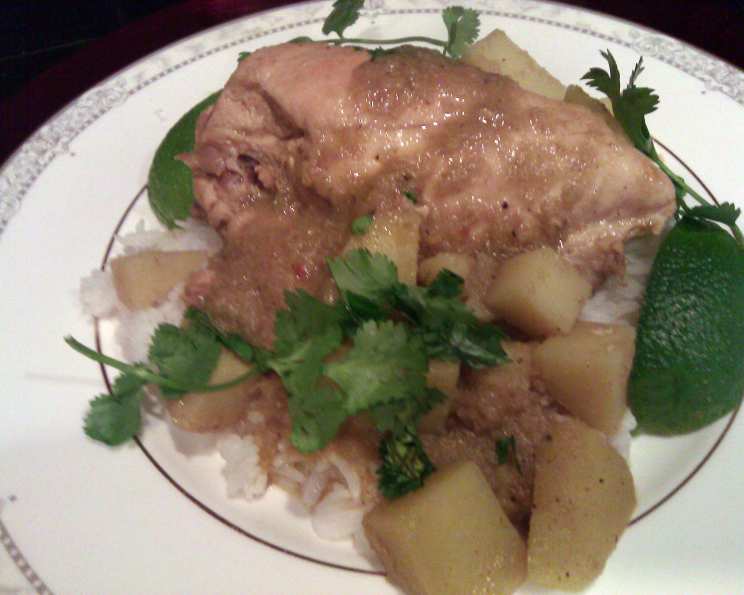
Chicken Lemongrass and Potato Curry: A Taste of Southeast Asia
There’s a certain magic that happens when lemongrass hits hot oil. The scent alone transports me back to the bustling street food stalls of Hanoi, the air thick with the promise of deliciousness. I remember one tiny stall in particular, where an elderly woman ladled steaming bowls of curry, the lemongrass fragrance mingling with the earthy aroma of spices. Every spoonful was a comforting hug, a perfect balance of sweet, savory, and spicy. This Chicken Lemongrass and Potato Curry, adapted from Andrea Nguyen, captures that essence beautifully, bringing a taste of those vibrant memories into my own kitchen.
Recipe Overview
- Prep Time: 20 minutes
- Cook Time: 55 minutes
- Total Time: 1 hour 15 minutes
- Servings: 4
- Dietary Type: Dairy-Free
Ingredients
- 3 stalks lemongrass, trimmed, quartered lengthwise, and coarsely chopped
- 1-inch piece gingerroot, peeled and roughly chopped
- 1 medium yellow onion, roughly chopped
- 1 tablespoon canola oil
- 2 tablespoons Madras curry powder, Vietnamese kind preferred
- ½ teaspoon dried red chili pepper flakes (optional)
- 2 to 2 ½ lbs bone-in skinless chicken breasts
- 1 ½ teaspoons salt
- ½ teaspoon pepper
- 1 (13 ½ ounce) can coconut milk
- 4 white boiling potatoes, peeled and cut into 1-inch chunks (about 1 ¼ to 1 ½ pounds total)
- 1 lime, cut into wedges
Equipment Needed
- Food processor
- Large saucepan (4 or 5-quart)
- Knife
- Cutting board
Instructions
- Prepare the Lemongrass, Ginger, and Onion Paste: Place the lemongrass into the bowl of a food processor and process until the lemongrass is transformed into a soft, fluffy mass, about 3 minutes. (You’ll see a whirling snow blizzard in the bowl.)
- Add the ginger to the bowl of the food processor and pulse until the ginger is finely chopped.
- Add the onion and process the entire mixture to a nice paste. This paste is the aromatic foundation of the curry, so take your time to ensure it’s finely ground.
- Cook the Curry: Heat the canola oil in a large saucepan (4 or 5-quart) over medium heat.
- Sauté the paste of lemongrass, ginger, and onion until it is fragrant, about 3 minutes. The fragrance is key; you’ll know it’s ready when the kitchen fills with a bright, savory aroma.
- Add the curry powder and dried red chili flakes (if using) and continue sautéing to aromatize the spices, about 1 minute. This step is crucial for unlocking the full potential of the curry powder, allowing its flavors to bloom.
- Add the chicken pieces, salt, pepper, coconut milk, and enough water to just cover the chicken. Be sure not to overcrowd the pan; work in batches if necessary.
- Bring to a simmer and cook uncovered for 20 minutes. Simmering gently ensures the chicken stays tender and absorbs the flavors of the curry. Avoid boiling vigorously, as this can toughen the meat.
- Add the Potatoes: While the curry simmers, peel the potatoes and cut them into 1-inch chunks.
- Add the potatoes to the curry when the initial cooking time has elapsed.
- Bring the curry back to a simmer and continue cooking for 15 minutes, until the potatoes are tender. A fork should easily pierce through a potato chunk when they are ready.
- Turn off the heat and let the curry sit, covered, for 30 to 45 minutes to let the flavors meld and mature. This resting period is essential for allowing the curry to deepen and develop its complex flavors. It’s a secret trick many chefs use to enhance their dishes.
- Final Touches: Reheat over low heat and correct the seasoning. Taste and adjust the salt and pepper to your preference. A squeeze of lime juice can also brighten the flavors.
- Serve with lots of steamed rice or warm baguette for dipping. Lime wedges are a good accompaniment for folks who want to cut some of the heat!
Expert Tips & Tricks
- For a richer, more intense flavor, toast the curry powder in a dry pan for a minute or two before adding it to the oil. Be careful not to burn it!
- If you prefer a smoother curry, blend a cup of the sauce before adding the potatoes and stir it back in.
- To make this dish ahead of time, prepare the curry up to the point of adding the potatoes. Store it in the refrigerator for up to 2 days. Add the potatoes and continue cooking just before serving.
- Don’t discard the tougher outer leaves of the lemongrass stalks. You can tie them together and add them to the curry while simmering for extra flavor, then remove them before serving.
- If you don’t have Madras curry powder, you can substitute with a combination of your favorite curry powders, adjusting the amounts to your liking.
Serving & Storage Suggestions
Serve this Chicken Lemongrass and Potato Curry hot, garnished with fresh cilantro or chopped scallions for a pop of color. A side of steamed jasmine rice is perfect for soaking up the flavorful sauce. Warm baguette slices are also a delightful accompaniment for dipping.
Leftovers can be stored in an airtight container in the refrigerator for up to 3 days. Reheat gently on the stovetop over low heat or in the microwave until heated through. For longer storage, freeze in an airtight container for up to 2 months. Thaw overnight in the refrigerator before reheating.
Nutritional Information
| Nutrient | Amount per Serving | % Daily Value |
|---|---|---|
| Calories | 792.3 kcal | N/A |
| Calories from Fat | 236 g | 30% |
| Total Fat | 26.3 g | 40% |
| Saturated Fat | 17.1 g | 85% |
| Cholesterol | 145.6 mg | 48% |
| Sodium | 1180.5 mg | 49% |
| Total Carbohydrate | 86.9 g | 28% |
| Dietary Fiber | 4.7 g | 18% |
| Sugars | 54.2 g | 216% |
| Protein | 52.9 g | 105% |
Note: Nutritional information is an estimate and may vary based on specific ingredients and cooking methods.
Variations & Substitutions
- Chicken: Substitute chicken thighs for chicken breasts for a richer flavor.
- Vegetarian: Replace the chicken with firm tofu or chickpeas for a vegetarian version.
- Potatoes: Use sweet potatoes instead of white potatoes for a sweeter flavor profile.
- Spice Level: Adjust the amount of chili flakes to control the heat.
- Coconut Milk: Use light coconut milk for a lower-fat option, but be aware that it will result in a less creamy curry.
- Greens: Spinach or kale can be added during the last few minutes of cooking for added nutritional value.
FAQs (Frequently Asked Questions)
Q: Can I use dried lemongrass instead of fresh?
A: While fresh lemongrass is ideal for its vibrant flavor, you can use dried lemongrass in a pinch. Use about 1 tablespoon of dried lemongrass for every stalk of fresh lemongrass, and be sure to rehydrate it in hot water before adding it to the food processor.
Q: How can I make this curry spicier?
A: Add more dried red chili pepper flakes, a chopped fresh chili pepper, or a dash of chili oil to the curry while it’s cooking.
Q: Can I freeze this curry?
A: Yes, this curry freezes well. Allow it to cool completely before transferring it to an airtight container and freezing for up to 2 months. Thaw overnight in the refrigerator before reheating.
Q: What kind of rice is best served with this curry?
A: Jasmine rice is a classic choice, but any long-grain rice will work well. Brown rice is a healthier option.
Q: Can I use a different type of curry powder?
A: While Madras curry powder is preferred for its unique flavor profile, you can use other types of curry powder. Just be aware that the flavor will be slightly different. Taste and adjust the seasoning accordingly.
Final Thoughts
This Chicken Lemongrass and Potato Curry is a delicious and comforting dish that’s perfect for a weeknight meal or a weekend gathering. The fragrant lemongrass, aromatic spices, and tender chicken create a symphony of flavors that will tantalize your taste buds. Don’t be afraid to experiment with different variations and substitutions to create a curry that’s perfectly tailored to your preferences. I encourage you to give this recipe a try and share your feedback – and perhaps a photo! – with me. Pair it with a crisp, refreshing white wine or a cold beer for the ultimate culinary experience.