
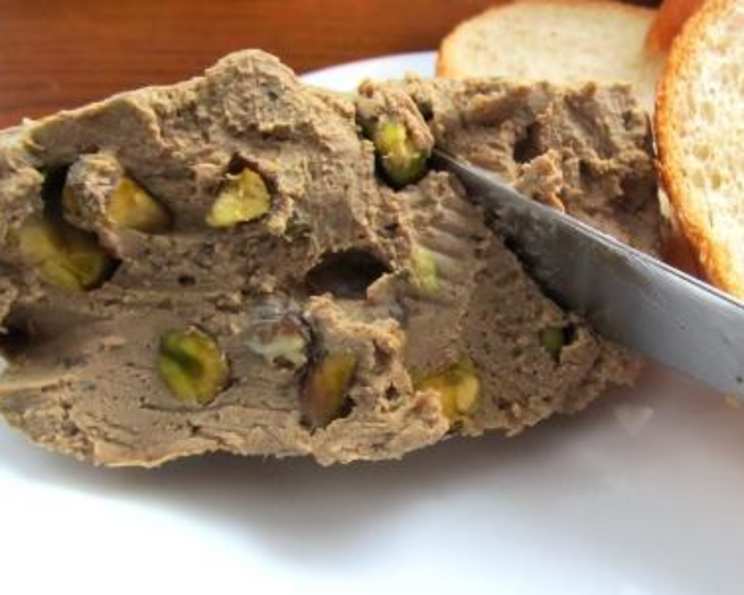
Chicken Liver Paté With Port Wine and Pistachios
The first time I tasted chicken liver paté was at a tiny bistro in Paris. I remember the dim light, the clinking of glasses, and the rich, earthy flavor that exploded in my mouth. It was served with crusty bread and cornichons, and I felt like I was experiencing true culinary magic. Years later, I still strive to recreate that experience, and this recipe, with its subtle hint of port and the delightful crunch of pistachios, comes wonderfully close.
Recipe Overview
- Prep Time: 15 minutes
- Cook Time: 30 minutes
- Total Time: 45 minutes
- Yields: 1 3/4 cup
- Dietary Type: Not Gluten-Free
Ingredients
- 100 ml dry white wine (just under 1/2 cup)
- 100 ml brandy (or cognac or whisky, just under 1/2 cup)
- 100 ml port wine, good quality (just under 1/2 cup)
- 1 small onion, finely chopped
- 3 garlic cloves, peeled, crushed, chopped
- 2 tablespoons fresh thyme (or 1 Tbsp dried)
- 500 g chicken livers (just over 1 lb, about 1 lb 2 oz)
- 4-6 tablespoons butter
- 1/2 teaspoon salt (or more, to taste)
- 1 teaspoon pepper, black, coarse
- 100 g pistachio nuts (This is 3 1/2 oz. Use any other nut specified)
Equipment Needed
- Small pot
- Frying pan
- Food processor
- Bowl
Instructions
-
In a small pot, combine the white wine, brandy, and half the port wine (50 ml) with the finely chopped onion, crushed and chopped garlic, and thyme. This mixture should amount to approximately 1 cup of liquid.
-
Bring the mixture to a simmer and allow it to reduce until it reaches about 1/3 cup, or just over. Estimating the reduction can be tricky due to the presence of onion bits. Simply tilt the pot and make your best guess.
-
While the liquid is reducing, melt the butter in a frying pan. Be generous with the butter; this recipe doesn’t use cream, so sufficient butter is essential. The goal is to have butter remaining in the pan after the livers are cooked.
-
Fry the cleaned chicken livers in the melted butter over moderately high heat until they are just pink on the inside. Be careful not to overcook them. To check for doneness, cut a few livers open. This process should take about 10 minutes, stirring frequently.
-
Transfer the cooked chicken livers to a food processor. Add all the remaining butter from the pan, followed by the reduced liquor mixture. If you used thyme sprigs, remember to remove them before adding the liquid.
-
Add the salt and pepper to the food processor.
-
Process the mixture until smooth. At this stage, you’ll need the remaining port wine. Add it to the processor and continue to process until the paté reaches a soft, almost runny consistency. Remember, it will firm up as it chills in the refrigerator.
-
Taste the paté and adjust seasoning as needed, particularly the salt. The consistency should be velvety smooth.
-
Scrape the paté into a bowl and fold in the pistachios.
-
Cover the bowl and allow the paté to cool completely before refrigerating. Chill in the refrigerator until firm.
-
The paté’s flavor will continue to develop and improve over the next day. It can be stored and used for up to a week.
Expert Tips & Tricks
- For an extra smooth paté, consider passing the mixture through a fine-mesh sieve after processing. This will remove any small bits that may have escaped the blades.
- If you’re using dried thyme, add it to the reduction at the beginning to allow the flavors to infuse properly.
- Don’t overcrowd the pan when frying the livers. Cook them in batches if necessary to ensure they brown evenly.
- For a deeper flavor, marinate the chicken livers in the port wine for 30 minutes before cooking.
- If the paté is too thick after chilling, add a tablespoon of warmed port wine or brandy at a time until the desired consistency is reached.
Serving & Storage Suggestions
Serve the chicken liver paté chilled with crusty bread, toast points, crackers, or crudités. Garnish with extra pistachios, fresh thyme sprigs, or a drizzle of good quality olive oil. It pairs beautifully with cornichons, pickled onions, or a fig jam.
Store leftover paté in an airtight container in the refrigerator for up to one week. The paté is best enjoyed within this timeframe, as the flavor and texture can deteriorate over time. While freezing is possible, it may slightly alter the texture upon thawing. To freeze, portion the paté into small, freezer-safe containers and consume within 2-3 months. Thaw in the refrigerator overnight before serving. Avoid leaving the paté at room temperature for more than 2 hours.
Nutritional Information
| Nutrient | Amount per Serving | % Daily Value |
|---|---|---|
| Calories | 322 kcal | 16% |
| Total Fat | 25.5g | 39% |
| Saturated Fat | 9.6g | 48% |
| Cholesterol | 477 mg | 159% |
| Sodium | 485mg | 20% |
| Total Carbohydrate | 14g | 5% |
| Dietary Fiber | 3g | 12% |
| Sugars | 5g | – |
| Protein | 28g | 56% |
Note: Nutritional information is an estimate and may vary based on specific ingredients and preparation methods.
Variations & Substitutions
- Nut Alternatives: If pistachios are unavailable or not to your taste, toasted hazelnuts, almonds, or cashews make excellent substitutes. Use the same quantity as the pistachios.
- Liquor Variations: Experiment with different liquors to create unique flavor profiles. Consider using Madeira wine, sherry, or even a splash of Grand Marnier for a hint of orange.
- Herb Variations: Rosemary or sage can be used in place of thyme, offering a more robust and earthy flavor.
- Spicy Paté: Add a pinch of cayenne pepper or a dash of hot sauce to the mixture for a touch of heat.
- Vegan Version: Substitute chicken livers with sauteed mushrooms and walnuts, and use plant-based butter. Adjust seasonings accordingly for a completely vegan pate.
FAQs (Frequently Asked Questions)
Q: Can I use frozen chicken livers?
A: Yes, you can use frozen chicken livers. Be sure to thaw them completely in the refrigerator before cooking and pat them dry with paper towels to remove excess moisture.
Q: How can I tell if the chicken livers are cooked enough?
A: The chicken livers should be just slightly pink in the center. Overcooked livers will be dry and rubbery.
Q: Can I make this paté ahead of time?
A: Absolutely! In fact, the flavor of the paté improves as it sits in the refrigerator. You can make it up to a week in advance.
Q: My paté is too thick. How can I thin it out?
A: Add a tablespoon of warmed port wine or brandy at a time until the desired consistency is reached.
Q: Can I freeze this paté?
A: Yes, you can freeze it, but the texture may change slightly upon thawing. Portion the paté into small, freezer-safe containers and consume within 2-3 months.
Final Thoughts
Chicken liver paté is more than just a spread; it’s an experience. This recipe, with its rich, complex flavors and delightful textures, is a testament to the simple elegance of French cuisine. Don’t be intimidated by the ingredients – the process is surprisingly straightforward, and the results are truly rewarding. So, gather your ingredients, pour yourself a glass of wine, and embark on a culinary adventure. I’m confident that you’ll be delighted with the outcome. And, please, share your feedback and any creative twists you might add! This paté also pairs wonderfully with a crisp Sauvignon Blanc or a refreshing sparkling wine. Bon appétit!