
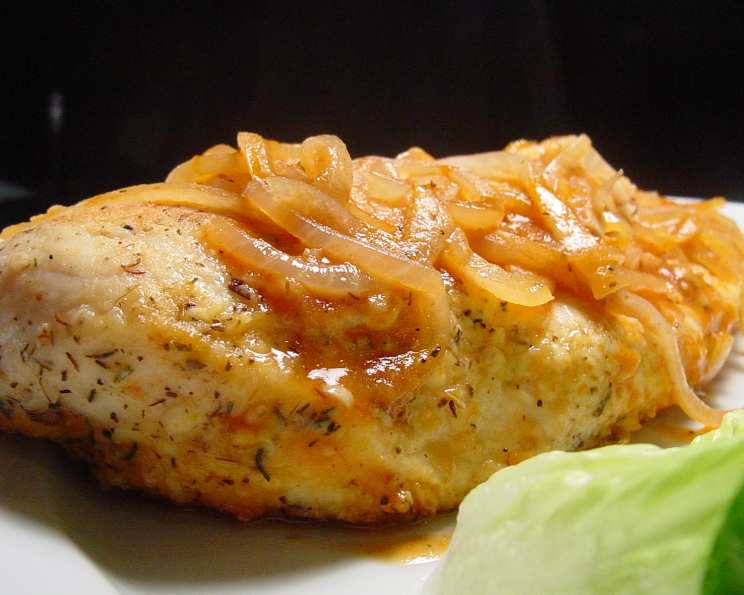
Chicken Lyonnaise: A Taste of Elegance
The first time I encountered Chicken Lyonnaise, it wasn’t in a bustling bistro in Lyon, but in my grandmother’s cozy kitchen. I remember the aroma of sautéed onions mingling with the herbaceous scent of thyme, filling the air with warmth and anticipation. She’d always hum a little French tune while she cooked, and the way the chicken glistened in the pan, coated in that rich, savory sauce, was pure magic. It was more than just a meal; it was a hug on a plate, a culinary memory etched in my heart forever.
Recipe Overview
- Prep Time: 15 minutes
- Cook Time: 20 minutes
- Total Time: 35 minutes
- Servings: 6
- Yield: 6 servings
- Dietary Type: None Specified
Ingredients
- 1/3 cup all-purpose flour
- 2 tablespoons fresh thyme (or 1 tablespoon dried)
- 1/2 teaspoon salt
- 1/2 teaspoon pepper
- 6 boneless chicken breasts (or chicken cutlets)
- 1 egg, beaten
- 3 tablespoons vegetable oil
- 2 onions, thinly sliced
- 1 garlic clove, minced
- 1/3 cup white wine
- 1 cup chicken stock (increase to 1 1/2 cups for more sauce)
- 2 teaspoons tomato paste
- 1/8 teaspoon granulated sugar
Equipment Needed
- Large, deep skillet
- Plastic bag
- Shallow dish or bowl for egg
- Oven
Instructions
-
Begin by preparing the chicken. In a plastic bag, combine the flour, 1 tablespoon of fresh thyme (or ½ teaspoon if using dried), salt, and pepper. Seal the bag and shake to mix the ingredients thoroughly.
-
One at a time, dip each chicken breast into the beaten egg, ensuring it’s fully coated. Then, place the coated chicken breast into the plastic bag with the flour mixture. Seal the bag and shake well until the chicken is evenly coated with the flour mixture.
-
In a large, deep skillet, heat 2 tablespoons of vegetable oil over medium-high heat. Make sure the oil is hot before adding the chicken.
-
Carefully place the floured chicken in the hot pan, skin side down if your chicken breasts have skin. Be cautious of splattering oil.
-
Cook the chicken, turning once, for approximately 10 minutes, or until the chicken is golden brown on both sides. Adjust the heat if necessary to prevent burning.
-
Remove the golden-brown chicken from the skillet and place it in a preheated 225°F (107°C) oven to keep it warm while you prepare the sauce. This prevents the chicken from drying out.
-
Reduce the heat under the skillet to medium. Add the remaining 1 tablespoon of vegetable oil to the skillet.
-
Stir in the thinly sliced onions, minced garlic, and the remaining 1 tablespoon of fresh thyme (or ½ teaspoon if using dried) into the skillet.
-
Cook, stirring frequently, for about 5 minutes, or until the onions become translucent and begin to soften.
-
Increase the heat to medium-high and continue to cook the onions, stirring often, for an additional 5 minutes, or until they are a rich golden brown and slightly caramelized. This step is crucial for developing the characteristic Lyonnaise flavor.
-
Pour the white wine into the pan. Use a spatula or spoon to scrape up any brown bits that have stuck to the bottom of the pan. This process, known as deglazing, adds depth and complexity to the sauce. Cook for about 1 minute, or until the wine has reduced by about half.
-
Stir in the chicken stock, tomato paste, and granulated sugar. Whisk together until the tomato paste is fully incorporated.
-
Bring the mixture to a boil and then reduce the heat to a simmer. Boil for approximately 2 minutes, or until the sauce begins to thicken slightly.
-
Return the cooked chicken to the pan, turning to coat it evenly with the simmering sauce.
-
Cook for an additional 5 minutes, or until the juices from the chicken run clear when pierced with a fork. Ensure the internal temperature of the chicken reaches 165°F (74°C) for food safety.
-
Serve immediately.
For Chicken Cutlets (optional): If you prefer to use chicken cutlets, cut each chicken breast horizontally into 2-3 pieces of approximately equal size. Cover each piece with plastic wrap and gently pound it to an even ½-inch thickness. Chicken cutlets cook more evenly and are generally more tender than whole chicken breasts. Reduce the initial cooking time in the skillet accordingly, keeping a close eye on doneness.
Expert Tips & Tricks
-
Thyme Time: Fresh thyme truly elevates this dish, but if dried is all you have, don’t hesitate to use it. Just remember that dried herbs have a more concentrated flavor, so reduce the amount accordingly.
-
Onion Finesse: The key to perfect Lyonnaise onions is patience. Don’t rush the caramelization process. Allow them to slowly turn golden brown to unlock their sweet, complex flavor.
-
Sauce Consistency: If you prefer a thicker sauce, you can add a cornstarch slurry (1 tablespoon cornstarch mixed with 2 tablespoons cold water) during the last few minutes of cooking.
-
Chicken Prep: Pat the chicken dry with paper towels before coating it with flour. This will help the flour adhere better and create a crispier crust.
Serving & Storage Suggestions
Chicken Lyonnaise is best served immediately while the chicken is still moist and the sauce is luscious. Garnish with a sprig of fresh thyme for an elegant touch. It pairs wonderfully with mashed potatoes, roasted vegetables (like asparagus or green beans), or a simple side salad.
Leftovers can be stored in an airtight container in the refrigerator for up to 3 days. To reheat, gently warm the chicken in a skillet over medium-low heat, adding a splash of chicken stock if the sauce has thickened too much. You can also reheat it in the microwave, but be careful not to overcook the chicken. Freezing is not recommended, as the texture of the chicken and sauce may change.
Nutritional Information
| Nutrient | Amount per Serving | % Daily Value |
|---|---|---|
| Calories | 390.3 kcal | N/A |
| Calories from Fat | 194 g | 50% |
| Total Fat | 21.6 g | 33% |
| Saturated Fat | 5.2 g | 25% |
| Cholesterol | 125 mg | 41% |
| Sodium | 370.8 mg | 15% |
| Total Carbohydrate | 11.4 g | 3% |
| Dietary Fiber | 1.1 g | 4% |
| Sugars | 2.7 g | 10% |
| Protein | 33.6 g | 67% |
Variations & Substitutions
-
Gluten-Free: Substitute the all-purpose flour with a gluten-free blend for a gluten-free version.
-
Wine Alternative: If you prefer not to use wine, you can substitute it with an equal amount of chicken stock or apple cider vinegar.
-
Herb Variations: Experiment with different herbs, such as rosemary or oregano, in addition to or instead of thyme.
-
Spicy Kick: Add a pinch of red pepper flakes to the sauce for a touch of heat.
-
Creamy Sauce: For a richer sauce, stir in a tablespoon of heavy cream or crème fraîche at the end of cooking.
FAQs (Frequently Asked Questions)
Q: Can I make this dish ahead of time?
A: While best served fresh, you can prepare the sauce ahead of time and store it in the refrigerator. When ready to serve, simply cook the chicken and add it to the reheated sauce.
Q: Can I use bone-in chicken instead of boneless chicken breasts?
A: Yes, you can use bone-in chicken thighs or drumsticks. Increase the cooking time accordingly to ensure the chicken is cooked through.
Q: What is the best way to tell if the chicken is cooked through?
A: The best way is to use a meat thermometer. Insert it into the thickest part of the chicken; it should read 165°F (74°C). Alternatively, you can cut into the chicken and check that the juices run clear.
Q: Can I use a different type of onion?
A: While yellow onions are traditional for Lyonnaise dishes, you can also use sweet onions or shallots for a slightly different flavor profile.
Q: What if my sauce is too thin?
A: If your sauce isn’t thickening, continue to simmer it for a few more minutes to allow it to reduce. You can also add a cornstarch slurry (1 tablespoon cornstarch mixed with 2 tablespoons cold water) to help thicken it.
Final Thoughts
Chicken Lyonnaise is more than just a recipe; it’s an invitation to create a little bit of French magic in your own kitchen. The combination of tender chicken, caramelized onions, and a flavorful wine sauce is simply irresistible. I encourage you to give this recipe a try and experience the joy of sharing a truly special meal with your loved ones. Don’t be afraid to experiment with variations and make it your own. And most importantly, savor every delicious bite! Pair it with a crisp glass of white wine and some crusty bread to soak up all that glorious sauce. Bon appétit!