
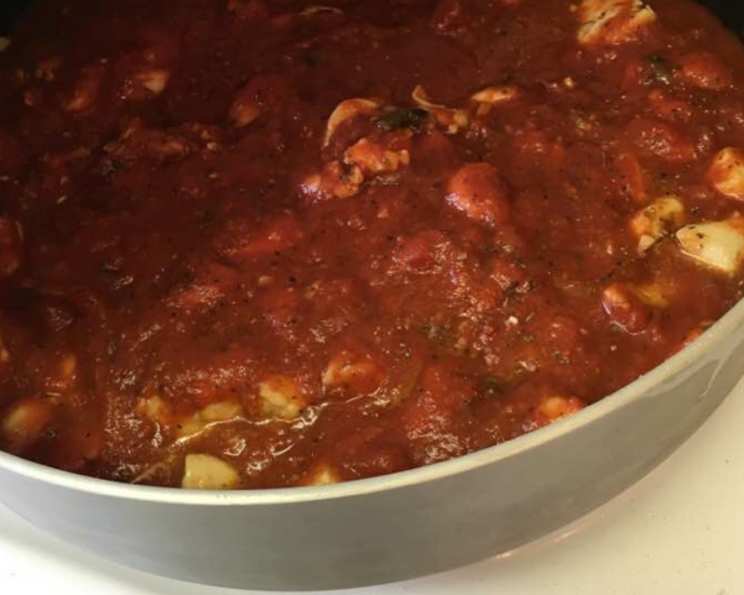
Chicken Marinara: A Taste of Sicilian Comfort
The aroma of simmering tomato sauce, infused with garlic and basil, has always been the very essence of home to me. I remember standing on a stool next to my grandmother, Nonna Emilia, in her tiny kitchen, mesmerized as she transformed simple ingredients into a sauce that tasted like pure love. The bubbling marinara, destined for a mountain of perfectly cooked pasta and some tender chicken, was the centerpiece of countless Sunday dinners. Each spoonful was a warm hug, a reminder of family, tradition, and the simple joy of sharing a delicious meal.
Recipe Overview
- Prep Time: 20 minutes
- Cook Time: 1 hour 15 minutes
- Total Time: 1 hour 35 minutes
- Servings: 6
- Yield: About 8 cups of sauce
- Dietary Type: Adaptable (see variations for Gluten-Free/Dairy-Free)
Ingredients
- 2 (28 ounce) cans crushed tomatoes
- 14 ounces water
- 5 garlic cloves
- 3 tablespoons tomato paste
- 1 tablespoon dried basil
- 1 lb boneless skinless chicken breast
- 2 tablespoons olive oil
- Salt and pepper to taste
- 1 large yellow onion, sliced (optional)
- 1 cup sliced mushrooms (optional)
- Parmesan cheese (optional, for serving)
- 1/4 cup red wine (optional)
- 16 ounces pasta (spaghetti, angel hair, penne, etc)
Equipment Needed
- Large skillet or pot
- Large bowl
- Lid for skillet or pot
- Pasta pot
Instructions
-
Begin by preparing your garlic. Mince the garlic cloves. In a large skillet or pot, heat 1 tablespoon of olive oil over medium heat. Add the minced garlic and sauté until lightly brown and fragrant, about 2-3 minutes. Be careful not to burn the garlic, as this will impart a bitter taste. Once browned, remove the garlic from the skillet and set aside.
-
Next, prepare the chicken. Cut the boneless skinless chicken breast into bite-size pieces.
-
Using the same skillet (no need to wash it, those garlic bits are flavor!), add the remaining 1 tablespoon of olive oil over medium heat. Add the chicken pieces, sliced onion (if using), and sliced mushrooms (if using). Cook until the chicken is white throughout and no longer pink inside. This should take approximately 5-7 minutes. Season generously with salt and pepper to your preference.
-
Add the tomato paste and the sautéed garlic back to the skillet. Mix well to coat the chicken and vegetables with the tomato paste.
-
Pour in the 2 cans of crushed tomatoes, dried basil, and water. Mix thoroughly to combine all ingredients.
-
Bring the sauce to a boil over medium-high heat. Once boiling, reduce the heat to low, cover the skillet or pot with a lid, and simmer the sauce for 1 hour. Stir the sauce occasionally to prevent sticking and burning. Season with additional salt and pepper as needed to adjust the flavor.
-
About halfway through the simmering process, after approximately 30 minutes, add the red wine (if using) to the sauce. Stir well to incorporate the wine and resume simmering with the lid on. The wine adds depth and complexity to the sauce, but it’s perfectly delicious without it too.
-
During the last fifteen minutes of the simmering time, cook the pasta according to the package directions. Be sure to salt the pasta water generously – this is crucial for properly seasoning the pasta itself.
-
Once the pasta is cooked al dente (tender but still firm to the bite), drain it well.
-
In a large bowl, pour the marinara sauce over the cooked pasta. Mix well to ensure that the pasta is evenly coated with the sauce.
-
Serve immediately. Sprinkle with parmesan cheese (if desired) before serving. A sprinkle of fresh basil would be a great addition too!
Expert Tips & Tricks
- For a richer flavor: Brown the chicken in batches to avoid overcrowding the pan. This will ensure that the chicken develops a nice sear.
- Spice it up: Add a pinch of red pepper flakes to the sauce for a subtle kick of heat.
- Fresh herbs: If you have fresh basil available, use about 1/4 cup of chopped fresh basil instead of dried basil. Add it during the last 15 minutes of simmering for the best flavor.
- Make ahead: The marinara sauce can be made ahead of time and stored in the refrigerator for up to 3 days. The flavors will actually meld and deepen over time.
- Fixing acidity: If the sauce tastes too acidic, add a pinch of sugar to balance the flavors.
- Adjusting Consistency: If the sauce is too thick, add a little more water until it reaches your desired consistency. If it’s too thin, simmer it uncovered for a longer period to allow it to reduce.
Serving & Storage Suggestions
Serve the Chicken Marinara hot, garnished with freshly grated parmesan cheese and a sprig of fresh basil (if available). This dish is fantastic served with a side of garlic bread or a simple green salad.
Leftovers can be stored in an airtight container in the refrigerator for up to 3 days. For longer storage, the sauce can be frozen for up to 2 months. To reheat, simply warm the sauce in a saucepan over medium heat or in the microwave until heated through. Add the cooked pasta to the reheated sauce, or serve the sauce over freshly cooked pasta. If frozen, thaw overnight in the refrigerator before reheating.
Nutritional Information
| Nutrient | Amount per Serving | % Daily Value* |
|---|---|---|
| Calories | 484 kcal | 24% |
| Total Fat | 7.1 g | 9% |
| Saturated Fat | 1.1 g | 6% |
| Cholesterol | 44 mg | 15% |
| Sodium | 686 mg | 30% |
| Total Carbohydrate | 76 g | 27% |
| Dietary Fiber | 6.7 g | 24% |
| Sugars | 12 g | N/A |
| Protein | 30 g | 60% |
| Vitamin A | ||
| Vitamin C | ||
| Calcium | ||
| Iron |
*Percent Daily Values are based on a 2,000 calorie diet. Your daily values may be higher or lower depending on your calorie needs.
Variations & Substitutions
- Gluten-Free: Use gluten-free pasta. Ensure all other ingredients are gluten-free as well.
- Dairy-Free: Omit the parmesan cheese. You can use a dairy-free parmesan alternative.
- Vegetarian: Substitute the chicken with grilled eggplant or zucchini.
- Spicy Marinara: Add 1/2 teaspoon of red pepper flakes to the sauce during simmering.
- Creamy Marinara: Stir in 1/4 cup of heavy cream or half-and-half during the last 5 minutes of simmering for a richer, creamier sauce. For a dairy-free option, use cashew cream.
- Fresh Tomato Marinara: In the summer, use fresh tomatoes! Roughly chop about 6-8 large ripe tomatoes and substitute them for the canned crushed tomatoes. You may need to adjust the cooking time depending on the juiciness of the tomatoes.
FAQs (Frequently Asked Questions)
Q: Can I use chicken thighs instead of chicken breasts?
A: Yes, you can substitute chicken thighs for chicken breasts. Chicken thighs will add a richer flavor to the sauce. Just make sure to trim any excess fat before cooking.
Q: How do I know when the marinara sauce is ready?
A: The sauce is ready when it has thickened slightly and the flavors have melded together. It should coat the back of a spoon easily.
Q: Can I add other vegetables to the sauce?
A: Absolutely! Feel free to add other vegetables such as bell peppers, zucchini, or carrots. Add them along with the onions and mushrooms.
Q: Can I freeze leftover marinara sauce?
A: Yes, leftover marinara sauce can be frozen in an airtight container for up to 2 months.
Q: What’s the best way to reheat frozen marinara sauce?
A: Thaw the sauce overnight in the refrigerator before reheating. Then, heat it in a saucepan over medium heat until heated through. You can also reheat it in the microwave.
Final Thoughts
Chicken Marinara is more than just a recipe; it’s an invitation to create memories, to gather around the table with loved ones, and to savor the simple joys of a home-cooked meal. This adaptable recipe is a blank canvas for your culinary creativity. So, don’t be afraid to experiment with different ingredients and make it your own. I encourage you to try this recipe, share it with your family and friends, and let the aroma of simmering marinara fill your home with warmth and love. And, of course, I’d love to hear your feedback and any variations you try! Buon appetito!