
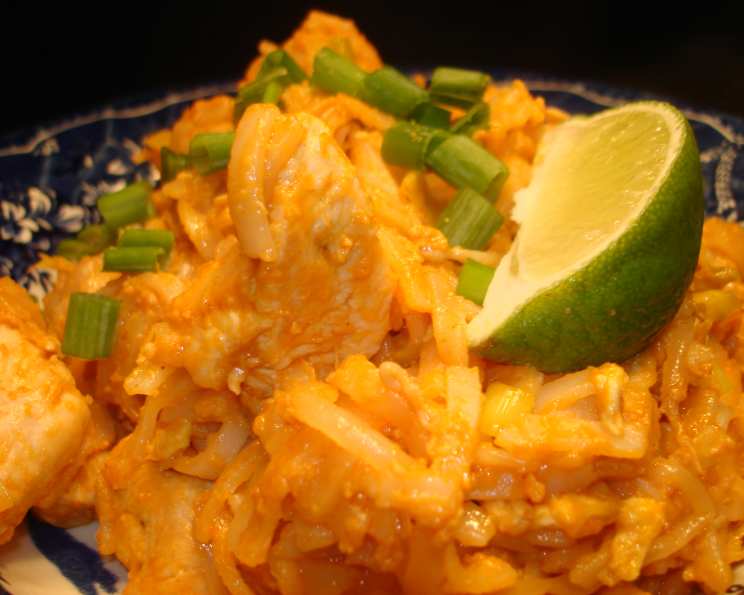
Chicken Pad Thai: A Flavorful Culinary Adventure
I’ll never forget my first taste of authentic Pad Thai from a bustling Bangkok street vendor. The vibrant combination of sweet, sour, salty, and savory flavors, along with the perfectly cooked noodles and crunchy peanuts, was an explosion of sensations that completely captivated me. Ever since that moment, I’ve been on a quest to recreate that unforgettable experience in my own kitchen, and this recipe comes incredibly close. This isn’t just a quick weeknight meal; it’s a journey to Southeast Asia, one delicious bite at a time.
Recipe Overview
- Prep Time: 15 minutes
- Cook Time: 20 minutes
- Total Time: 35 minutes
- Servings: 6
- Dietary Type: Can be Gluten-Free (see notes)
Ingredients
- 8 ounces Thai rice noodles (Thai Kitchen Brand- 1/2 box)
- 2 eggs
- 3 (6 -7 ounce) boneless chicken breasts
- 1/2 cup paad Thai sauce (“Thai Kitchen” Brand)
- 1/2 cup organic peanut sauce
- 2 tablespoons creamy peanut butter (Jiff)
- 6 scallions, diced
- 1/4 teaspoon garlic
- 1 lime (quartered)
- 1 cup bean sprouts
- 1 teaspoon red pepper flakes
- 2-3 tablespoons sriracha sauce
- 1/2 cup chopped dry roasted peanuts
- 6 tablespoons diced scallions (to garnish)
Ingredient Notes:
- For a gluten-free version, ensure your Pad Thai sauce and peanut sauce are certified gluten-free. Tamari can be used as a soy sauce alternative.
- Feel free to adjust the amount of sriracha to your spice preference.
Equipment Needed
- Large saute pan
- Small frying pan
- Large pot
- Colander
- Foreman grill (optional)
Instructions
-
Begin by cooking the chicken. You can either grill it on a Foreman grill and then transfer it to a large sauté pan, or you can sauté the chicken in the sauté pan itself. Once cooked, cut the chicken into cubes and return it to the pan.
-
In a separate small frying pan, scramble the two eggs until cooked through. Set the scrambled eggs aside.
-
Add the cooked chicken, garlic, diced scallions, red pepper flakes, creamy peanut butter, paad Thai sauce, organic peanut sauce, and sriracha sauce to the large sauté pan. Squeeze in the juice from 1/2 of the lime into the pan.
-
Simmer the mixture for 5-10 minutes, allowing the flavors to meld together.
-
While the sauce simmers, bring a large pot of water to a rapid boil. Once boiling, add 1/2 package (8 ounces) of Thai rice noodles. Remove the pot from the heat and stir the noodles occasionally, letting them sit in the hot water for 10 minutes.
-
After 10 minutes, drain the noodles in a colander and rinse them thoroughly with cold water to stop the cooking process and prevent sticking.
-
Add the drained noodles to the sauté pan with the chicken and sauce mixture. Toss the noodles to coat them evenly in the sauce and continue to cook for 3 minutes, ensuring everything is heated through.
-
Add the bean sprouts and scrambled egg to the pan. Cook for another 2 or 3 minutes, stirring constantly, until the bean sprouts are slightly softened and the egg is fully incorporated.
-
Taste the Pad Thai and adjust the sauce consistency if needed. If the mixture seems dry, add extra paad Thai sauce or organic peanut sauce to reach your desired sauciness.
-
Serve immediately, garnished with lime wedges, extra diced scallions, and crushed peanuts.
Expert Tips & Tricks
- To prevent the noodles from sticking together, toss them with a little oil after rinsing them with cold water.
- For an extra layer of flavor, try adding a splash of fish sauce to the sauce mixture while it simmers.
- If you’re using a gas stove, be mindful of the heat and adjust it as needed to prevent the sauce from burning.
- Prepare all your ingredients before you start cooking – this will make the process much smoother. This culinary technique is known as Mise en Place, “everything in its place.”
Serving & Storage Suggestions
Serve your Chicken Pad Thai immediately while it’s hot and the flavors are at their peak. Arrange the Pad Thai attractively on plates and garnish generously with lime wedges, diced scallions, and crushed peanuts.
Leftovers can be stored in an airtight container in the refrigerator for up to 3 days. To reheat, microwave in short intervals, stirring occasionally, until heated through. You may need to add a splash of water or extra sauce to prevent the noodles from drying out. Reheating in a pan on the stovetop is also an option. Freezing is not recommended as the noodles can become mushy upon thawing.
Nutritional Information
| Nutrient | Amount per Serving | % Daily Value |
|---|---|---|
| Calories | 466.8 kcal | N/A |
| Calories from Fat | 197 g | 42% |
| Total Fat | 21.9 g | 33% |
| Saturated Fat | 4.7 g | 23% |
| Cholesterol | 124.9 mg | 41% |
| Sodium | 328.6 mg | 13% |
| Total Carbohydrate | 40.7 g | 13% |
| Dietary Fiber | 3.7 g | 14% |
| Sugars | 2.8 g | 11% |
| Protein | 28 g | 55% |
Note: Nutritional information is an estimate and may vary based on specific ingredients used.
Variations & Substitutions
- Vegetarian Pad Thai: Substitute tofu for chicken. Extra firm tofu works best.
- Shrimp Pad Thai: Replace the chicken with peeled and deveined shrimp. Add the shrimp to the pan during the last few minutes of cooking to prevent overcooking.
- Spicier Pad Thai: Add extra red pepper flakes or a dash of chili oil for an extra kick.
- Nut-Free Pad Thai: Omit the peanut butter and peanut sauce, and use sunflower seed butter or tahini instead. Replace the peanut garnish with toasted sesame seeds.
FAQs (Frequently Asked Questions)
Q: Can I prepare the Pad Thai sauce ahead of time?
A: Yes, you can prepare the Pad Thai sauce a day or two in advance and store it in the refrigerator. This will allow the flavors to meld together even more.
Q: What type of rice noodles should I use?
A: Use flat, thin Thai rice noodles for the most authentic Pad Thai experience. Look for “Thai Kitchen” brand, as specified in the ingredient list.
Q: Can I use a different type of protein?
A: Absolutely! Feel free to substitute chicken with tofu, shrimp, pork, or any other protein you prefer. Adjust cooking times accordingly.
Q: How do I prevent the noodles from becoming sticky?
A: Rinsing the cooked noodles with cold water is crucial for preventing them from sticking together. Tossing them with a little oil after rinsing can also help.
Q: Can I add other vegetables?
A: Yes, feel free to add other vegetables such as carrots, bell peppers, or broccoli to your Pad Thai. Add them to the pan along with the bean sprouts.
Final Thoughts
This Chicken Pad Thai recipe is a fantastic way to bring the exotic flavors of Thailand into your home kitchen. Don’t be intimidated by the list of ingredients; the process is surprisingly simple, and the results are incredibly rewarding. Whether you’re whipping this up for a quick weeknight dinner or serving it at a dinner party, I’m confident that it will be a hit. So, gather your ingredients, sharpen your knives, and get ready to embark on a culinary adventure. I encourage you to try this recipe and share your feedback! For a perfect pairing, serve alongside a refreshing Thai iced tea or a crisp Sauvignon Blanc. Enjoy!