
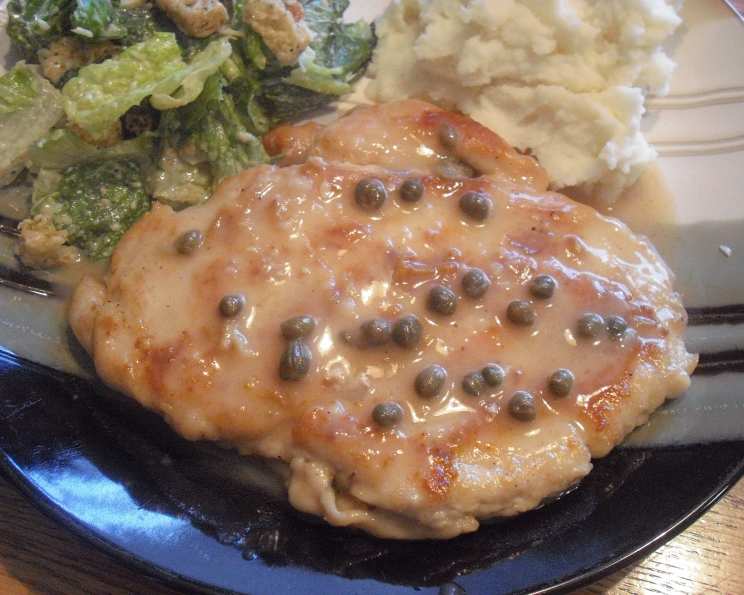
Chicken Piccata: A Symphony of Lemon, Butter, and Capers
The first time I tasted Chicken Piccata, I was a wide-eyed culinary student, intimidated by the seemingly complex world of sauces. One bite of that tender chicken, bathed in a bright, tangy, and utterly luscious sauce, and my fears melted away like butter in a hot pan. The vibrant lemon, the salty capers, the richness of the butter – it was a culinary revelation, a perfectly balanced dance of flavors that sparked my lifelong love affair with simple, yet exquisite, cooking. This dish isn’t just food; it’s a memory, a comfort, and a testament to the transformative power of good ingredients handled with care.
Recipe Overview
- Prep Time: 15 minutes
- Cook Time: 15 minutes
- Total Time: 30 minutes
- Servings: 4
- Dietary Type: Not Gluten-Free
Ingredients
- 4 boneless skinless chicken breast halves
- 3 tablespoons butter, room temperature
- 1 1⁄2 teaspoons all-purpose flour
- Additional all-purpose flour for dredging
- 2 tablespoons olive oil
- 1⁄3 cup dry white wine (such as Pinot Grigio or Sauvignon Blanc)
- 1⁄4 cup fresh lemon juice
- 1⁄4 cup chicken stock
- 1⁄4 cup drained capers
- 1⁄4 cup chopped fresh parsley
- Salt and pepper to taste
Equipment Needed
- Plastic wrap
- Meat pounder or rolling pin
- Small bowl
- Shallow baking dish
- 2 large heavy skillets
Instructions
- Prepare the Chicken: Place each chicken breast between two large sheets of plastic wrap. Using a meat pounder or rolling pin, lightly pound the chicken to an even 1/4-inch thickness. This ensures even cooking and tenderizes the meat.
- Season: Sprinkle the flattened chicken generously with salt and pepper. Don’t be shy; seasoning is key to a flavorful dish.
- Make the Beurre Manié: In a small bowl, mix 1 tablespoon of butter (at room temperature for easy mixing) and 1 1/2 teaspoons of all-purpose flour until smooth. This mixture, called a beurre manié, will be used to thicken the sauce. Set aside.
- Dredge the Chicken: Place additional flour in a shallow baking dish. Dip each chicken breast into the flour to coat it evenly, shaking off any excess. A light coating of flour helps the chicken brown beautifully and creates a slight thickening effect in the sauce.
- Sear the Chicken: Heat 1 tablespoon of olive oil in each of the 2 large heavy skillets over medium-high heat. The skillets should be hot enough to sizzle when a drop of water is added.
- Cook the Chicken: Add 2 chicken breasts to each skillet, ensuring they are not overcrowded. Cook the chicken until golden brown and cooked through, about 3-4 minutes per side. The internal temperature should reach 165°F (74°C). Avoid overcooking, which can make the chicken dry.
- Rest the Chicken: Transfer the cooked chicken to a platter and tent it with foil to keep it warm while you prepare the sauce.
- Deglaze the Pan: In one of the skillets (scrape any browned bits from the bottom – these add tons of flavor!), bring the dry white wine, fresh lemon juice, and chicken stock to a boil over medium-high heat. The wine will deglaze the pan, lifting all those delicious browned bits.
- Thicken the Sauce: Whisk in the butter-flour mixture (beurre manié) and continue to boil the sauce until it thickens slightly, about 2 minutes. Whisk constantly to prevent lumps from forming.
- Finish the Sauce: Stir in the drained capers, chopped fresh parsley, and the remaining 2 tablespoons of butter. The butter adds richness and a beautiful shine to the sauce.
- Season to Taste: Season the sauce to taste with salt and pepper. Remember that the capers are already salty, so adjust accordingly.
- Serve: Pour the luscious sauce generously over the chicken and serve immediately.
Expert Tips & Tricks
- Pounding Perfection: Evenly pounded chicken cooks faster and more uniformly. Take your time with this step for the best results.
- Don’t Overcrowd the Pan: Cooking the chicken in batches ensures proper browning. Overcrowding lowers the pan temperature and results in steamed, rather than seared, chicken.
- Fresh is Best: Use fresh lemon juice for the brightest flavor. Bottled juice simply doesn’t compare.
- Wine Selection: A crisp, dry white wine like Pinot Grigio or Sauvignon Blanc works best in this recipe. Avoid sweet wines. You can substitute with extra chicken broth if avoiding alcohol.
- Room Temperature Butter: Using room temperature butter for the beurre manié ensures it mixes smoothly with the flour.
- Adjust the Lemon: Taste the sauce and adjust the lemon juice to your preference. Some people prefer a more tart piccata.
Serving & Storage Suggestions
Chicken Piccata is best served immediately, while the chicken is still tender and the sauce is vibrant. It pairs beautifully with pasta (such as linguine or spaghetti), rice, mashed potatoes, or roasted vegetables like asparagus or broccoli.
Leftovers can be stored in an airtight container in the refrigerator for up to 3 days. Reheat gently in a skillet over low heat, adding a splash of chicken broth if needed to prevent the sauce from drying out. Freezing is not recommended, as the sauce can become grainy upon thawing.
Nutritional Information
| Nutrient | Amount per Serving | % Daily Value |
|---|---|---|
| Calories | 302 kcal | – |
| Calories from Fat | 168 kcal | – |
| Total Fat | 18.8 g | 28% |
| Saturated Fat | 7.2 g | 35% |
| Cholesterol | 98.9 mg | 32% |
| Sodium | 492.7 mg | 20% |
| Total Carbohydrate | 3.5 g | 1% |
| Dietary Fiber | 0.5 g | 1% |
| Sugars | 0.9 g | – |
| Protein | 26 g | 52% |
Note: Nutritional information is an estimate and may vary based on specific ingredients and cooking methods.
Variations & Substitutions
- Gluten-Free Chicken Piccata: Substitute the all-purpose flour with a gluten-free blend like rice flour or tapioca starch for dredging. Ensure your chicken stock is also gluten-free.
- Dairy-Free Chicken Piccata: Replace the butter with a plant-based butter alternative. Olive oil can also be used, but the flavor will be slightly different.
- Herb Variations: Experiment with different herbs, such as oregano, thyme, or chives, in addition to or instead of parsley.
- Spice it Up: Add a pinch of red pepper flakes to the sauce for a touch of heat.
- Mushroom Piccata: Add sliced mushrooms to the skillet after cooking the chicken and sauté until softened before adding the wine, lemon juice, and chicken stock.
FAQs (Frequently Asked Questions)
Q: Can I use chicken thighs instead of chicken breasts?
A: Yes, you can substitute boneless, skinless chicken thighs. They may require slightly longer cooking time, so ensure they reach an internal temperature of 165°F (74°C).
Q: What if I don’t have dry white wine?
A: You can substitute the white wine with additional chicken stock or vegetable broth. Add a tablespoon of white wine vinegar for a similar acidity.
Q: Can I make this ahead of time?
A: The chicken can be pounded and dredged ahead of time and stored in the refrigerator. The sauce is best made fresh just before serving.
Q: The sauce is too thin. How can I thicken it?
A: Whisk a small amount of cornstarch with cold water (a slurry) and add it to the sauce while it’s simmering. Continue to simmer until the sauce reaches the desired consistency.
Q: What’s the best way to keep the chicken warm while making the sauce?
A: Tent the platter of cooked chicken loosely with foil. You can also place it in a warm oven (around 200°F or 95°C) for a short period.
Final Thoughts
Chicken Piccata is a dish that proves simplicity can be truly extraordinary. Don’t be intimidated by the fancy name; this recipe is surprisingly easy to master. I encourage you to try it, experiment with the variations, and make it your own. Share your creations and any tips you discover with fellow food lovers. Serve it with a crisp glass of white wine and some crusty bread to soak up all that delicious sauce. Bon appétit!