
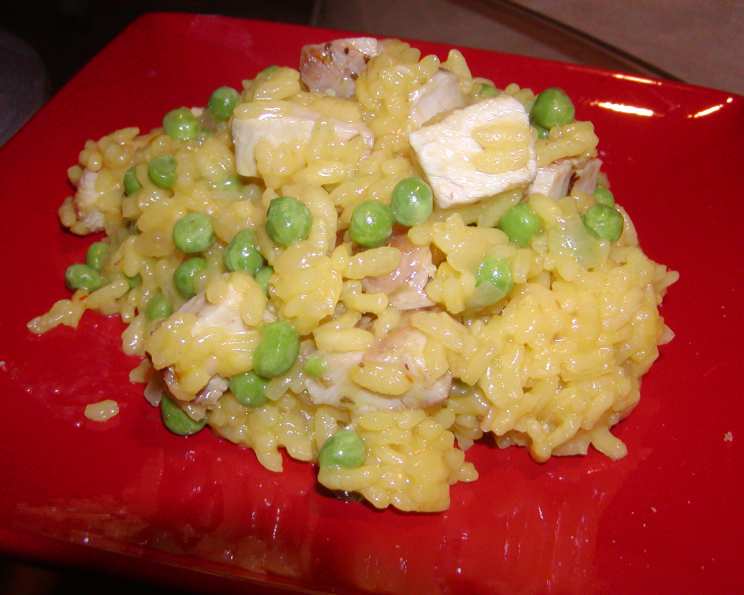
Creamy, Dreamy Chicken Saffron Risotto (Low Fat!)
The aroma of saffron always transports me back to a tiny trattoria in Venice. I was a wide-eyed culinary student, and the chef, a woman with hands that moved like seasoned dancers, shared her secrets to the perfect risotto. The golden hue, the subtle floral notes, the creamy texture – it was pure magic. This version, lighter on the fat, brings that same magic to your table without compromising on flavor or indulgence. It’s a hug in a bowl, perfect for a cozy night in.
Recipe Overview
- Prep Time: 15 minutes
- Cook Time: 40 minutes
- Total Time: 55 minutes
- Servings: 4
- Yield: Approximately 6 cups
- Dietary Type: Low Fat
Ingredients
- 1 1⁄4 cups arborio rice
- 4 cups chicken stock
- 300 g chicken breasts, all fat removed and lightly cooked
- 1 leek, chopped finely (or onion)
- 1⁄2 cup chicken stock, extra
- 12 saffron strands
- 1 lemon, zest of
- 1 tablespoon lemon juice
- 1 cup frozen peas
Equipment Needed
- Large skillet or saucepan
- Wooden spoon
- Measuring cups and spoons
- Cutting board
- Sharp knife
Instructions
-
Begin by preparing your ingredients. Ensure the chicken breasts are trimmed of all fat and lightly cooked. I like to poach them gently in seasoned water or stock until just cooked through. Once cooled slightly, shred or cut into bite-sized pieces. Finely chop the leek (or onion if using) and measure out your arborio rice, chicken stock, and frozen peas. Zest and juice the lemon. Have your saffron strands ready.
-
Now, the magic begins. In a large skillet or saucepan over medium heat, add the 1/2 cup of extra chicken stock. This will act as your “oil” for sautéing, keeping the recipe low-fat.
-
Add the finely chopped leek (or onion) to the pan and sauté, stirring frequently, until softened and translucent. This should take about 5-7 minutes. Add more stock, a tablespoon at a time, if the leek starts to stick to the pan or brown too quickly. You want them soft and slightly sweet, not burned.
-
Add the saffron strands to the softened leek. Stir to coat the leek with the saffron-infused stock. The stock should start to turn a beautiful golden hue.
-
Add the arborio rice to the pan. Stir continuously for about 2 minutes, ensuring that each grain of rice is coated with the saffron-infused stock. This toasting process is crucial for developing the creamy texture of the risotto.
-
In a separate saucepan, bring the 4 cups of chicken stock to a gentle simmer. Keep it warm over low heat. This warm stock is essential for the gradual addition to the rice.
-
Ladle one cup of the warm chicken stock into the rice mixture. Stir gently but constantly until the stock is almost completely absorbed by the rice. You should still see a slight amount of liquid, but the rice should look plump and hydrated.
-
Continue adding the chicken stock, one cup at a time, stirring continuously after each addition until the liquid is almost completely absorbed. This process is key to releasing the starches in the rice, creating that signature creamy risotto texture. Resist the urge to add more stock at once, as this will prevent the rice from cooking properly.
-
After about 20-25 minutes of adding stock, or when the rice is almost cooked through but still has a slight bite (al dente), add the frozen peas, the cooked chicken pieces, the lemon zest, and the lemon juice.
-
Stir everything together gently and cook for another 2 minutes, allowing the peas to heat through and the flavors to meld. The risotto should be creamy and slightly loose, not dry or clumpy.
-
Remove the risotto from the heat and let it rest for a minute or two before serving. This allows the flavors to settle and the texture to become even creamier.
-
Serve immediately. Traditionally, risotto is served on its own, but a sprinkle of Parmesan cheese (optional) can add a touch of richness for those who desire it.
Expert Tips & Tricks
- Use high-quality arborio rice: This is essential for achieving the right creamy texture.
- Don’t rinse the rice: You want to keep the starches intact for that signature risotto creaminess.
- Use warm stock: Cold stock will lower the temperature of the rice and slow down the cooking process.
- Stir constantly: This releases the starches and prevents the rice from sticking to the bottom of the pan.
- Don’t overcook the rice: The risotto should be al dente, with a slight bite to it.
- Adjust seasoning: Taste and adjust the seasoning as needed. Salt and pepper are your friends!
- Make it ahead (partially): You can cook the risotto up to the point of adding the peas and chicken, then chill it. When ready to serve, add a little extra stock and heat through, stirring until creamy. Then, add the peas, chicken, lemon zest, and lemon juice as directed.
Serving & Storage Suggestions
Serve the Chicken Saffron Risotto immediately in warmed bowls. Garnish with a sprig of fresh parsley or a lemon wedge for a pop of color. Leftovers can be stored in an airtight container in the refrigerator for up to 3 days. Reheat gently in a saucepan over low heat, adding a splash of stock or water to loosen it up if necessary. You can also microwave it, but be careful not to overcook it. Risotto doesn’t freeze well, as the texture can change upon thawing.
Nutritional Information
| Nutrient | Amount per Serving | % Daily Value* |
|---|---|---|
| Calories | 380 kcal | 19% |
| Total Fat | 6g | 8% |
| Saturated Fat | 1.5g | 8% |
| Cholesterol | 75mg | 25% |
| Sodium | 550mg | 24% |
| Total Carbohydrate | 65g | 24% |
| Dietary Fiber | 4g | 16% |
| Sugars | 5g | – |
| Protein | 25g | 50% |
*Based on a 2000 calorie diet.
Variations & Substitutions
- Vegetarian/Vegan: Substitute vegetable broth for chicken stock and omit the chicken. Add roasted vegetables like butternut squash or mushrooms for extra flavor and texture. Nutritional yeast can mimic the cheesy flavor.
- Seafood Risotto: Replace the chicken with shrimp, scallops, or mussels.
- Mushroom Risotto: Add sautéed mushrooms (such as cremini, shiitake, or porcini) along with the leek.
- Spring Risotto: Use asparagus, spring onions, and fresh herbs like mint and parsley.
- Gluten-Free: This recipe is naturally gluten-free as long as you use gluten-free chicken stock.
- Spice it up: Add a pinch of red pepper flakes for a subtle kick.
FAQs (Frequently Asked Questions)
Q: Can I use a different type of rice?
A: Arborio rice is specifically used for risotto because of its high starch content, which creates the creamy texture. Other types of rice won’t yield the same results.
Q: What if I run out of chicken stock?
A: You can use hot water in a pinch, but the flavor will be less rich. Add a bouillon cube or a teaspoon of chicken flavor concentrate to the water if possible.
Q: How do I know when the risotto is done?
A: The rice should be al dente, meaning it has a slight bite to it. The risotto should be creamy and slightly loose, not dry or soupy.
Q: Can I add wine to the risotto?
A: Yes, you can add 1/2 cup of dry white wine after toasting the rice. Let it evaporate before adding the stock.
Q: Why is my risotto mushy?
A: You may have overcooked the rice or added too much stock at once. Be sure to stir frequently and add the stock gradually.
Final Thoughts
This Chicken Saffron Risotto is more than just a recipe; it’s an invitation to slow down, savor the moment, and create something truly special. Don’t be intimidated by the stirring – embrace the process and enjoy the aroma filling your kitchen. Whether you’re cooking for a romantic dinner or a comforting family meal, this dish is sure to impress. Give it a try, experiment with your favorite variations, and let me know what you think! Pair it with a crisp white wine like Pinot Grigio or Sauvignon Blanc for a truly unforgettable experience. Buon appetito!