
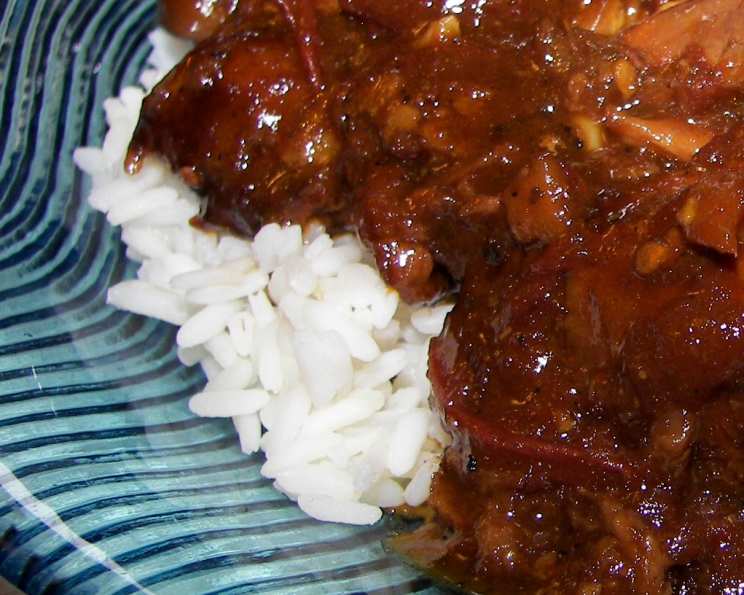
Chicken Semur: A Taste of Java in Your Kitchen
My strongest memories of Java are tied to the scents and flavors that hung heavy in the humid air. I remember vividly the tiny warungs (roadside cafes) bustling with activity, the constant sizzle of cooking oil, and the fragrant steam rising from huge woks. It was at one such cafe, somewhere between Yogyakarta and Solo, that I first tasted Chicken Semur. The rich, dark gravy clinging to tender chicken pieces was simply unforgettable, and the friendly cook graciously shared her family recipe, a treasure I’ve cherished ever since. This recipe attempts to recapture that taste of Java.
Recipe Overview
- Prep Time: 20 minutes
- Cook Time: 1 hour 30 minutes
- Total Time: 1 hour 50 minutes
- Servings: 6
- Dietary Type: Dairy-Free
Ingredients
- 1 kg chicken pieces (thigh & drumsticks are best)
- 1 brown onion
- 2 garlic cloves
- 2 cm piece of gingerroot
- 1 tablespoon ground nutmeg
- 1 tablespoon ground pepper
- 250 g tomatoes, sliced into thin wedges
- 1/4 cup sweet soy sauce
- 2 tablespoons palm sugar (gula jawa)
- 1/4 cup coconut cream
- 3 tablespoons vegetable oil
Equipment Needed
- Wok or large frying pan
- Chopping board
- Knife
- Measuring spoons and cups
Instructions
- Begin by preparing your aromatics. Mince the onion, peeled garlic, and ginger. Set aside.
- In a wok or large frying pan, heat the vegetable oil over medium-high heat.
- Brown the chicken pieces in the hot oil. Work in batches if necessary to avoid overcrowding the pan, which can lower the temperature and result in steamed, rather than browned, chicken. Remove the browned chicken pieces from the wok and set aside.
- Drain off most of the oil from the wok, leaving approximately 1 tablespoon.
- Add the minced onion, garlic, and ginger mixture to the wok and sauté for about 10 minutes, stirring frequently to prevent browning. The goal is to soften the aromatics and release their fragrance.
- Add the ground nutmeg and ground pepper to the wok and continue to sauté for another minute, allowing the spices to bloom and become more fragrant.
- Add the sliced tomatoes to the wok and continue to sauté for approximately 10 minutes, or until the tomatoes start to break down and release their juices. This step is crucial for creating a rich and flavorful base for the semur.
- Return the browned chicken pieces to the wok.
- Add the sweet soy sauce and palm sugar to the wok. Add salt to taste. Remember that soy sauce is already salty, so start with a small amount and adjust as needed.
- Bring the mixture to a boil, then reduce the heat to low, cover the wok, and simmer for approximately 1 to 1 1/2 hours, or until the chicken is very tender and the sauce has thickened. The exact cooking time will depend on the size of the chicken pieces. Check periodically to ensure the sauce isn’t sticking to the bottom of the wok; add a splash of water if necessary.
- After simmering, add the coconut cream to the wok and bring the mixture back to heat. Do not allow it to boil vigorously, as this can cause the coconut cream to curdle. Do not put the lid back on as the coconut milk will curdle.
- Simmer gently for a few more minutes, allowing the coconut cream to meld with the other flavors.
- Serve hot with plain steamed rice.
Expert Tips & Tricks
- Browning is key: Don’t skip the step of browning the chicken. It adds depth of flavor to the finished dish.
- Palm sugar is important: Palm sugar (gula jawa) has a unique caramel-like flavor that is essential to authentic Semur. If you can’t find it, you can substitute brown sugar, but the flavor will be slightly different.
- Low and slow: Simmering the chicken at a low temperature for a long time is what makes it incredibly tender and allows the flavors to meld together beautifully.
- Adjust the sweetness: The amount of palm sugar can be adjusted to your preference. If you prefer a less sweet Semur, reduce the amount of palm sugar slightly.
- Don’t overcook the coconut milk: Adding the coconut milk at the end and simmering gently prevents it from curdling.
Serving & Storage Suggestions
Serve Chicken Semur hot, garnished with fresh cilantro or a sprinkle of fried shallots, alongside a generous serving of steamed white rice. The rich, savory sauce is perfect for soaking into the rice.
Leftovers can be stored in an airtight container in the refrigerator for up to 3 days. Reheat gently on the stovetop or in the microwave until heated through. Adding a splash of water or chicken broth during reheating can help to keep the chicken moist and prevent the sauce from drying out. While freezing is possible, the texture of the chicken and the sauce may change slightly upon thawing.
Nutritional Information
Please note that the following nutritional information is an estimate and may vary based on specific ingredients and portion sizes.
| Nutrient | Amount per Serving | % Daily Value |
|---|---|---|
| Calories | 450 kcal | 23% |
| Total Fat | 30g | 46% |
| Saturated Fat | 12g | 60% |
| Cholesterol | 130mg | 43% |
| Sodium | 200mg | 9% |
| Total Carbohydrate | 15g | 5% |
| Dietary Fiber | 2g | 8% |
| Sugars | 8g | – |
| Protein | 35g | 70% |
Variations & Substitutions
- Spicy Semur: Add a chopped red chili pepper or a teaspoon of chili flakes to the onion mixture for a spicier version of Semur.
- Vegetarian Semur: Substitute the chicken with firm tofu or tempeh for a vegetarian option. Adjust the cooking time accordingly.
- Potato Semur: Add diced potatoes along with the chicken for a heartier meal.
- Egg Semur: Hard-boiled eggs can be added during the last 30 minutes of cooking time. Gently prick the eggs with a fork to allow them to absorb the flavors of the sauce.
FAQs (Frequently Asked Questions)
Q: Can I use chicken breasts instead of thighs and drumsticks?
A: Yes, you can, but keep in mind that chicken breasts tend to dry out more easily. Reduce the cooking time accordingly to avoid overcooking them.
Q: Can I use a different type of soy sauce?
A: Sweet soy sauce (kecap manis) is crucial for the flavor of Semur. Using regular soy sauce will result in a very different flavor profile. If you cannot find sweet soy sauce, you can try adding a little molasses or brown sugar to regular soy sauce.
Q: How do I know when the chicken is cooked through?
A: The chicken is cooked through when the internal temperature reaches 165°F (74°C). You can check this with a meat thermometer. The chicken should also be very tender and easily pierced with a fork.
Q: Can I make this in a slow cooker?
A: Yes, you can adapt this recipe for a slow cooker. Brown the chicken and sauté the aromatics as directed, then transfer everything to the slow cooker. Cook on low for 6-8 hours, or on high for 3-4 hours. Add the coconut milk during the last 30 minutes of cooking.
Q: What if my sauce is too thin?
A: If the sauce is too thin after simmering, you can remove the chicken pieces and simmer the sauce over medium heat until it thickens to your desired consistency. You can also thicken it with a cornstarch slurry (1 tablespoon cornstarch mixed with 2 tablespoons cold water).
Final Thoughts
Chicken Semur is more than just a recipe; it’s a culinary journey to the heart of Java. Don’t be intimidated by the slightly longer cooking time. The resulting flavors are well worth the effort. Gather your ingredients, embrace the aromatic spices, and allow yourself to be transported to a bustling roadside cafe in Indonesia. I hope you enjoy this dish as much as I do, and I encourage you to experiment with variations and make it your own. I’d love to hear your feedback and see your creations! Pair this dish with a crisp cucumber salad for a refreshing contrast to the rich flavors of the semur. Selamat makan (Enjoy your meal)!