
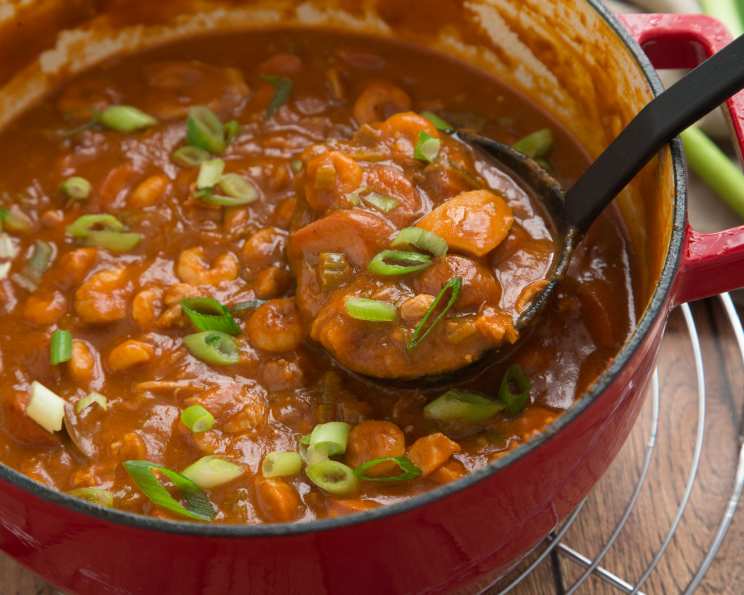
Chicken, Shrimp, and Sausage Gumbo: A Taste of Louisiana
The scent of gumbo always takes me back to my grandmother’s kitchen in New Orleans. I remember standing on a stool, mesmerized, as she stirred a dark roux, the very heart of this iconic dish. The rich aroma, a symphony of spices and seafood, promised a meal that was both comforting and deeply flavorful. It was more than just food; it was a connection to family, tradition, and the vibrant culture of Louisiana.
Recipe Overview
- Prep Time: 45 minutes
- Cook Time: 3 hours 45 minutes
- Total Time: 4 hours 30 minutes
- Servings: 14-18
- Yield: Large Pot of Gumbo
- Dietary Type: Varies based on sausage type – can be dairy-free. Not gluten-free.
Ingredients
- 1 lb kielbasa, sliced into 1/2 inch thick medallions
- 1 lb andouille sausage, sliced into 1/2 inch thick medallions
- 2 lbs boneless, skinless chicken thighs, cut into bite-size pieces
- 2 lbs shrimp, peeled and deveined (save the shells to make a stock)
- 2 cups cold water
- 1/4 cup Creole seasoning, divided (such as Tony Chachere’s)
- 3/4 cup vegetable oil
- 1 cup all-purpose flour
- 1 1/2 cups onions, small dice
- 1 cup green bell pepper, small dice
- 1 cup celery, small dice
- 2 tablespoons garlic, minced (or to taste)
- 8 ounces tomato paste
- 3 bay leaves
- 96 ounces chicken broth
- 1-2 teaspoons cayenne pepper (more or less to taste)
- 1 bunch scallions, small dice
- Cooked long-grain rice (as much as you think you’ll need)
- File powder (served on the side)
Equipment Needed
- Large skillet
- Small saucepan
- 12-quart heavy-bottom stock pot
- Wooden spoon
- Strainer
- Serving bowls
Instructions
- In a large skillet, brown both the kielbasa and andouille sausage over medium-low heat. Work in batches if needed to avoid overcrowding the pan. This step renders some of the fat from the sausage, adding depth of flavor to the gumbo. Set the browned sausages aside until later.
- In a small saucepan, combine the shrimp shells with 2 cups of cold water. Simmer the mixture, covered, for 20 minutes. Remove from the heat and let it sit, still covered, for another 20 minutes. This allows the flavors to fully infuse into the water, creating a rich shrimp stock. Strain the stock, discarding the shells, and reserve the stock for later use.
- In a bowl, season the chicken and shrimp with 2-3 tablespoons of Creole seasoning. Ensure that both are thoroughly coated. Set aside.
- In a 12-quart heavy-bottom stock pot, heat the vegetable oil over medium/medium-low heat. Once the oil is hot, add the flour all at once. This is the start of your roux.
- Stir constantly with a wooden spoon until the roux turns a dark chocolate color. This process will take approximately 20-30 minutes. Be patient and do not rush this step by increasing the heat, as the flour will burn quickly and easily. Burnt roux will ruin the entire gumbo. Exercise caution as splattering may occur, and hot roux can cause burns. Constant stirring is crucial for even cooking and preventing scorching. The darker the roux, the richer and nuttier the flavor of the gumbo will be.
- Add the onions, green bell pepper, celery, and garlic to the pot. Continue stirring constantly until the vegetables soften, about 5-10 minutes. This mixture will form a thick paste with the roux.
- Add the bay leaves and stir in the tomato paste. Cook for a couple of minutes, stirring constantly, to allow the tomato paste to caramelize slightly, deepening its flavor.
- Pour in the chicken broth and the reserved shrimp stock, stirring until the roux is completely combined and there are no lumps.
- Add the browned sausages, the remaining Creole seasoning, and the cayenne pepper. Increase the heat to bring the mixture to a soft boil for about 10 minutes.
- Reduce the heat to a simmer, add the uncooked chicken, and cover the pot. Simmer for 30 minutes, allowing the chicken to cook through and infuse its flavor into the gumbo.
- Check the consistency of the gumbo. If it is too thick, add a little water or chicken broth to thin it out. If it’s too thin, simmer uncovered for a while longer to let it reduce.
- Simmer for another 15-20 minutes, allowing the flavors to meld together.
- Add the shrimp and stir. The shrimp will cook very quickly, usually within 2-3 minutes. As soon as they turn pink and opaque, the gumbo is ready to serve. Overcooked shrimp will become rubbery, so watch them carefully.
- To serve, place a pressed scoop of cooked long-grain rice in the middle of a bowl. An ice cream scoop works well for this, creating a neat, rounded presentation. Ladle the gumbo around and over the top of the rice.
- Sprinkle some small diced scallions on top for a fresh, vibrant garnish. Serve with file powder on the side, allowing guests to add it to their liking.
Expert Tips & Tricks
- Roux is Key: Don’t rush the roux! A properly made roux is the foundation of a great gumbo. Low and slow is the way to go.
- Shrimp Stock Boost: Using homemade shrimp stock, or even store-bought seafood stock, makes a world of difference. It intensifies the seafood flavor.
- Day-Old Gumbo: Like many stews, gumbo often tastes even better the next day as the flavors continue to meld.
- Spice Level: Adjust the amount of cayenne pepper to your preferred spice level. Start with less and add more to taste.
- Thickening Options: If you prefer a thicker gumbo, you can add a small amount of okra during the simmering process. Okra will naturally thicken the broth.
Serving & Storage Suggestions
Serve the gumbo hot, ladled over rice, and garnished with scallions and file powder. A side of crusty bread is also a great addition for soaking up the delicious broth.
Leftover gumbo should be cooled completely before storing it in an airtight container in the refrigerator. It will last for 3-4 days. For longer storage, freeze the gumbo in freezer-safe containers for up to 2-3 months.
To reheat, thaw the gumbo in the refrigerator overnight if frozen. Reheat gently in a saucepan over medium heat, stirring occasionally, until heated through. You may need to add a little water or broth if the gumbo has thickened during storage.
Nutritional Information
| Nutrient | Amount per Serving | % Daily Value |
|---|---|---|
| Calories | 534 kcal | N/A |
| Calories from Fat | 306 g | 57% |
| Total Fat | 34 g | 52% |
| Saturated Fat | 8.8 g | 43% |
| Cholesterol | 175.4 mg | 58% |
| Sodium | 1885.8 mg | 78% |
| Total Carbohydrate | 17.3 g | 5% |
| Dietary Fiber | 1.9 g | 7% |
| Sugars | 4.8 g | N/A |
| Protein | 38.3 g | 76% |
Note: Nutritional information is an estimate and may vary based on specific ingredients and serving sizes.
Variations & Substitutions
- Seafood Gumbo: Increase the amount of shrimp, and add crab meat and oysters during the last few minutes of cooking for a truly decadent seafood gumbo.
- Spicy Andouille: For extra heat, use a spicier andouille sausage.
- Vegetarian Gumbo: Substitute the chicken and sausage with smoked tofu or vegetarian sausage. Use vegetable broth instead of chicken broth.
- Okra Addition: As mentioned before, add sliced okra during the simmering stage to thicken and add a unique flavor.
- Gluten-Free: Using a gluten-free flour blend for the roux makes this gumbo gluten free.
FAQs (Frequently Asked Questions)
Q: Can I make the roux ahead of time?
A: Yes! You can make the roux in advance and store it in the refrigerator for up to a week. Just be sure to let it cool completely before storing.
Q: Can I use pre-cooked shrimp?
A: While you can, it’s best to use raw shrimp so it doesn’t become overcooked and rubbery. Add it right at the end, just until it turns pink.
Q: What is file powder?
A: File powder is ground sassafras leaves, traditionally used as a thickening agent and flavor enhancer in gumbo. It has a unique, slightly earthy flavor.
Q: Can I freeze this gumbo?
A: Absolutely! Gumbo freezes very well. Allow it to cool completely before portioning it into freezer-safe containers.
Q: What if my roux burns?
A: Unfortunately, if your roux burns, you have to start over. Burnt roux will make the entire gumbo taste bitter.
Final Thoughts
This Chicken, Shrimp, and Sausage Gumbo is more than just a recipe; it’s an invitation to experience the soul of Louisiana. Take your time with the roux, savor the aromas as the flavors meld together, and share this comforting dish with friends and family. Don’t be afraid to experiment with the spice level and ingredient variations to create your own signature gumbo. And most importantly, enjoy the process! Bon appétit!