
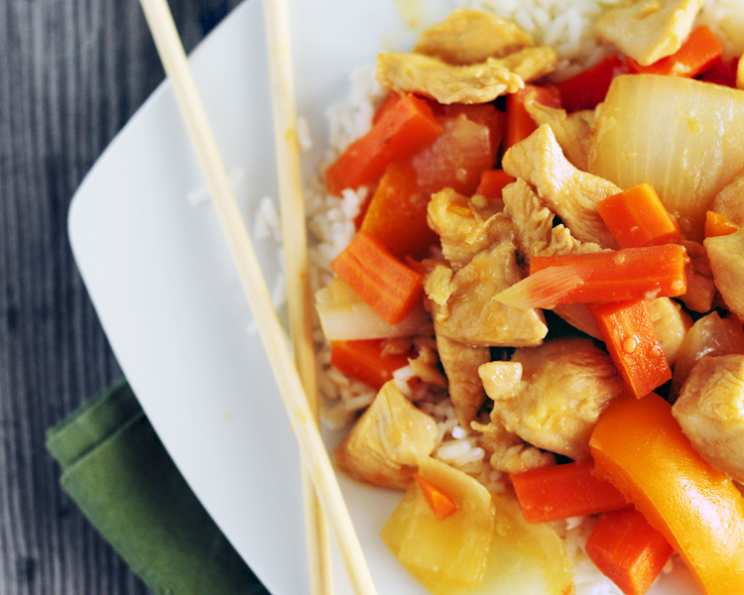
Chicken Stir-Fry: A Weeknight Classic
My earliest memories of stir-fry involve standing on a stool next to my grandmother, mesmerized by the dance of her wok spatula. The sizzle of vegetables hitting the hot oil, the fragrant steam rising, and the vibrant colors swirling together always felt like culinary magic. She would always let me add the final touch – a generous sprinkle of toasted sesame seeds – a task I took with the utmost seriousness. This simple Chicken Stir-Fry recipe reminds me of those cherished moments, offering a quick, healthy, and endlessly adaptable meal that brings a touch of warmth to any table.
Recipe Overview
- Prep Time: 30 minutes
- Cook Time: 15 minutes
- Total Time: 45 minutes
- Servings: 4
- Yield: About 6 cups
- Dietary Type: Gluten-Free (if using gluten-free soy sauce)
Ingredients
- 4 boneless, skinless chicken breast halves
- 3 tablespoons cornstarch
- 2 tablespoons soy sauce
- ½ teaspoon ground ginger
- ¼ teaspoon garlic powder
- 3 tablespoons cooking oil, divided (vegetable, canola, or peanut oil work well)
- 2 cups broccoli florets
- 1 cup sliced celery
- 1 cup thinly sliced carrot
- 1 small onion, cut into wedges
- 1 cup water
- 1 teaspoon chicken bouillon granule (or 1 cube)
Equipment Needed
- Resealable plastic bag
- Large skillet or wok
- Cutting board
- Knife
- Measuring spoons and cups
Instructions
-
Begin by preparing the chicken. Cut the chicken breasts into ½ inch strips. Place the strips into a resealable plastic bag.
-
Add the cornstarch to the bag with the chicken. Seal the bag tightly and shake well to ensure the chicken is evenly coated with the cornstarch. This will help create a tender texture and thicken the sauce later.
-
In a small bowl, combine the soy sauce, ground ginger, and garlic powder. This mixture forms the base of your marinade and adds depth of flavor.
-
Pour the soy sauce mixture into the bag with the chicken. Seal the bag, removing as much air as possible, and shake well to distribute the marinade evenly.
-
Refrigerate the chicken in the marinade for at least 30 minutes. This allows the flavors to penetrate the meat and tenderize it. Longer marinating times (up to a few hours) will further enhance the flavor.
-
When ready to cook, heat 2 tablespoons of cooking oil in a large skillet or wok over medium-high heat. Ensure the pan is hot before adding the chicken; this will help it sear properly.
-
Add the marinated chicken to the hot skillet or wok. Stir-fry the chicken until it is no longer pink inside and is cooked through. This usually takes about 3-5 minutes, depending on the thickness of the chicken strips. Be careful not to overcrowd the pan, as this can lower the temperature and result in steamed chicken instead of stir-fried. If necessary, cook the chicken in batches.
-
Remove the cooked chicken from the skillet or wok and set aside to keep warm. A covered bowl or a low oven setting (around 200°F) will help maintain the temperature.
-
Add the remaining 1 tablespoon of cooking oil to the skillet or wok.
-
Add the broccoli florets, sliced celery, thinly sliced carrot, and onion wedges to the pan. Stir-fry the vegetables for 4-5 minutes, or until they are crisp-tender. The goal is to cook them until they are slightly softened but still retain a bit of crunch.
-
Pour the water into the skillet or wok with the vegetables. Add the chicken bouillon granule (or crumbled cube). Stir well to dissolve the bouillon.
-
Return the cooked chicken to the skillet or wok with the vegetables and sauce.
-
Cook and stir the mixture until the sauce has thickened and become bubbly. This usually takes a minute or two. The cornstarch from the chicken coating will help to thicken the sauce. If the sauce is too thick, add a little more water to reach your desired consistency.
Expert Tips & Tricks
- Prep Ahead: Chop all the vegetables and marinate the chicken ahead of time to significantly reduce cooking time on busy weeknights. The marinated chicken can sit in the refrigerator for up to 24 hours.
- Vegetable Variety: Feel free to swap out or add other vegetables such as bell peppers, snow peas, mushrooms, or zucchini. Adjust the cooking time depending on the density of the vegetables you use.
- Sauce Enhancement: For a richer, more complex sauce, add a dash of sesame oil, a splash of rice vinegar, or a pinch of red pepper flakes for a little heat.
- Thickening Issues: If the sauce doesn’t thicken sufficiently, mix 1 teaspoon of cornstarch with 1 tablespoon of cold water to create a slurry. Gradually add the slurry to the stir-fry while stirring continuously until the sauce reaches the desired consistency.
- Meat Alternatives: You can substitute the chicken with tofu, shrimp, or beef, adjusting the cooking time accordingly.
Serving & Storage Suggestions
Serve the Chicken Stir-Fry hot over steamed rice, noodles, or quinoa. Garnish with chopped green onions or sesame seeds for added visual appeal and flavor.
Leftovers can be stored in an airtight container in the refrigerator for up to 3-4 days. To reheat, microwave until heated through, or stir-fry in a skillet over medium heat until warmed. A splash of water may be necessary to rehydrate the sauce. While refrigeration is recommended, food should not be left at room temperature for more than 2 hours.
Nutritional Information
| Nutrient | Amount per Serving | % Daily Value |
|---|---|---|
| Calories | 289.8 kcal | N/A |
| Calories from Fat | N/A | 42% |
| Total Fat | 13.6 g | 20% |
| Saturated Fat | 2.1 g | 10% |
| Cholesterol | 75.6 mg | 25% |
| Sodium | 814 mg | 33% |
| Total Carbohydrate | 13.7 g | 4% |
| Dietary Fiber | 1.8 g | 7% |
| Sugars | 3 g | N/A |
| Protein | 27.9 g | 55% |
Note: Nutritional information is an estimate and may vary based on specific ingredients and cooking methods.
Variations & Substitutions
- Gluten-Free: Use tamari or a gluten-free soy sauce alternative to make this stir-fry gluten-free.
- Spicy Kick: Add a teaspoon of sriracha or a pinch of red pepper flakes to the sauce for a spicy variation.
- Protein Power: Substitute the chicken with shrimp, tofu, or sliced steak for a different protein source. Adjust cooking times accordingly.
- Vegetable Medley: Experiment with different seasonal vegetables such as asparagus in the spring or butternut squash in the fall.
- Sweet and Sour: Add a tablespoon of pineapple juice and a tablespoon of rice vinegar to the sauce for a sweet and sour twist.
FAQs (Frequently Asked Questions)
Q: Can I use frozen vegetables in this recipe?
A: Yes, you can use frozen vegetables. Add them directly to the skillet or wok and stir-fry until they are heated through and tender-crisp. You may need to increase the cooking time slightly.
Q: How can I make the sauce thicker?
A: If the sauce isn’t thick enough, mix 1 teaspoon of cornstarch with 1 tablespoon of cold water to create a slurry and add it to the stir-fry while stirring until thickened.
Q: Can I marinate the chicken for longer than 30 minutes?
A: Yes, you can marinate the chicken for longer, up to a few hours or even overnight in the refrigerator. Longer marinating times will enhance the flavor.
Q: What kind of rice is best to serve with this stir-fry?
A: Any type of rice will work well, such as white rice, brown rice, jasmine rice, or basmati rice. Choose your favorite!
Q: Can I add nuts to this stir-fry?
A: Absolutely! Cashews, peanuts, or almonds make a great addition, adding a satisfying crunch and nutty flavor. Add them during the last few minutes of cooking to prevent them from burning.
Final Thoughts
This Chicken Stir-Fry is more than just a recipe; it’s an invitation to create a quick, delicious, and customizable meal that fits your taste and lifestyle. Whether you’re a seasoned cook or just starting out, this recipe is sure to become a weeknight staple. So, grab your wok, gather your ingredients, and embark on a flavorful culinary adventure. Don’t hesitate to experiment with different vegetables, sauces, and proteins to create your own signature stir-fry masterpiece. And most importantly, enjoy the process and share your creations with loved ones!