
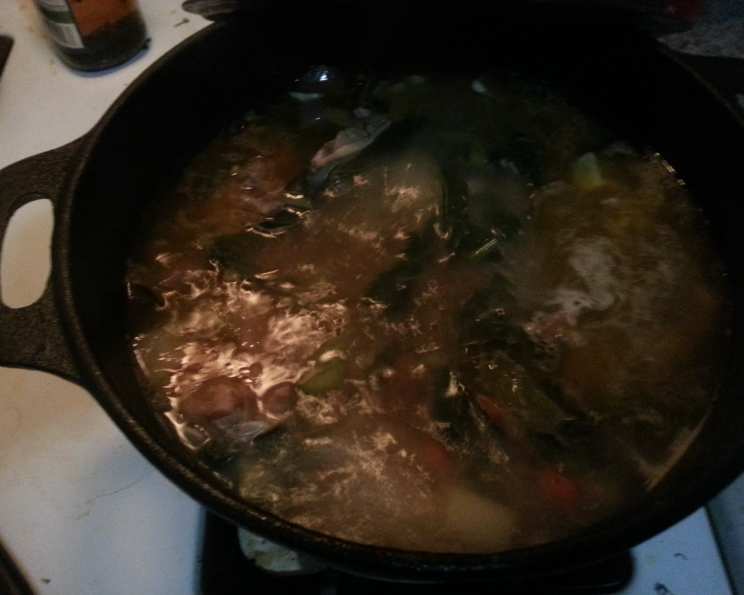
Liquid Gold: Transforming Chicken Carcass into Nourishing Stock
My grandmother, a woman who believed in wasting nothing, always said the most flavorful secrets were hidden in what others discarded. I remember watching her, a small, determined figure in her apron, meticulously coaxing every last drop of goodness from a leftover chicken carcass, transforming it into a golden elixir that would form the base of countless soups, stews, and sauces. The aroma, a comforting blend of savory chicken and earthy vegetables, would fill her entire house, promising warmth and nourishment. It wasn’t just about saving money; it was about respect for the ingredients and the art of creating something truly special from humble beginnings. That’s why, to this day, I always make stock from leftover chicken.
Recipe Overview
- Prep Time: 10 minutes
- Cook Time: 4 hours
- Total Time: 4 hours 10 minutes
- Yields: 4 cups
- Serves: 12
- Dietary Type: Dairy-Free
Ingredients
- 1 1/2 kg chicken carcasses (with some meat remaining)
- 6 cups water
- 1 large onion, quartered
- 1 large carrot, cut into around 12 pieces
- 1 teaspoon garlic, crushed
- 1 teaspoon ginger, grated
- 1 bay leaf
- 1 teaspoon celery seed
Equipment Needed
- Medium sized pot
- Strainer
- Storage container
Instructions
- Place the chicken carcass in a medium sized pot.
- Cover the carcass with water. You should use about 6 cups, but adjust to ensure the carcass is just covered.
- Bring the water to a boil over high heat, then immediately reduce the heat to low-medium and simmer gently for one hour.
- During the first hour of simmering, monitor the liquid level and the temperature, adjusting the heat as needed to maintain a gentle simmer. Be aware that some liquid will evaporate.
- Skim any fat that rises to the top of the broth using a spoon or ladle. This step helps to clarify the stock and remove excess fat.
- Add the quartered onion, chopped carrot, crushed garlic, grated ginger, bay leaf, and celery seeds to the pot.
- Continue to simmer the stock for an additional 3 hours, stirring gently once or twice during this time to ensure even cooking.
- After a total of 4 hours of simmering (1 hour initially + 3 hours with vegetables and spices), turn off the heat and allow the stock to cool completely, uncovered. This will help prevent condensation from forming and diluting the flavor.
- Once the stock has cooled, strain it through a fine-mesh strainer lined with cheesecloth (if desired) into a clean storage container. This will remove any solid particles, leaving you with a clear, flavorful stock.
- Use the stock immediately or freeze for later use.
Expert Tips & Tricks
- Roast the Carcass First: For an even richer, deeper flavor, roast the chicken carcass in a 400°F (200°C) oven for about 30 minutes before adding it to the pot. This will caramelize the bones and release even more flavor.
- Don’t Overcrowd the Pot: Ensure that the chicken carcass and vegetables have enough room in the pot. Overcrowding can lower the water temperature and affect the simmering process. Use a larger pot if necessary.
- Low and Slow is Key: Simmering over low heat is crucial for extracting maximum flavor from the ingredients. Avoid boiling the stock, as this can result in a cloudy and bitter-tasting broth.
- Don’t Add Salt: It’s best to avoid adding salt to the stock while it’s simmering. This allows you to control the salt level when you use the stock in your recipes.
- Freeze in Portions: Pour cooled stock into ice cube trays for small portions, or into freezer-safe bags or containers for larger quantities. This makes it easy to thaw only what you need. Be sure to leave some headspace in the containers as the liquid will expand when freezing.
Serving & Storage Suggestions
Your homemade chicken stock is now ready to elevate your culinary creations! Use it as a base for soups, stews, sauces, risottos, and more. It adds a depth of flavor that store-bought broths simply can’t match.
Allow the stock to cool completely at room temperature before storing. Once cooled, transfer it to an airtight container and refrigerate for up to 3-4 days. For longer storage, freeze the stock for up to 3-6 months. To reheat frozen stock, thaw it in the refrigerator overnight or use the defrost setting on your microwave.
Nutritional Information
Please note that nutritional information is an estimate and can vary based on specific ingredients and portion sizes.
| Nutrient | Amount per Serving | % Daily Value |
|---|---|---|
| Calories | 9 kcal | – |
| Total Fat | 0.1g | 0% |
| Saturated Fat | 0g | 0% |
| Cholesterol | 0mg | 0% |
| Sodium | 8.5mg | 0% |
| Total Carbohydrate | 2g | 0% |
| Dietary Fiber | 0.4g | 1% |
| Sugars | 0.8g | – |
| Protein | 0.2g | 0% |
Variations & Substitutions
- Vegetarian Stock: If you don’t have a chicken carcass, use vegetable scraps such as onion peels, carrot tops, and celery ends to make a vegetarian stock.
- Herb Variations: Add different herbs and spices to customize the flavor of your stock. Try adding thyme, rosemary, parsley, or peppercorns.
- Mushroom Stock: For a rich and umami-packed stock, add dried or fresh mushrooms to the pot along with the other ingredients.
- Spicy Stock: Add a chili pepper or a few red pepper flakes to the stock for a touch of heat.
FAQs (Frequently Asked Questions)
Q: Do I need to remove all the meat from the carcass before making stock?
A: No, you don’t need to remove all the meat. In fact, leaving some meat on the carcass will add more flavor to the stock.
Q: Can I use chicken bones from cooked chicken wings or thighs?
A: Absolutely! Any leftover chicken bones can be used to make stock. Just be sure to remove any excess skin or fat before adding them to the pot.
Q: How do I know when the stock is done simmering?
A: The stock is done when it has developed a rich, golden color and a deep, savory flavor. The vegetables should be soft and the bones should be easily crushed.
Q: My stock is cloudy. Is it still safe to use?
A: Yes, cloudy stock is still safe to use. Cloudiness is often caused by impurities that are released during simmering. You can strain the stock through cheesecloth to clarify it.
Q: Can I use a pressure cooker or Instant Pot to make chicken stock?
A: Yes, you can! Pressure cooking will significantly reduce the cooking time. Follow the manufacturer’s instructions for your specific appliance. Typically, you’ll cook the stock on high pressure for about 45-60 minutes, followed by a natural pressure release.
Final Thoughts
Making chicken stock from a leftover carcass is a simple yet rewarding way to reduce waste, save money, and elevate the flavor of your home-cooked meals. Don’t be intimidated by the long simmering time – the process is mostly hands-off, and the end result is well worth the effort. I encourage you to give this recipe a try and experience the magic of transforming humble ingredients into liquid gold. Once you’ve tasted homemade stock, you’ll never go back to store-bought! Try using your stock in a hearty chicken noodle soup, or deglaze a pan with it after roasting vegetables. Let me know how your stock turns out, and share your favorite ways to use it!