
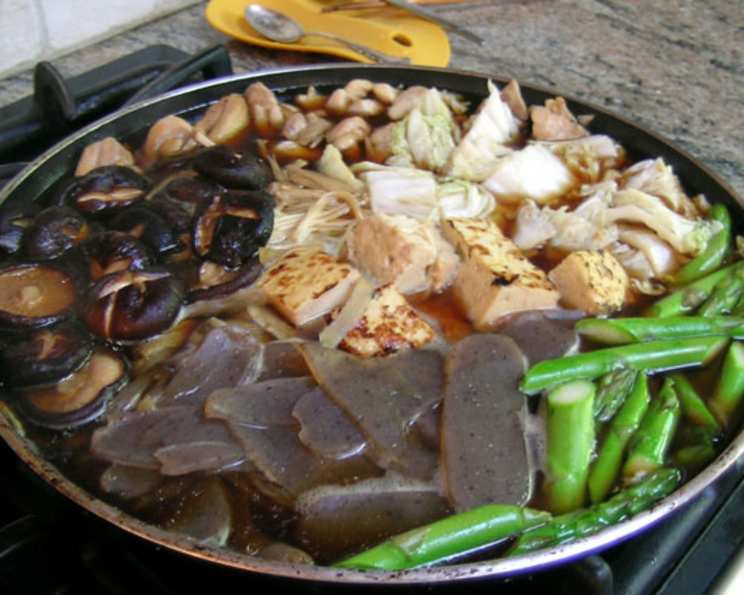
Chicken Sukiyaki: A Taste of Home
The first time I had sukiyaki was at a small, family-run restaurant in Kyoto. The aroma alone was intoxicating – a sweet and savory dance of soy, sake, and simmering vegetables. As the bubbling broth filled the air, the anticipation was almost unbearable. That communal pot, filled with thinly sliced beef, tofu, and noodles, felt like a warm embrace, a symbol of togetherness and comfort that resonated deeply. Even now, years later, the memory of that meal evokes a feeling of profound contentment. I strive to recreate that feeling with every sukiyaki I make.
Recipe Overview
- Prep Time: 20 minutes
- Cook Time: 20 minutes
- Total Time: 40 minutes
- Servings: 4
- Dietary Type: Adaptable (see variations)
Ingredients
For the Sukiyaki Sauce:
- 2 cups dashi stock (or dashi granules mixed with water)
- ½ cup soy sauce
- ½ cup mirin
- ½ cup sake
- 2 tablespoons sugar
For the Sukiyaki:
- 2 tablespoons oil
- 1 burdock root (or 2 carrots)
- 2-3 chicken legs, including thigh (boned and cut into bite-size pieces)
- 8 shiitake mushrooms, stems removed and cut in half on an angle
- 1 cake tofu, cut into 8 pieces (firm or regular)
- 1 cake konnyaku, sliced very thinly
- 4 scallions, sliced on an angle into 2-inch pieces
- ½ napa cabbage, cut into bite-size pieces
- 2 bunches mitsuba, cut into 2-inch pieces (or 4 cups baby spinach)
- 2 lb fresh-frozen ramen noodles (save soup packets for other use) or (8 ounce) packages ramen noodles, cooked (save soup packets for other use)
Equipment Needed
- Large frying pan with at least 2 1/2 inch sides, or a donabe (Japanese clay pot)
- Saucepan
- Cutting board
- Knife
- Peeler
- Bowls for ingredient preparation
Instructions
-
Prepare the Sukiyaki Sauce: In a saucepan, combine the dashi stock, soy sauce, mirin, sake, and sugar. Bring the mixture to a boil over medium-high heat. Cook for about 1 minute, then remove from the heat and set aside.
-
Prepare the Burdock Root (or Carrots): If using burdock root, scrape off the peel. Cut the burdock like you are sharpening the end of a pencil to produce thin shavings. Alternatively, use a peeler and shave the burdock into 2-inch pieces. Immediately soak the shavings in a bowl of water with a bit of vinegar (about 1-2 teaspoons) to prevent discoloration. Set aside. If using carrots, peel and slice them into thin rounds or matchsticks.
-
Heat the Pan: Heat a large frying pan with at least 2 1/2 inch sides, or use a donabe (Japanese clay pot that has been properly seasoned). Add the oil to the pan.
-
Brown the Chicken and Vegetables: Arrange the burdock (or carrots) and chicken in separate and neat groupings within the pan. Brown the chicken and vegetables for about 2 minutes. Add the shiitake mushrooms, tofu, and konnyaku to the pan, again keeping them separate from the other ingredients. Cook for another 2 minutes. The goal is to lightly brown the ingredients without fully cooking them.
-
Add the Sukiyaki Sauce: Pour the prepared sukiyaki sauce into the pan, adding just enough to cover halfway up the ingredients. Spoon the sauce over all the ingredients. Avoid overfilling the pan, and do not cover it with a lid.
-
Simmer the Sukiyaki: As soon as the liquid comes to a boil, reduce the heat to medium and cook for about 4-5 minutes. The chicken should be nearly cooked through, and the vegetables should be slightly softened.
-
Add the Remaining Vegetables: Uncover the pan and add the scallions, napa cabbage, and mitsuba (or baby spinach). Cook for about 2 minutes, or until the greens are wilted but still vibrant. Add more sukiyaki sauce if needed, and continue to spoon the sauce over each ingredient.
-
Serve the Sukiyaki: Serve the sukiyaki without mixing the ingredients together. Encourage guests to select their preferred items from the pot.
-
Cook the Noodles: After most of the ingredients have been consumed, bring the remaining sauce to a boil again. Add the ramen noodles (either fresh-frozen or cooked) to the pan. Heat the noodles until they are warmed through and have absorbed some of the sauce.
-
Serve the Noodles: Serve the noodles in individual bowls, along with some of the remaining sukiyaki broth.
Expert Tips & Tricks
- Burdock Root Preparation: The key to working with burdock root is to prevent it from oxidizing and turning brown. Soaking it in water with a little vinegar immediately after cutting is crucial.
- Chicken Doneness: Ensure the chicken is cooked through for food safety. Use a meat thermometer to check for an internal temperature of 165°F (74°C).
- Sauce Consistency: If the sukiyaki sauce becomes too thick during cooking, add a little more dashi stock or water to thin it out.
- Ingredient Placement: Arranging the ingredients neatly in the pan not only looks appealing but also allows for even cooking.
- Tofu Preparation: For a firmer tofu that holds its shape well in the sukiyaki, press the tofu before cutting it into pieces to remove excess water.
Serving & Storage Suggestions
Serve the chicken sukiyaki hot, directly from the pan or donabe. Provide small bowls for each person to take portions of the ingredients and broth. This dish is best enjoyed communally, with everyone sharing from the same pot.
Leftovers can be stored in an airtight container in the refrigerator for up to 3 days. Reheat gently on the stovetop or in the microwave until warmed through. The noodles may absorb some of the sauce during storage, so you may need to add a little extra dashi or water when reheating.
Nutritional Information
| Nutrient | Amount per Serving | % Daily Value |
|---|---|---|
| Calories | 650 kcal | 33% |
| Total Fat | 25g | 38% |
| Saturated Fat | 8g | 40% |
| Cholesterol | 50mg | 17% |
| Sodium | 2000mg | 83% |
| Total Carbohydrate | 60g | 20% |
| Dietary Fiber | 4g | 16% |
| Sugars | 8g | – |
| Protein | 35g | 70% |
Variations & Substitutions
- Vegetarian Sukiyaki: Substitute the chicken with extra tofu, mushrooms, and other vegetables like enoki mushrooms, shimeji mushrooms, or Chinese cabbage. Use vegetable broth instead of dashi stock.
- Gluten-Free Sukiyaki: Use gluten-free soy sauce (tamari) and ensure the ramen noodles are also gluten-free. Rice noodles are a great alternative.
- Beef Sukiyaki: Substitute the chicken with thinly sliced beef, such as ribeye or sirloin. Adjust cooking time accordingly, as beef cooks faster than chicken.
- Seasonal Vegetables: Feel free to add seasonal vegetables like asparagus, green beans, or bell peppers to the sukiyaki.
- Spicy Sukiyaki: Add a pinch of red pepper flakes or a few slices of fresh chili peppers to the sukiyaki sauce for a spicy kick.
FAQs (Frequently Asked Questions)
Q: What is dashi stock, and can I substitute it?
A: Dashi stock is a Japanese soup stock made from dried kelp (kombu) and dried bonito flakes (katsuobushi). While there’s no perfect substitute, you can use chicken broth or vegetable broth in a pinch, but it will alter the flavor profile slightly.
Q: Can I make sukiyaki ahead of time?
A: While you can prepare the sukiyaki sauce and chop the vegetables in advance, it’s best to cook the sukiyaki fresh for optimal flavor and texture.
Q: What is konnyaku, and is it essential to the recipe?
A: Konnyaku is a jelly-like food made from konjac potato, known for its unique texture and low calorie content. It adds an interesting element to sukiyaki but can be omitted if you can’t find it.
Q: What’s the best way to serve sukiyaki?
A: Sukiyaki is traditionally served in a communal pot, allowing everyone to select their favorite ingredients. Accompany it with bowls of steamed rice and maybe a side of Japanese pickles.
Q: Can I freeze sukiyaki leftovers?
A: Freezing is not recommended, as the texture of the tofu and vegetables can change significantly. It’s best to enjoy the leftovers within a few days of making it.
Final Thoughts
Chicken Sukiyaki is more than just a recipe; it’s an experience, a celebration of flavors, and a testament to the joy of sharing a meal with loved ones. Whether you follow this recipe to the letter or customize it to your own tastes, I encourage you to gather your friends and family, gather your ingredients, and embark on this culinary adventure. Don’t be afraid to experiment and make it your own. And most importantly, savor every moment of creating and enjoying this comforting and delicious dish. Pair it with a crisp, dry sake for an authentic Japanese experience!