
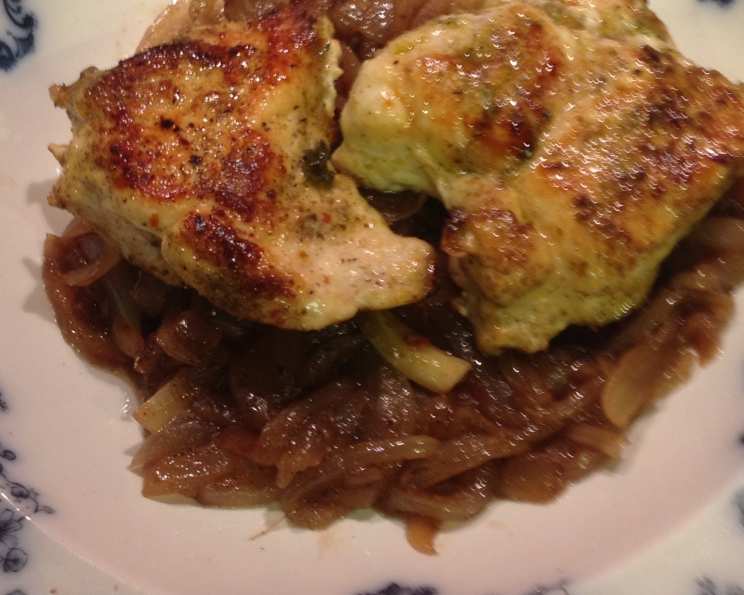
Chicken With Caramelized Onions: A Simple Elegance
Caramelized onions have always held a certain magic for me. As a young chef’s apprentice, I remember being tasked with stirring massive pots of onions for hours on end. At first, it felt like a tedious chore, but as the onions slowly softened, sweetened, and deepened in color, I began to understand the transformative power of slow cooking. That patient process, coaxing out the hidden sugars and complexities, turned a humble vegetable into something extraordinary. This recipe for Chicken with Caramelized Onions captures that essence, pairing tender chicken with the sweet, savory depth of perfectly caramelized onions for a dish that’s both satisfying and surprisingly simple.
Recipe Overview
- Prep Time: 15 minutes
- Cook Time: 35 minutes
- Total Time: 50 minutes
- Servings: 6
- Dietary Type: Gluten-Free
Ingredients
- Cooking spray
- 6 cups thinly sliced onions
- ½ teaspoon salt
- ¼ teaspoon dried thyme
- ¼ teaspoon ground red pepper
- ¼ teaspoon black pepper
- ½ cup low sodium chicken broth, divided
- ¼ cup balsamic vinegar
- 6 (4 ounce) boneless skinless chicken breast halves
Equipment Needed
- Large skillet
- Paper towels
Instructions
- Coat a large skillet with cooking spray and place it over medium heat until hot.
- Add the thinly sliced onions to the skillet. Cover the skillet and cook for 10 minutes, or until the onions are golden brown. Stir frequently during this time to prevent burning and ensure even cooking. The goal is to begin the softening and browning process.
- In a small bowl, combine the salt, dried thyme, ground red pepper, and black pepper. Stir well to ensure the spices are evenly distributed. This spice mixture will add depth and complexity to both the onions and the chicken.
- Sprinkle half of the spice mixture over the onions in the skillet. Add ¼ cup of low sodium chicken broth to the onions. Continue to cook for another 10 minutes, stirring frequently. The chicken broth helps to deglaze the pan and adds moisture, which is essential for proper caramelization.
- Add 2 tablespoons of chicken broth to the skillet. Cook until the liquid evaporates, making sure to scrape the pan to loosen any browned bits that may have stuck. These browned bits are packed with flavor and will contribute to the overall richness of the dish.
- Stir in the remaining 2 tablespoons of chicken broth; cook until the liquid evaporates. Again, scrape the pan to release any flavorful bits. This step ensures maximum caramelization and flavor development.
- Add the balsamic vinegar to the skillet and cook for an additional 2 minutes, or until the liquid has almost completely evaporated. The balsamic vinegar adds a touch of acidity that balances the sweetness of the caramelized onions and provides a pleasant tang.
- Remove the onion mixture from the skillet and set it aside, keeping it warm. You can cover the onions with foil to prevent them from cooling down too much.
- Wipe the skillet clean with paper towels to remove any residual onion bits or browned particles. This ensures that the chicken will cook evenly and develop a nice sear.
- Rub the chicken breasts with the remaining spice mixture, ensuring that each piece is evenly coated. This infuses the chicken with flavor and helps create a delicious crust when cooked.
- Recoat the skillet with cooking spray and place it over medium-high heat until hot.
- Add the seasoned chicken breasts to the skillet. Cook for 5 minutes on each side, or until the chicken is cooked through. The internal temperature of the chicken should reach 165°F (74°C). Use a meat thermometer to ensure accurate doneness.
- Serve the cooked chicken immediately, topped with the warm caramelized onion mixture.
Expert Tips & Tricks
- For deeper flavor, use a good quality balsamic vinegar. Aged balsamic will offer a more complex and intense sweetness.
- Don’t rush the caramelization process. Low and slow is the key to unlocking the onions’ natural sweetness. If the onions start to burn, reduce the heat slightly and add a splash more chicken broth.
- Pound the chicken breasts to an even thickness before cooking. This ensures even cooking and prevents some parts from being overcooked while others are still raw.
- To avoid overcooking the chicken, use a meat thermometer to check the internal temperature. Once it reaches 165°F (74°C), remove it from the heat immediately.
- For a richer sauce, you can add a tablespoon of butter to the onions during the final stages of caramelization.
Serving & Storage Suggestions
Serve the Chicken with Caramelized Onions hot, directly after cooking. A side of roasted vegetables, such as asparagus or Brussels sprouts, makes an excellent complement. You can also serve it with a simple salad or a side of quinoa or rice.
Leftovers can be stored in an airtight container in the refrigerator for up to 3 days. Reheat gently in a skillet over medium heat, or in the microwave. If reheating in a skillet, add a splash of chicken broth to prevent the chicken from drying out. Freezing is not recommended, as the texture of the caramelized onions may change upon thawing.
Nutritional Information
| Nutrient | Amount per Serving | % Daily Value |
|---|---|---|
| Calories | 206.5 kcal | N/A |
| Calories from Fat | 29 g | 14% |
| Total Fat | 3.2 g | 4% |
| Saturated Fat | 0.8 g | 3% |
| Cholesterol | 72.6 mg | 24% |
| Sodium | 340.2 mg | 14% |
| Total Carbohydrate | 17.1 g | 5% |
| Dietary Fiber | 2.8 g | 11% |
| Sugars | 8.4 g | 33% |
| Protein | 26.3 g | 52% |
Variations & Substitutions
- Chicken Thighs: Substitute boneless, skinless chicken thighs for the chicken breasts for a richer flavor. Adjust cooking time as needed to ensure they are fully cooked.
- Vegetarian Option: Replace the chicken with firm tofu slices. Press the tofu to remove excess water, then pan-fry or bake until golden brown.
- Wine Reduction: Before adding the balsamic vinegar, deglaze the pan with a splash of dry red or white wine for an extra layer of flavor.
- Different Herbs: Experiment with different herbs, such as rosemary or oregano, in place of thyme.
- Sweetener: If you prefer a sweeter onion mixture, add a teaspoon of brown sugar or honey during the caramelization process.
FAQs (Frequently Asked Questions)
Q: Can I make the caramelized onions ahead of time?
A: Yes, you can make the caramelized onions up to 2 days in advance. Store them in an airtight container in the refrigerator and reheat gently before serving.
Q: How do I prevent the onions from burning?
A: The key is to cook the onions over low to medium heat and stir them frequently. If they start to brown too quickly, reduce the heat and add a small amount of chicken broth or water.
Q: Can I use a different type of onion?
A: While yellow onions are recommended for their sweetness, you can also use white or red onions. Red onions will add a slightly different flavor and color to the dish.
Q: How do I know when the chicken is cooked through?
A: The best way to check for doneness is to use a meat thermometer. Insert it into the thickest part of the chicken breast; it should read 165°F (74°C).
Q: Can I add other vegetables to the caramelized onion mixture?
A: Yes, you can add other vegetables such as sliced bell peppers or mushrooms to the onion mixture during the caramelization process.
Final Thoughts
This Chicken with Caramelized Onions recipe is a testament to the fact that simple ingredients, when treated with care and attention, can create something truly extraordinary. The sweetness of the onions perfectly complements the savory chicken, resulting in a dish that’s both satisfying and elegant. Don’t be afraid to experiment with different variations and substitutions to make it your own. I encourage you to try this recipe and share your feedback – and maybe pair it with a crisp glass of Pinot Noir! Bon appétit!