
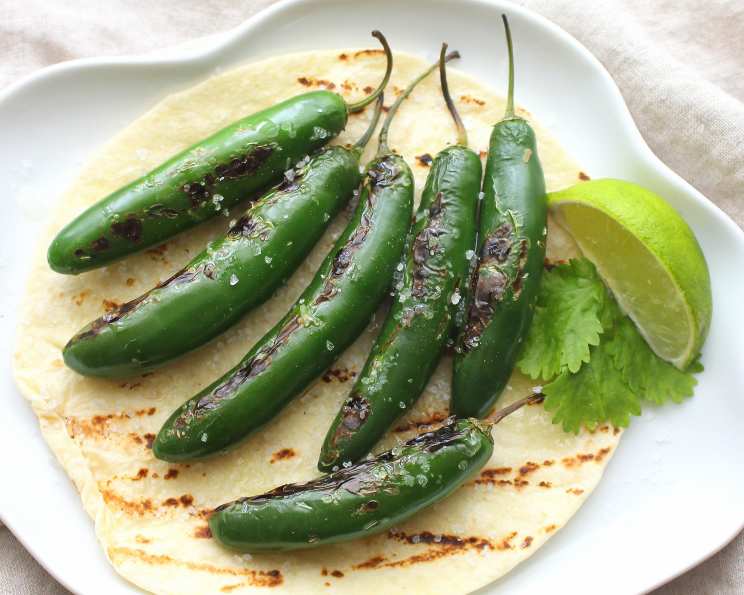
Chiles Toreados: A Fiery Fiesta for Your Taste Buds
The sizzle of chiles hitting a hot cast iron pan… the intoxicating aroma of slightly charred peppers filling the air… that’s the soundtrack to many of my fondest memories of late-night taco runs and lively family gatherings. There’s just something primal and deeply satisfying about the simple yet bold flavors of chiles toreados. These aren’t just a side dish; they’re an experience, a fiery dance on your tongue that awakens your senses and leaves you craving more.
Recipe Overview
- Prep Time: 5 minutes
- Cook Time: 15 minutes
- Total Time: 20 minutes
- Servings: 2-4
- Yield: Variable, depends on pepper quantity
- Dietary Type: Vegan, Gluten-Free
Ingredients
- 12-16 hot peppers (either serranos or jalapeños are best)
- Vegetable oil (for rubbing chiles)
- Coarse salt (to taste)
- Lime wedge (optional)
Equipment Needed
- Comal, griddle, or small cast iron skillet
- Large knife or cleaver (optional, for flattening)
Instructions
-
Preheat a comal, griddle, or small cast iron skillet over medium-high heat. These may also be grilled outdoors; just adjust cooking time accordingly for more intense heat. The goal is a hot surface that will quickly blister the peppers without burning them to a crisp immediately.
-
Slightly flatten the whole chiles (the side of a large knife or cleaver works well). This is an optional step, but it helps the peppers cook more evenly and releases their flavor more readily. Be careful not to completely crush them; you just want to gently encourage them to lay flatter.
-
Rub each chile with a thin coat of vegetable oil. This helps the peppers char nicely and prevents them from sticking to the hot surface. You don’t need a lot of oil; just a light coating will do the trick.
-
Roast the chiles on the preheated pan for about 10 to 15 minutes, or until they begin to blister and char, turning occasionally. Keep a close eye on them; they can go from perfectly blistered to burnt very quickly. The exact cooking time will depend on the heat of your pan and the size and thickness of your peppers. You’re looking for a mottled appearance with some dark spots and softened peppers.
-
Remove the roasted chiles to a serving dish.
-
Sprinkle with coarse salt to taste. The salt enhances the natural flavors of the peppers and adds a nice textural contrast.
-
Squeeze lime wedges over the chiles (if using). The acidity of the lime juice brightens the flavor and adds a refreshing counterpoint to the heat of the peppers.
-
Serve immediately as a bar snack or as an accompaniment to grilled meats, tacos, or any dish that could use a spicy kick.
Expert Tips & Tricks
- Control the Heat: If you’re sensitive to spice, consider removing some of the seeds from the chiles before roasting. However, remember that much of the flavor resides in the seeds and membranes, so removing them will also reduce the overall intensity.
- Proper Ventilation: Roasting chiles can release capsaicin into the air, which can cause coughing and eye irritation. Make sure your kitchen is well-ventilated by opening windows or turning on the exhaust fan.
- Don’t Overcrowd the Pan: Cook the chiles in batches if necessary to avoid overcrowding the pan. Overcrowding can lower the temperature of the pan and cause the peppers to steam instead of char.
- Even Cooking: For even cooking, try using a cast-iron skillet. Cast iron retains heat exceptionally well, resulting in evenly cooked peppers.
- Spice Infusion: For an extra layer of flavor, consider adding a clove or two of smashed garlic to the pan while roasting the chiles. The garlic will infuse the oil and impart a subtle garlicky flavor to the peppers.
- Spice Level Mitigation: If the peppers turn out spicier than you like, serving them with a dollop of sour cream or Mexican crema can help cool down the heat.
- Selecting Peppers: When selecting peppers, choose firm, unblemished peppers. The color should be vibrant and the skin smooth. Avoid peppers that are soft, wrinkled, or have dark spots.
Serving & Storage Suggestions
Chiles toreados are best served immediately while they are still warm and blistered. They make a fantastic addition to a charcuterie board, an appetizer for your next Mexican fiesta, or a spicy condiment to elevate any meal.
Leftover chiles can be stored in an airtight container in the refrigerator for up to 3 days. Reheat them in a dry skillet over medium heat until warmed through. They can also be chopped and added to salsas, stews, or scrambled eggs for a spicy kick.
They are not typically frozen, as freezing can alter their texture.
Nutritional Information
| Nutrient | Amount per Serving | % Daily Value |
|---|---|---|
| Calories | 50 kcal | 3% |
| Total Fat | 3g | 4% |
| Saturated Fat | 0g | 0% |
| Cholesterol | 0mg | 0% |
| Sodium | 5mg | 0% |
| Total Carbohydrate | 6g | 2% |
| Dietary Fiber | 2g | 7% |
| Sugars | 1g | 0% |
| Protein | 1g | 2% |
Note: Nutritional information is an estimate and may vary based on specific ingredients and preparation methods.
Variations & Substitutions
- Pepper Variety: Experiment with different types of hot peppers, such as habaneros (for extreme heat), poblanos (for a milder flavor), or a mix of different peppers for a more complex flavor profile.
- Spice Level: Adjust the amount of chiles to your preference. If you’re not a fan of spicy food, use fewer chiles or choose milder varieties.
- Flavor Enhancements: Add other ingredients to the pan while roasting the chiles, such as sliced onions, garlic cloves, or whole spices like cumin seeds or coriander seeds.
- Oil Infusions: Infuse the vegetable oil with herbs or spices before rubbing it on the chiles. Try adding dried oregano, chili flakes, or garlic powder to the oil.
- Serving Style: Serve the chiles with different accompaniments, such as shredded cheese, chopped cilantro, diced onions, or a drizzle of crema.
- Grilled Option: Grilling the peppers imparts a wonderful smoky flavor. Simply grill over medium heat, turning occasionally, until blistered and slightly charred.
FAQs (Frequently Asked Questions)
Q: Can I use dried chiles for this recipe?
A: While you could, the flavor profile will be different. Fresh chiles provide a brighter, more vibrant flavor than dried chiles. Dried chiles are better suited for sauces and stews where they can rehydrate and release their deeper, earthier flavors.
Q: How do I know when the chiles are done?
A: The chiles are done when they are blistered, slightly charred, and softened. They should have some dark spots on their skin but should not be completely burnt.
Q: Can I make this recipe ahead of time?
A: It’s best to serve chiles toreados fresh, but you can roast the chiles a few hours ahead of time and store them at room temperature. Reheat them briefly in a dry skillet before serving.
Q: What if I don’t have a comal or griddle?
A: A cast iron skillet works great, but any heavy-bottomed skillet will do. Just make sure it’s preheated properly before adding the chiles. You can even use an outdoor grill!
Q: How can I reduce the spiciness of the chiles?
A: Removing the seeds and membranes from the chiles before roasting will help reduce their spiciness. Serving them with a dairy-based accompaniment like sour cream or crema will also help cool down the heat.
Final Thoughts
So, there you have it – a simple, authentic, and incredibly flavorful recipe for chiles toreados. Don’t let the simplicity fool you; these little peppers pack a serious punch of flavor. Whether you’re looking to spice up your next taco night, add some heat to your game day snacks, or simply experience a taste of true Mexican culinary tradition, I urge you to give this recipe a try. Gather your ingredients, fire up the pan, and prepare for a fiery fiesta for your taste buds! I hope you enjoy this recipe as much as I do, and please feel free to share your own variations and experiences. ¡Buen provecho!