
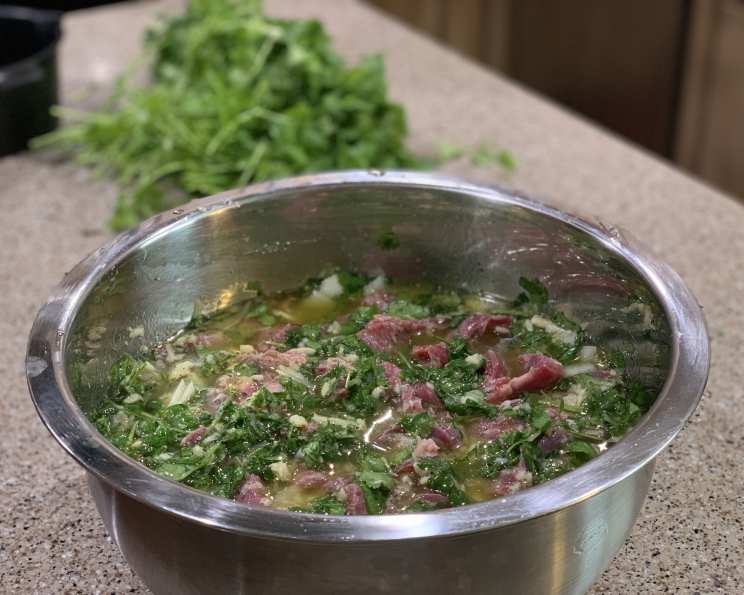
Chimichurri: Argentina’s Zesty Herb Sauce for Grilled Meats
I remember the first time I tasted real chimichurri. I was backpacking through Patagonia, miles from anywhere, and a gaucho shared his asado with me – perfectly grilled lamb, smoky and tender, drizzled with this vibrant green sauce. The explosion of fresh herbs, garlic, and a hint of spice cut through the richness of the meat, awakening my palate in a way I’d never experienced. It wasn’t just a sauce; it was a story, a taste of the land itself. That day, I vowed to learn the secrets of this magical Argentinian condiment.
Recipe Overview
- Prep Time: 5 minutes
- Cook Time: 0 minutes (plus 30 minutes resting)
- Total Time: 35 minutes (plus optional refrigeration time)
- Yield: 1 1/2 cups
- Dietary Type: Vegan, Gluten-Free, Dairy-Free
Ingredients
- 1 bunch parsley, roughly chopped
- 8 garlic cloves, crushed
- 1 teaspoon oregano
- 2 tablespoons paprika (optional)
- 1⁄4 – 1⁄2 teaspoon cayenne pepper
- 1 – 2 teaspoon salt
- 1⁄3 cup red wine vinegar (use sherry vinegar for a more subtle flavour)
- 3⁄4 cup olive oil
Equipment Needed
- Blender or Food Processor
- Bowl
Instructions
-
In a blender or food processor, combine the parsley, garlic, oregano, paprika (if using), salt, cayenne pepper, and red wine vinegar.
-
Pulse the mixture to process well, but be careful not to over-process it into a puree. The chimichurri should retain a slightly chunky texture. You want to see the individual herbs, not just a green paste.
-
Transfer the mixture to a bowl.
-
Stir in the olive oil.
-
Let the chimichurri stand for at least 30 minutes at room temperature to allow the flavors to meld and develop. This step is crucial for achieving the authentic taste.
-
For an even deeper flavor, it is recommended to let the chimichurri sit in the refrigerator for a few days before using. The flavors intensify over time.
Expert Tips & Tricks
- Don’t over-process: As mentioned before, maintaining a slightly chunky texture is key. Over-processing will result in a bitter, less flavorful sauce.
- Fresh is best: Use the freshest parsley you can find. The flavor of the sauce depends heavily on the quality of the herbs. Flat-leaf parsley (Italian parsley) is the traditional choice.
- Adjust the heat: The amount of cayenne pepper can be adjusted to your preference. Start with 1/4 teaspoon and taste, adding more if you like a spicier sauce.
- Emulsifying the Sauce: While chimichurri isn’t traditionally fully emulsified, you can whisk the olive oil and vinegar together vigorously before adding them to the herb mixture for a slightly smoother consistency.
- Garlic intensity: If you prefer a milder garlic flavor, blanch the garlic cloves in boiling water for a minute before crushing them. This will mellow their pungency.
- Make it ahead: Chimichurri is a fantastic make-ahead sauce. The flavors deepen and improve over time, making it perfect for preparing a day or two in advance.
- Use good quality olive oil: Since the olive oil makes up a significant portion of the sauce, use a good quality extra virgin olive oil for the best flavor.
Serving & Storage Suggestions
Chimichurri is traditionally served with grilled meats, especially steak, chorizo, and lamb. However, its versatility extends beyond just meat. Try it:
- As a marinade for chicken or fish.
- Drizzled over roasted vegetables.
- As a topping for eggs.
- Mixed into scrambled eggs or omelets.
- Served with grilled halloumi cheese.
- Used as a vibrant addition to sandwiches or tacos.
Storage:
- Room Temperature: Chimichurri can be left at room temperature for up to 2 hours.
- Refrigerator: Store in an airtight container in the refrigerator for up to 1 week. The olive oil may solidify in the fridge, but it will return to its normal consistency at room temperature.
- Freezer: While not ideal, chimichurri can be frozen. However, the texture may change slightly upon thawing. Freeze in ice cube trays for easy portioning. Use within 2-3 months.
Nutritional Information
| Nutrient | Amount per Serving | % Daily Value |
|---|---|---|
| Calories | 992.6 kcal | N/A |
| Calories from Fat | 973 g | 98% |
| Total Fat | 108.2 g | 166% |
| Saturated Fat | 14.9 g | 74% |
| Cholesterol | 0 mg | 0% |
| Sodium | 1563.3 mg | 65% |
| Total Carbohydrate | 6.2 g | 2% |
| Dietary Fiber | 0.7 g | 2% |
| Sugars | 0.3 g | 1% |
| Protein | 1.3 g | 2% |
Note: Nutritional information is an estimate and may vary based on specific ingredients and portion sizes.
Variations & Substitutions
- Sherry Vinegar: As mentioned in the ingredients, sherry vinegar offers a more subtle and complex flavor than red wine vinegar.
- Different Herbs: While parsley is the star, you can experiment with other herbs like cilantro, mint, or basil. Adjust the proportions to your liking.
- Spice it Up: Add a pinch of red pepper flakes for an extra kick of heat.
- Smoked Paprika: Substitute regular paprika with smoked paprika for a smoky, earthy flavor.
- Lemon Juice: A squeeze of fresh lemon juice can brighten the flavor of the chimichurri.
- Roasted Garlic: For a sweeter, mellower garlic flavor, use roasted garlic instead of fresh garlic.
FAQs (Frequently Asked Questions)
Q: Why is my chimichurri bitter?
A: Over-processing the herbs or using old, bitter parsley can result in a bitter chimichurri. Be sure to pulse the herbs instead of pureeing them, and use fresh, vibrant parsley.
Q: Can I use dried herbs instead of fresh?
A: While fresh herbs are highly recommended for the best flavor, you can use dried herbs in a pinch. Use about 1 teaspoon of dried parsley and 1/4 teaspoon of dried oregano to substitute for the fresh amounts.
Q: How long does chimichurri last?
A: Chimichurri will last for up to a week in the refrigerator. The flavors will actually improve over time.
Q: Can I make chimichurri without a food processor?
A: Yes, you can chop the herbs very finely by hand and then combine them with the other ingredients. It will require more chopping time, but the results will be just as delicious.
Q: What is the best way to serve chimichurri?
A: Chimichurri is best served at room temperature to allow the flavors to fully develop. Drizzle it generously over grilled meats or use it as a condiment for other dishes.
Final Thoughts
Now that you’re armed with this authentic recipe, I encourage you to try making your own chimichurri. Experiment with the ingredients, adjust the spice level to your liking, and discover the magic of this vibrant Argentinian sauce. Whether you’re grilling a steak, roasting vegetables, or simply looking for a flavorful condiment, chimichurri is sure to elevate your culinary creations. Don’t be afraid to share your creations and your feedback with friends and family – and maybe even pair it with a glass of Malbec for the complete Argentinian experience! ¡Buen provecho!