
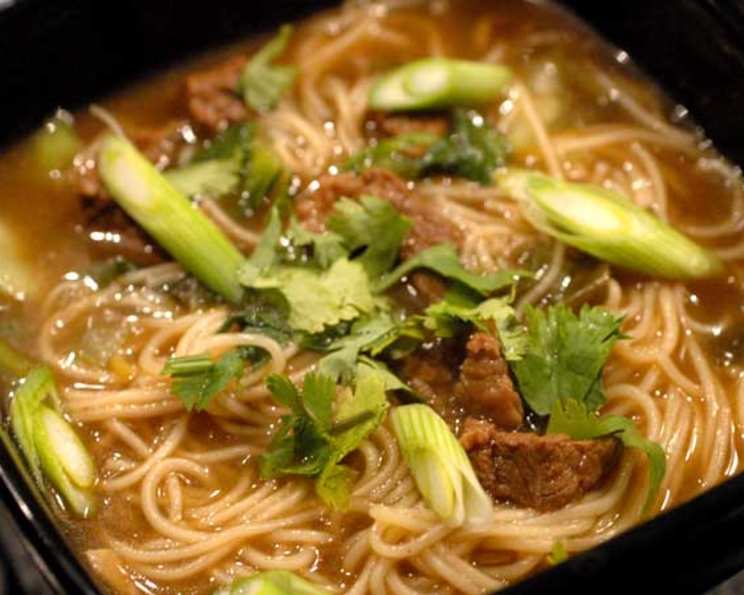
Chinese Cinnamon Beef Noodle Soup: A Taste of Home
The first time I tasted anything like this soup, I was a broke culinary student, craving warmth and flavor on a blistery Chicago winter day. A tiny hole-in-the-wall restaurant tucked away on Argyle Street offered a steaming bowl for next to nothing. The rich, fragrant broth, the tender beef, and the chewy noodles were a revelation. It felt like a warm hug from the inside out, a little piece of culinary magic that I’ve been chasing and recreating ever since. Now, years later, this recipe comes pretty darn close to capturing that memory.
Recipe Overview
- Prep Time: 20 minutes
- Cook Time: 1 hour 30 minutes
- Total Time: 1 hour 50 minutes
- Servings: 6-8
- Dietary Type: Dairy-Free
Ingredients
- 1 teaspoon vegetable oil
- 3 cinnamon sticks (about 3 inches each)
- 6 scallions, cut into 1 1/2 inch pieces
- 6 garlic cloves, smashed
- 2 tablespoons fresh ginger, minced
- 1 1⁄2 teaspoons anise seeds
- 1 1⁄2 teaspoons Asian chili paste
- 7 cups water
- 4 cups low sodium chicken broth
- 1⁄2 cup soy sauce
- 1⁄4 cup rice vinegar
- 2 1⁄2 lbs boneless beef chuck
- 9 ounces fresh udon noodles (or 6 ounces dried)
- 1 1⁄2 lbs bok choy
- 1⁄2 cup fresh cilantro leaves
Equipment Needed
- Heavy soup pot or Dutch oven
- Large pot for cooking noodles
Instructions
- Begin by preparing the beef. If you did not purchase pre-cut stewing beef, cut the beef chuck into approximately 3/4-inch thick chunks.
- Heat the vegetable oil in a heavy soup pot or Dutch oven over medium heat. Allow the oil to become very hot.
- Add the cinnamon sticks, scallions, garlic, ginger, anise seeds, and chili paste to the pot. Cook, stirring frequently, for about 1 minute, until fragrant.
- Pour in the water, chicken broth, soy sauce, and rice vinegar. Increase the heat to high and bring the mixture to a boil.
- Add the beef to the boiling broth. Once the mixture returns to a vigorous simmer, reduce the heat to low.
- Maintain a gentle simmer, partially covered, for approximately 1 1/2 hours, or until the beef is very tender. Be sure to monitor the soup throughout the simmering process to prevent it from either boiling rapidly or ceasing to simmer. Add more water if needed to keep beef covered.
- About 15 minutes before the beef is expected to be tender, bring a large pot of water to a rolling boil.
- Cook the udon noodles according to the package directions until they are just tender.
- Once cooked, drain the noodles immediately and rinse them under cold water to prevent sticking. Set aside.
- When the beef is tender, carefully remove the cinnamon sticks from the soup and discard them.
- Add the bok choy to the soup. Simmer until the stalks are crisp-tender and the greens are very tender, approximately 5 to 10 minutes.
- Stir in the cooked udon noodles and allow them to warm through in the soup.
- Serve the soup immediately, garnished generously with fresh cilantro leaves.
Expert Tips & Tricks
- Beef Selection: While chuck roast is excellent, consider using short ribs for an even richer, more flavorful broth. They’ll require a slightly longer simmering time.
- Spice Level: The chili paste adds a subtle warmth. Adjust the amount to suit your personal preference. For a spicier soup, add a pinch of red pepper flakes along with the paste.
- Broth Depth: For a deeper, more complex flavor, consider browning the beef chuck in the pot before adding the aromatics and liquids. This creates a rich fond on the bottom of the pot, which adds depth to the broth as it simmers.
- Make-Ahead Magic: The soup base (without the noodles and bok choy) can be made a day or two in advance. Store it in the refrigerator and simply reheat it before adding the final ingredients.
- Noodle Know-How: If you’re using dried udon noodles, be careful not to overcook them. They can become mushy quite easily.
Serving & Storage Suggestions
This Chinese Cinnamon Beef Noodle Soup is best served immediately, piping hot, in large bowls. Garnish generously with fresh cilantro leaves for a burst of freshness. A drizzle of sesame oil adds a nutty aroma and flavor.
Leftovers can be stored in an airtight container in the refrigerator for up to 3 days. Reheat gently on the stovetop or in the microwave. The noodles will absorb some of the broth over time, so you may need to add a little water or broth when reheating. Freezing is not recommended as the noodles and bok choy can become mushy upon thawing.
Nutritional Information
| Nutrient | Amount per Serving | % Daily Value |
|---|---|---|
| Calories | 338.9 kcal | N/A |
| Calories from Fat | N/A | N/A |
| Total Fat | 13.6 g | 20% |
| Saturated Fat | 5.6 g | 27% |
| Cholesterol | 124.7 mg | 41% |
| Sodium | 1627.7 mg | 67% |
| Total Carbohydrate | 9.1 g | 3% |
| Dietary Fiber | 1.9 g | 7% |
| Sugars | 2.4 g | N/A |
| Protein | 48 g | 95% |
Note: Nutritional information is an estimate and may vary depending on specific ingredients and portion sizes.
Variations & Substitutions
- Gluten-Free: Use gluten-free tamari instead of soy sauce and opt for rice noodles or gluten-free udon noodles.
- Vegetarian/Vegan: Substitute the beef chuck with firm or extra-firm tofu. Pan-fry the tofu until golden brown before adding it to the broth. Use vegetable broth instead of chicken broth.
- Spicy Kick: Add a finely chopped red chili pepper or a few dashes of chili oil to the soup for an extra layer of heat.
- Vegetable Variety: Feel free to add other vegetables such as sliced mushrooms, carrots, or snow peas to the soup along with the bok choy.
- Herbal Infusion: Experiment with adding other herbs like Thai basil or mint to the soup for a different flavor profile.
FAQs (Frequently Asked Questions)
Q: Can I use pre-cut stewing beef instead of cutting my own chuck roast?
A: Yes, you can use pre-cut stewing beef. However, cutting your own from a chuck roast allows you to control the size and quality of the beef.
Q: How long will the soup last in the refrigerator?
A: Properly stored in an airtight container, the soup will last for up to 3 days in the refrigerator.
Q: Can I freeze this soup?
A: While you can freeze it, the noodles and bok choy may become mushy upon thawing. It’s best enjoyed fresh or refrigerated.
Q: Can I use dried noodles instead of fresh udon?
A: Yes, you can substitute with dried udon noodles. Be sure to cook them according to package directions.
Q: What if I don’t have Asian chili paste?
A: You can substitute with sriracha or sambal oelek, adjusting the amount to your preferred spice level. A pinch of red pepper flakes can also work in a pinch.
Final Thoughts
This Chinese Cinnamon Beef Noodle Soup is more than just a recipe; it’s an invitation to create a comforting and flavorful experience in your own kitchen. The aromatic spices, tender beef, and slurpable noodles combine to create a dish that’s both satisfying and soul-warming. Don’t be afraid to experiment with variations and substitutions to make it your own. I encourage you to try this recipe, share it with loved ones, and let the fragrant broth transport you to a place of culinary bliss. And if you tweak it, add your own spin, or discover a new variation, please share your feedback – I’d love to hear about it! Perhaps pair it with a simple side of stir-fried greens or a crisp, refreshing cucumber salad for a complete and satisfying meal.