
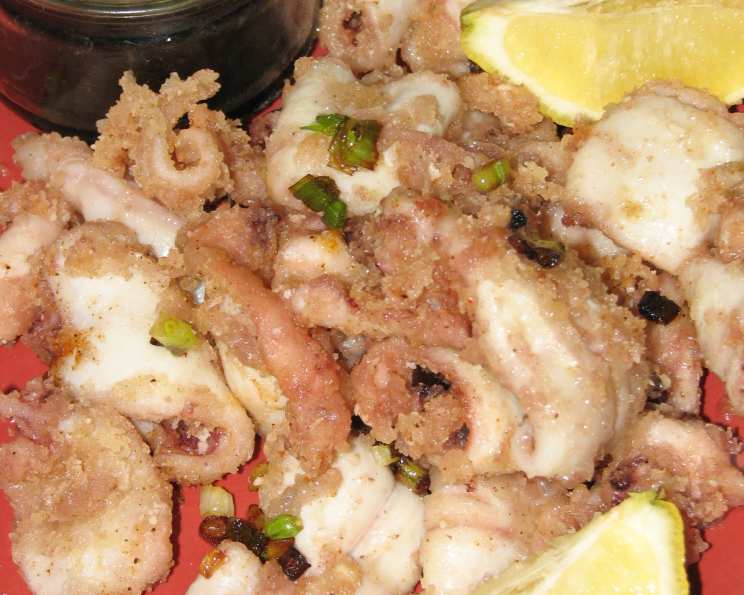
Chinese Crisp: Fried Salt and Pepper Squid
The first time I tasted salt and pepper squid, it was in a bustling, neon-lit night market in Hong Kong. The air buzzed with the aroma of a hundred different street foods, but this one – the dai pai dong stall frying up glistening, golden squid – stood out. The vendor, with a practiced flick of the wrist, tossed the crispy morsels into a paper cone, showering them with chopped chilies and scallions. That first bite, the perfect balance of salty, peppery, and umami, the incredibly tender squid with a satisfying crunch – it was a revelation, a culinary memory etched in my mind. It’s a dish I’ve been chasing ever since, striving to recreate that perfect combination of textures and flavours.
Recipe Overview
- Prep Time: 10 minutes
- Cook Time: 15 minutes
- Total Time: 25 minutes
- Servings: 4
- Dietary Type: Dairy-Free
Ingredients
- 300g young squid, each about 4 to 5 cm long, cleaned
- 3 cups vegetable oil, for deep frying
- 1 tablespoon sea salt
- 1 tablespoon black peppercorns
- 75g cornflour
- 1 red chile, very thinly sliced, seeds and all
- 2 green onions, cut into 1 cm pieces
Equipment Needed
- Deep frying pan or wok
- Pestle and mortar
- Mesh spoon
- Kitchen paper
Instructions
- Using a sharp knife, slit each squid body open along one side. Then, on the inside of each body, score in a criss-cross pattern. This helps tenderize the squid and creates more surface area for the coating. Set aside the prepared squid bodies with the tentacles.
- Pour about 5 cm of vegetable oil into a deep frying pan or wok. Heat the oil over medium-high heat until it reaches a temperature suitable for deep frying (around 175°C or 350°F). If you don’t have a thermometer, you can test the oil by dropping a small piece of squid into it. If it sizzles immediately and floats to the surface, the oil is ready.
- In a pestle and mortar, combine the sea salt and black peppercorns. Crush coarsely together until the peppercorns are broken down but not completely pulverized. This will give the dish a wonderful textural contrast.
- In a bowl, stir the crushed salt and pepper mixture into the cornflour. This mixture forms the crispy coating for the squid.
- Toss the squid in the cornflour mixture, ensuring each piece is evenly coated. Shake off any excess cornflour; too much will make the oil cloudy and the squid greasy.
- Carefully add the sliced red chile and green onions to the hot oil. Cook for about 30 seconds, or until they are fragrant and slightly crispy. Use a mesh spoon to quickly remove them from the oil and drain on kitchen paper. This step infuses the oil with their flavours and creates a garnish with a pleasant crisp.
- Working in batches to avoid overcrowding the pan, cook the squid bodies and tentacles in the hot oil for about 2 minutes. The squid is ready when it rolls up, turns crisp, and is lightly golden. Be careful not to overcook the squid, as it will become rubbery.
- Transfer the fried squid to a plate lined with kitchen paper to drain any excess oil.
- Scatter the crispy chile and green onions over the fried squid.
- Serve immediately with soy sauce for drizzling and lemon wedges for squeezing over. The acidity of the lemon cuts through the richness of the fried squid and complements the salt and pepper flavours perfectly.
Expert Tips & Tricks
- Don’t overcrowd the pan: Frying in batches ensures the oil temperature doesn’t drop too much, which leads to soggy, less crispy squid.
- Use fresh oil: For the best flavour and colour, use fresh vegetable oil. If you’ve used the oil for frying before, make sure to strain it well and discard any debris.
- Double fry for extra crispiness: For an even crispier result, you can fry the squid twice. After the first fry, let the squid cool slightly, then fry it again for another minute or so until golden brown and extra crispy.
- Keep it hot: Serve immediately after frying to enjoy the squid at its crispiest. If you need to keep it warm for a few minutes, place it on a wire rack in a warm oven (about 90°C or 200°F).
Serving & Storage Suggestions
Serve the salt and pepper squid hot and fresh, ideally as soon as it comes out of the fryer. Arrange it attractively on a plate, making sure the crispy chilies and scallions are evenly distributed. Offer soy sauce in a small dish for dipping or drizzling, along with fresh lemon or lime wedges.
Leftovers are best enjoyed immediately, as the squid will lose its crispiness over time. If you must store them, place them in an airtight container in the refrigerator for up to 24 hours. To reheat, you can try briefly re-frying them, but they won’t be as good as freshly made. Microwaving is not recommended, as it will make the squid rubbery.
Nutritional Information
| Nutrient | Amount per Serving | % Daily Value |
|---|---|---|
| Calories | 399 kcal | 20% |
| Total Fat | 34g | 52% |
| Saturated Fat | 5g | 25% |
| Cholesterol | 44mg | 15% |
| Sodium | 445mg | 19% |
| Total Carbohydrate | 5g | 2% |
| Dietary Fiber | 0.6g | 2% |
| Sugars | 0.2g | 1% |
| Protein | 15g | 30% |
Note: Nutritional information is an estimate and may vary based on specific ingredients and cooking methods.
Variations & Substitutions
- Gluten-free: To make this dish gluten-free, simply substitute the cornflour with tapioca starch or a gluten-free cornflour blend. Ensure your soy sauce is also gluten-free (tamari is a good option).
- Spicy kick: For an extra spicy kick, add a pinch of cayenne pepper or a dash of your favourite hot sauce to the cornflour mixture. You can also use dried chili flakes instead of fresh chilies.
- Different seafood: While squid is the traditional choice, you can also use other types of seafood, such as shrimp or calamari rings. Adjust the cooking time accordingly.
- Vegetarian option: While not traditional, you can adapt this recipe for tofu or firm mushrooms for a vegetarian version. Coat them in the salt and pepper cornflour mixture and deep fry until crispy.
FAQs (Frequently Asked Questions)
Q: Can I use frozen squid for this recipe?
A: Yes, you can use frozen squid, but make sure to thaw it completely and pat it dry with paper towels before coating it with cornflour. Excess moisture will prevent the squid from getting crispy.
Q: How do I clean the squid properly?
A: To clean squid, gently pull the head and tentacles away from the body. Remove the transparent quill or cartilage inside the body. Rinse the body and tentacles thoroughly under cold water. You can also remove the outer skin if desired, but it’s not necessary.
Q: Can I bake the squid instead of frying it?
A: While deep frying is essential for the characteristic crispiness, you can try baking the squid for a healthier option. Toss the coated squid with a little oil and bake at 200°C (400°F) for about 15-20 minutes, flipping halfway through. It won’t be as crispy as the fried version, but it will still be delicious.
Q: What kind of soy sauce should I use?
A: You can use any type of soy sauce you prefer, but a light or all-purpose soy sauce is a good choice for drizzling. Dark soy sauce can be too strong and overpowering.
Q: How can I prevent the oil from splattering while frying?
A: Make sure the squid is as dry as possible before adding it to the hot oil. You can also use a splatter screen to cover the pan while frying.
Final Thoughts
This Fried Salt and Pepper Squid is more than just a recipe; it’s a portal back to those vibrant Hong Kong nights, the symphony of sizzling sounds, and the explosion of flavour in every bite. I encourage you to try this recipe, experiment with your own variations, and share the joy of this incredible dish with your friends and family. Pair it with a crisp, cold Asian beer or a refreshing glass of iced green tea. Don’t be afraid to get creative with the presentation and most importantly, have fun in the kitchen! Let me know how your version turns out; I’m always eager to hear your feedback and experiences.