
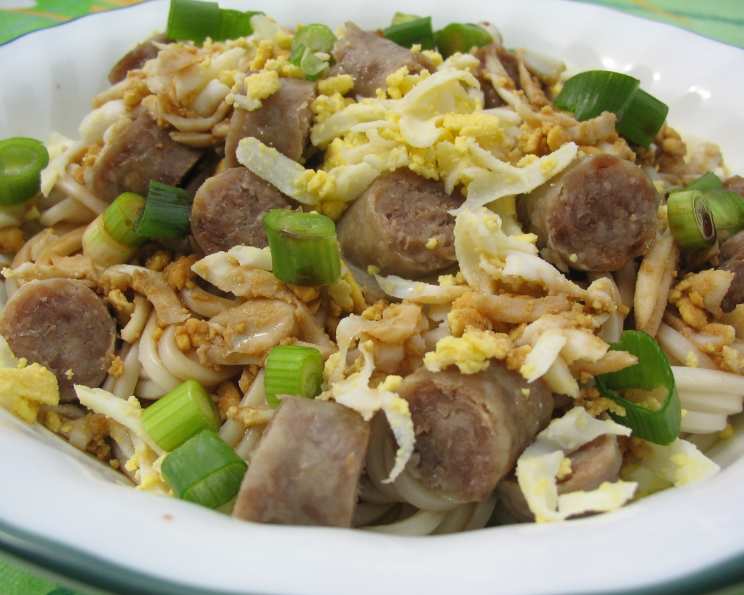
Chinese Noodle Comfort: A Taste of Home
The scent of these noodles instantly transports me back to my childhood kitchen. My mom, ever the resourceful cook, would whip up this simple dish on busy weeknights. I remember the clatter of her wok, the sizzle of the sausage, and the satisfying slurp as we devoured our bowls. It wasn’t fancy, but it was pure comfort food, a reminder of home, love, and simple flavors that still warm my heart today. This recipe isn’t just a meal; it’s a memory I cherish and am excited to share with you.
Recipe Overview
- Prep Time: 10 minutes
- Cook Time: 25 minutes
- Total Time: 35 minutes
- Servings: 2
- Dietary Type: Not specified
Ingredients
- 8 ounces Chinese egg noodles
- 6 sausages (I recommend Johnsonville “original” breakfast links)
- 2 eggs, hard boiled
- 4 green onions
- Soy sauce, to taste
- Sesame seeds (optional)
Equipment Needed
- Large pot
- Medium-sized bowl
- Cutting board
- Knife
- Grater (optional)
Instructions
- Begin by cooking the sausages. Place the sausage links in a large pot and cover them with boiling water. Cook until they are thoroughly cooked through, which typically takes approximately 20-25 minutes. Ensure the internal temperature reaches 160°F (71°C).
- Once the sausages are cooked, remove them from the pot and let them cool slightly. Remove any casings that may be left on the sausages. Then, using a sharp knife, cut the sausages into 1/2-inch pieces. Set the sausage pieces aside.
- While the sausages are cooking, prepare the hard-boiled eggs. If you haven’t already, hard boil the eggs. Once cooled, peel the eggs and either grate them into a medium-sized bowl or chop them finely. I prefer grating the eggs for a finer texture that distributes well throughout the noodles.
- Next, prepare the green onions. Thoroughly clean the green onions under cold water. Pat them dry and slice them thinly, separating the white and green parts for a more visually appealing dish, if desired.
- Now, cook the Chinese egg noodles according to the package directions. This usually involves boiling the noodles in salted water until they are tender but still slightly firm, known as al dente. Be careful not to overcook the noodles, as they can become mushy.
- Once the noodles are cooked, drain them well to remove any excess water.
- Place the desired amount of cooked and drained Chinese egg noodles into a bowl.
- Top the noodles with the sausage pieces, grated or chopped hard-boiled egg, and sliced green onions.
- Drizzle with soy sauce to taste. Start with a small amount and add more as needed to achieve your desired level of saltiness.
- If desired, sprinkle with sesame seeds for added flavor and texture.
Expert Tips & Tricks
- Sausage Selection: Don’t be afraid to experiment with different types of sausage. While the recipe calls for Johnsonville “original” breakfast links”, you can use other flavors or even Italian sausage for a different twist.
- Egg Perfection: To achieve perfectly hard-boiled eggs with no green ring, place the eggs in a saucepan and cover them with cold water. Bring the water to a rolling boil, then immediately remove the pan from the heat and cover it. Let the eggs sit in the hot water for 10-12 minutes, depending on the size of the eggs. Then, transfer the eggs to an ice bath to stop the cooking process.
- Noodle Texture: To prevent the noodles from sticking together after draining, toss them with a small amount of sesame oil or soy sauce.
- Flavor Boost: A small drizzle of chili oil or a sprinkle of red pepper flakes can add a delightful kick to this dish.
- Make-Ahead Prep: You can cook the sausages and hard-boil the eggs in advance to save time. Store them separately in the refrigerator until ready to assemble the dish.
Serving & Storage Suggestions
Serve these Chinese noodles immediately while they are warm. The dish is best enjoyed fresh, as the noodles can become sticky if left to sit for too long.
To store leftovers, place them in an airtight container and refrigerate for up to 2 days. Reheat gently in the microwave or in a skillet over low heat, adding a splash of water or soy sauce if necessary to prevent the noodles from drying out. Freezing is not recommended, as the texture of the noodles and eggs may change upon thawing.
Nutritional Information
| Nutrient | Amount per Serving | % Daily Value |
|---|---|---|
| Calories | 776 kcal | N/A |
| Calories from Fat | 291 g | 38% |
| Total Fat | 32.4 g | 49% |
| Saturated Fat | 10.3 g | 51% |
| Cholesterol | 367.7 mg | 122% |
| Sodium | 633 mg | 26% |
| Total Carbohydrate | 83.8 g | 27% |
| Dietary Fiber | 4.5 g | 18% |
| Sugars | 3.2 g | 12% |
| Protein | 35.7 g | 71% |
Note: Nutritional information is an estimate and may vary based on specific ingredients and portion sizes.
Variations & Substitutions
- Vegetarian Option: Substitute the sausage with tofu or tempeh for a vegetarian version. Marinate the tofu or tempeh in soy sauce, ginger, and garlic before cooking to enhance the flavor.
- Gluten-Free: Use gluten-free noodles or rice noodles as a substitute for the Chinese egg noodles.
- Protein Boost: Add shredded chicken, shrimp, or beef for extra protein.
- Vegetable Medley: Incorporate your favorite vegetables, such as broccoli, carrots, snap peas, or mushrooms, for added nutrients and flavor.
- Spicy Kick: Add a dash of Sriracha or chili garlic sauce for a spicy twist.
- Sesame Oil: Drizzle with a bit of sesame oil for a more intense flavor.
FAQs (Frequently Asked Questions)
Q: Can I use other types of noodles besides Chinese egg noodles?
A: Absolutely! Feel free to experiment with other types of noodles, such as udon, ramen, or even spaghetti. Just adjust the cooking time accordingly.
Q: Can I make this dish ahead of time?
A: While it’s best enjoyed fresh, you can prepare the individual components (cooking the sausage, hard-boiling the eggs, and slicing the green onions) in advance. Store them separately and combine them just before serving.
Q: How do I prevent the noodles from sticking together?
A: To prevent sticking, toss the cooked and drained noodles with a small amount of soy sauce or sesame oil. Avoid overcooking the noodles, as this can also contribute to stickiness.
Q: Can I add vegetables to this dish?
A: Yes, definitely! Adding vegetables like broccoli, carrots, or snap peas can add more nutrients and flavor. Stir-fry the vegetables separately before adding them to the noodles.
Q: Is this dish spicy?
A: The base recipe is not spicy, but you can easily add a pinch of red pepper flakes, a drizzle of chili oil, or a dash of Sriracha to customize the spice level.
Final Thoughts
I hope this recipe brings as much comfort and joy to your table as it has to mine. Don’t hesitate to experiment with different ingredients and flavors to create your own personalized version of this classic dish. Whether you’re cooking for a quick weeknight meal or sharing it with loved ones, these Chinese noodles are sure to be a hit. Please let me know what you think. Happy cooking!