
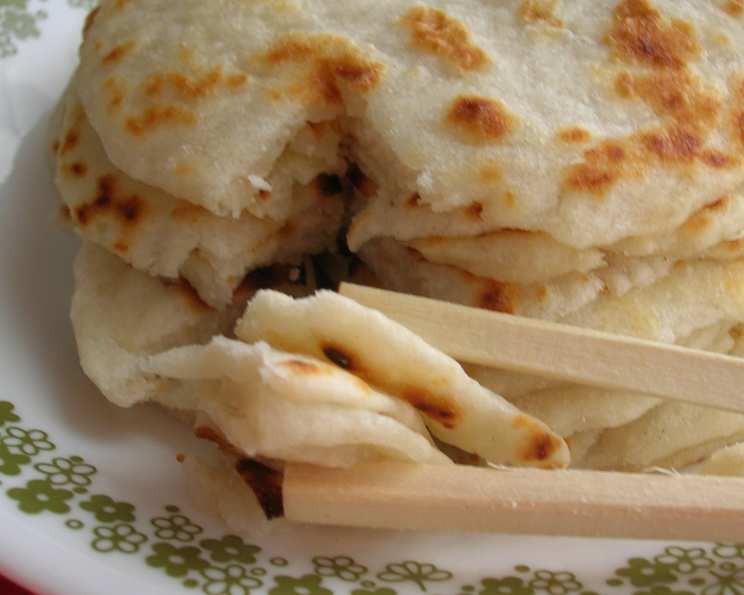
Chinese Pancakes: A Culinary Canvas
I can still remember the first time I had a perfectly executed Peking duck. The crispy skin, the succulent meat, and the sweet hoisin sauce were all incredible, but what truly elevated the experience were the delicate, paper-thin pancakes that cradled it all. It was more than just a meal; it was an edible work of art, a testament to the power of simple ingredients transformed into something extraordinary. That experience sparked a lifelong fascination with these seemingly unassuming pancakes.
Recipe Overview
- Prep Time: 20 minutes
- Cook Time: 20 minutes
- Total Time: 40 minutes
- Yields: 12 pancakes
- Dietary Type: Vegetarian
Ingredients
- 225 g plain flour, sieved
- 150 ml boiling water
- 2 teaspoons olive oil
Equipment Needed
- Mixing bowl
- Rolling pin
- Clean work surface (lightly floured)
- Large skillet or flat griddle
Instructions
- In a mixing bowl, combine the sieved plain flour and the boiling water. Immediately start mixing with a wooden spoon or chopsticks – be careful, the water is hot!
- Add 1 teaspoon of olive oil to the mixture.
- Knead the ingredients together, either in the bowl or on a lightly floured surface, until a firm, smooth dough forms. This may take about 5-7 minutes. If the dough is too sticky, add a little more flour, one teaspoon at a time. If it’s too dry, add a tiny bit more water, drop by drop.
- Once the dough is ready, divide it into two equal portions.
- Roll each portion into a long, thin sausage shape.
- Cut each “sausage” into 6 equal pieces, resulting in 12 pieces of dough.
- Take each piece of dough and press it into a flat circle using your palm or a rolling pin. Aim for circles that are roughly 3-4 inches in diameter.
- Brush six of the twelve pancake circles with the remaining olive oil (about ½ teaspoon per pancake).
- Place the remaining six pancake circles on top of the oiled ones, creating six “pancake sandwiches.”
- Using a rolling pin and a lightly floured surface, roll each pancake sandwich into a thin, even circle approximately 6 inches in diameter. Apply even pressure to ensure the layers stay aligned.
- Heat an ungreased skillet or flat griddle over high heat.
- Reduce the heat to medium-high and carefully place one pancake onto the hot pan.
- Cook the pancake for approximately 30-60 seconds, or until small brown spots start to appear on the underside. Keep a close watch to prevent burning.
- Flip the pancake and cook for another 30-60 seconds, or until it starts to puff up with air bubbles. This indicates that the layers are separating.
- Remove the pancake from the pan and carefully peel apart the two layers while they are still warm. They should separate easily. If they don’t, gently encourage them with a thin spatula.
- Repeat the procedure for the remaining pancakes. Stack the cooked pancakes under a clean tea towel to keep them warm and pliable until serving.
Expert Tips & Tricks
- Hot Water is Key: Using boiling water gelatinizes the starches in the flour, resulting in a softer, more pliable dough that’s easier to roll out thinly.
- Resting the Dough: Allow the dough to rest for at least 15 minutes before dividing and rolling. This allows the gluten to relax, making the pancakes more tender. Cover the dough with a damp cloth or plastic wrap to prevent it from drying out.
- Rolling Thinly: Achieving truly thin pancakes takes practice. Use consistent pressure with your rolling pin and rotate the pancake frequently to ensure even thickness.
- Prevent Sticking: If the pancakes are sticking to the pan, it may not be hot enough. Ensure the pan is well-heated before adding the pancakes.
- Peeling Perfection: If the layers are difficult to separate, try gently massaging the pancake while it’s cooking to encourage separation. You can also use a thin spatula to carefully lift the edges and create a starting point for peeling.
- Make-Ahead Option: You can prepare the dough ahead of time and store it in the refrigerator for up to 24 hours. Bring it to room temperature before rolling. The cooked pancakes can also be reheated by steaming them for a few minutes or microwaving them briefly.
Serving & Storage Suggestions
These Chinese pancakes are best served warm and fresh. They are the perfect accompaniment to Peking duck, moo shu pork, or any stir-fry. Serve them with a variety of fillings and sauces, such as:
- Peking Duck: Crispy duck skin, thinly sliced duck meat, scallions, and hoisin sauce.
- Moo Shu Pork: Stir-fried shredded pork, cabbage, mushrooms, and scrambled eggs with hoisin sauce.
- Vegetarian Stir-fry: Tofu, vegetables, and a savory sauce.
- Sweet Fillings: Nutella, peanut butter, or jam for a simple dessert.
Store leftover pancakes in an airtight container at room temperature for up to 24 hours, or in the refrigerator for up to 3 days. To reheat, steam them for a few minutes until softened, or microwave them briefly with a damp paper towel to prevent them from drying out.
Nutritional Information
| Nutrient | Amount per Serving | % Daily Value |
|---|---|---|
| Calories | 75 kcal | 4% |
| Total Fat | 1.5g | 2% |
| Saturated Fat | 0.2g | 1% |
| Cholesterol | 0mg | 0% |
| Sodium | 1mg | 0% |
| Total Carbohydrate | 14g | 5% |
| Dietary Fiber | 0.5g | 2% |
| Sugars | 0.2g | 0% |
| Protein | 2g | 4% |
Nutritional information is an estimate and may vary based on specific ingredients and preparation methods.
Variations & Substitutions
- Gluten-Free: Substitute the plain flour with a gluten-free all-purpose flour blend. You may need to adjust the amount of water to achieve the right dough consistency.
- Whole Wheat: Use half whole wheat flour and half plain flour for a nuttier flavor and added fiber.
- Sesame Oil: Replace the olive oil with sesame oil for a more authentic Chinese flavor.
- Sweet Pancakes: Add a tablespoon of sugar to the flour for a slightly sweet pancake that pairs well with dessert fillings.
- Savory Pancakes: Add a teaspoon of garlic powder or onion powder to the flour for a savory flavor.
FAQs (Frequently Asked Questions)
Q: Why is boiling water used instead of cold water?
A: Boiling water helps to create a softer, more pliable dough by gelatinizing the starches in the flour. This makes the pancakes easier to roll out thinly and gives them a more delicate texture.
Q: How do I prevent the pancakes from sticking to the pan?
A: Make sure your pan is hot enough before adding the pancakes. Also, be sure to roll the pancakes out on a lightly floured surface to prevent sticking.
Q: Can I make these pancakes ahead of time?
A: Yes, you can prepare the dough ahead of time and store it in the refrigerator for up to 24 hours. Bring it to room temperature before rolling. The cooked pancakes can also be reheated.
Q: What if my pancake layers don’t separate easily?
A: Gently massage the pancake while it’s cooking to encourage separation. You can also use a thin spatula to carefully lift the edges and create a starting point for peeling.
Q: Can I freeze these pancakes?
A: Yes, you can freeze cooked pancakes. Stack them with parchment paper in between to prevent sticking, and then place them in a freezer-safe bag or container. Thaw completely before reheating.
Final Thoughts
Making Chinese pancakes at home might seem intimidating, but with a little patience and practice, you’ll be able to create these delicate wrappers that are perfect for so many delicious fillings. Don’t be afraid to experiment with different variations and fillings to create your own signature dish. I encourage you to give this recipe a try and share your creations with friends and family. Whether you’re serving them with classic Peking duck or a simple vegetarian stir-fry, these pancakes are sure to be a crowd-pleaser! Enjoy the journey and the delicious results!