
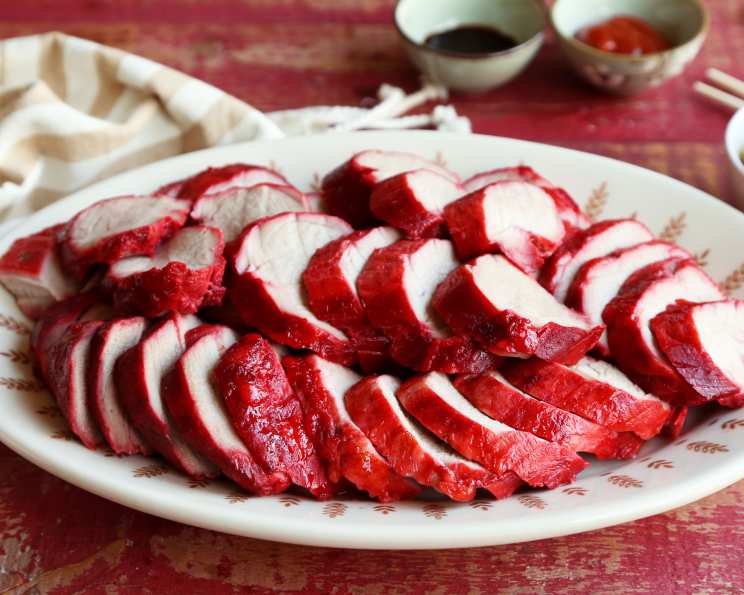
Chinese Roast Pork Tenderloin: A Taste of Home
The aroma still takes me back. My grandmother, a Cantonese immigrant, would make this dish for special occasions. The sweet and savory fragrance of the marinade, a heady mix of soy, sherry, and five-spice, permeated every corner of her tiny kitchen. It wasn’t just a meal; it was a symbol of her heritage, adapted and perfected in her new home, a delicious bridge between two worlds. Each slice, glazed and glistening, was a little piece of love.
Recipe Overview
- Prep Time: 15 minutes
- Cook Time: 1 hour
- Total Time: 7 hours 15 minutes (includes marinating time)
- Servings: 4
- Dietary Type: Gluten-Free (check soy sauce ingredients)
Ingredients
- 1 (2 lb) whole pork tenderloin, well trimmed
- ½ cup water or ½ cup chicken stock
- ¼ cup light brown sugar, packed
- 2 teaspoons kosher salt
- ½ teaspoon Chinese five spice powder
- 2 tablespoons Kikkoman soy sauce
- 1 tablespoon dry sherry or 1 tablespoon Japanese sake
- 1 tablespoon yellow miso (Yellow miso can be bought in the Asian section of most supermarkets)
- 2 teaspoons crushed fresh garlic
- ¼ teaspoon red food coloring (optional, for color)
Equipment Needed
- Large ziploc freezer bag
- Small bowl
- Whisk or fork
- Shallow baking pan
- Wire rack
- Meat thermometer
Instructions
- Prepare the Marinade: In a small bowl, whisk together the water (or chicken stock), light brown sugar, kosher salt, Chinese five spice powder, soy sauce, dry sherry (or sake), yellow miso, crushed fresh garlic, and red food coloring (if using). Stir until the sugar and salt have completely dissolved.
- Marinate the Pork: Place the pork tenderloin in a large ziploc freezer bag. Pour the prepared marinade into the bag.
- Seal and Refrigerate: Remove as much air as possible from the ziploc bag and seal it tightly. Massage the marinade into the pork to ensure it’s evenly coated. Refrigerate for a minimum of 6 hours, but preferably between 6 and 36 hours for the best flavor penetration. Turning the bag occasionally will ensure even marination.
- Preheat the Oven: Preheat your oven to 375 degrees Fahrenheit (190 degrees Celsius).
- Prepare for Roasting: Remove the pork tenderloin from the marinade. Discard the remaining marinade – do not reuse it. Place the pork tenderloin on a wire rack set inside a shallow baking pan. This allows for air circulation and helps the pork roast evenly.
- Insert Thermometer: Insert a meat thermometer into the thickest part of the pork tenderloin. Ensure the thermometer doesn’t touch any bone.
- Roast the Pork: Roast in the preheated oven for approximately 1 hour, or until the internal temperature reaches 165 degrees Fahrenheit (74 degrees Celsius). Cooking time may vary depending on your oven and the thickness of the tenderloin, so rely on the thermometer.
- Rest the Pork: Once the pork reaches 165°F, remove it from the oven and let it rest on the wire rack for 15 minutes before removing the thermometer. This resting period allows the juices to redistribute throughout the meat, resulting in a more tender and flavorful final product. Tent loosely with foil if desired to retain heat.
- Slice and Serve: To serve as a main course, cut the pork tenderloin into ¼-inch slices. For a Chinese appetizer presentation, slice into ¼-inch pieces and arrange on a platter with small bowls of Chinese hot mustard and untoasted sesame seeds. Instruct guests to dip a slice into the mustard, then into the sesame seeds for an authentic experience.
Expert Tips & Tricks
- Marinating Time: Don’t skimp on the marinating time! The longer the pork marinates, the more flavorful and tender it will become. Aim for at least 6 hours, and ideally overnight.
- Miso Matters: Yellow miso has a mild, slightly sweet flavor that complements the other ingredients perfectly. Avoid using red miso, which has a much stronger, saltier taste that can overpower the dish.
- Doneness is Key: A meat thermometer is your best friend for achieving perfectly cooked pork. Overcooked pork tenderloin will be dry and tough. Aim for an internal temperature of 165°F (74°C) for optimal tenderness.
- Browning Boost: For extra browning, you can broil the pork for the last few minutes of cooking, but watch it carefully to prevent burning.
- Garlic Note: Use freshly crushed garlic for the best flavor. Garlic powder is an acceptable substitute, but fresh garlic provides a much brighter and more aromatic taste.
Serving & Storage Suggestions
This Chinese Roast Pork Tenderloin can be served as a delightful main course with steamed rice and stir-fried vegetables, or as an appetizer. To serve it as an appetizer, slice thinly and serve with small bowls of Chinese hot mustard and untoasted sesame seeds.
Leftover pork can be stored in an airtight container in the refrigerator for up to 3-4 days. For longer storage, slice the pork and freeze it in a freezer-safe container for up to 2 months. To reheat, thaw the pork in the refrigerator overnight and then gently warm it in a skillet or microwave. Adding a splash of broth or water can help prevent it from drying out.
Nutritional Information
| Nutrient | Amount per Serving | % Daily Value |
|---|---|---|
| Calories | 338 kcal | – |
| Calories from Fat | 73 g | 22% |
| Total Fat | 8.1 g | 12% |
| Saturated Fat | 2.7 g | 13% |
| Cholesterol | 147.6 mg | 49% |
| Sodium | 1847 mg | 76% |
| Total Carbohydrate | 15 g | 5% |
| Dietary Fiber | 0.2 g | 0% |
| Sugars | 13.6 g | – |
| Protein | 48.1 g | 96% |
Variations & Substitutions
- Gluten-Free: Ensure you use a gluten-free soy sauce, such as tamari.
- Spice Level: Adjust the amount of Chinese five-spice powder to your preference. For a spicier version, add a pinch of red pepper flakes to the marinade.
- Sweetness: If you prefer a less sweet dish, reduce the amount of brown sugar in the marinade. Alternatively, use honey or maple syrup for a different flavor profile.
- Miso Substitute: If you can’t find yellow miso, you can try using white miso, though it will have a slightly different flavor. In a pinch, you can omit the miso, but it does contribute a unique umami note to the dish.
- Marinade Boost: Add a small piece of ginger, finely grated, to the marinade for an extra layer of flavor.
FAQs (Frequently Asked Questions)
Q: Can I use pork loin instead of pork tenderloin?
A: While you can use pork loin, keep in mind that it’s a larger, leaner cut of meat. You’ll need to adjust the cooking time accordingly, and it might not be as tender as pork tenderloin.
Q: Can I marinate the pork for longer than 36 hours?
A: While it’s generally safe to marinate for longer, the pork might become too soft or mushy if marinated for an extended period. It’s best to stick to the recommended 6-36 hour range.
Q: How do I know when the pork is done?
A: The most reliable way is to use a meat thermometer. Insert it into the thickest part of the tenderloin, and when it reaches 165°F (74°C), the pork is cooked through.
Q: Can I grill the pork instead of roasting it?
A: Yes, grilling is an excellent option. Preheat your grill to medium-high heat and grill the pork tenderloin for about 15-20 minutes, turning occasionally, until it reaches an internal temperature of 165°F (74°C).
Q: What side dishes go well with this pork?
A: Steamed rice, stir-fried vegetables (such as broccoli, bok choy, or snow peas), and a simple green salad all complement the flavors of the pork beautifully.
Final Thoughts
This Chinese Roast Pork Tenderloin is more than just a recipe; it’s a connection to my family history and a taste of home. I encourage you to try this recipe and adapt it to your own preferences. Whether you serve it as a main course or an appetizer, I hope it brings you as much joy as it has brought me over the years. Don’t hesitate to share your feedback and any variations you create – I’d love to hear about your culinary adventures! Pair it with a crisp, dry Riesling for a truly unforgettable meal.