
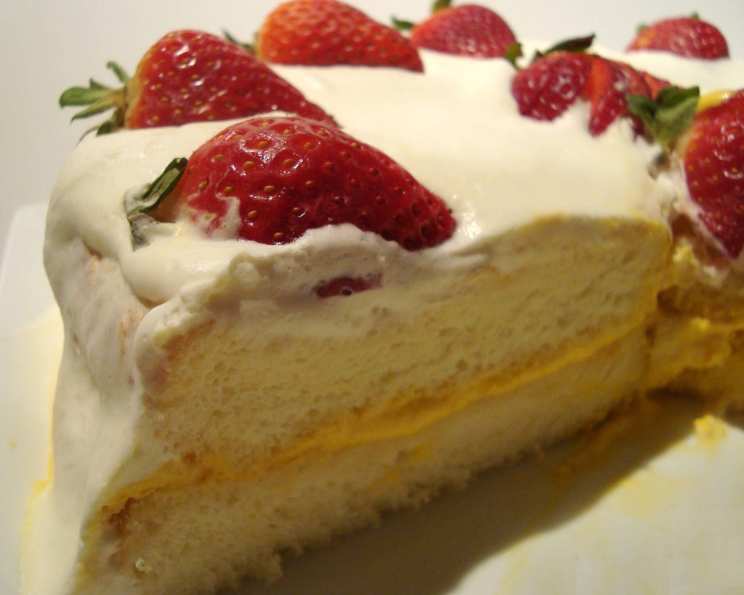
Chinese Sponge Cake: A Taste of Nostalgia
My earliest memories are filled with the comforting aroma of freshly baked cake wafting from our tiny kitchen. It wasn’t the elaborate, multi-tiered creations you see in fancy bakeries, but a simple, golden-hued sponge cake, taller than any other cake, baked in a well-worn aluminum angel food cake pan. My mother, a woman of few words but boundless love, would whip up this treat on special occasions, its airy texture and delicate sweetness a symbol of celebration and togetherness. While I’m still chasing the exact recipe for those fruit-and-cream-topped bakery versions I adore, this recipe brings me closer to the warmth of my childhood kitchen.
Recipe Overview
- Prep Time: 30 minutes
- Cook Time: 45-60 minutes
- Total Time: 1 hour 30 minutes
- Servings: 6-8
- Yield: 1 cake
- Dietary Type: Not Gluten-Free
Ingredients
- 2 cups Softasilk brand cake flour
- 1 1/2 cups sugar
- 1/2 cup oil
- 3/4 teaspoon cream of tartar
- 1 cup water
- 8 eggs, separated
- 3/4 teaspoon vanilla extract (or almond or coconut extract)
Equipment Needed
- Large mixing bowls
- Electric mixer (stand or hand-held)
- Aluminum angel food cake pan (ungreased, do NOT use non-stick)
- Whisk
- Rubber spatula
- Measuring cups and spoons
- Toothpick
Instructions
-
Begin by preparing the sugar syrup. Heat the water in a saucepan over medium heat until it is warm to the touch. Remove from the heat and dissolve the sugar completely in the water. Set aside to cool completely. This step is crucial, as adding hot sugar syrup can cook the egg yolks prematurely.
-
In a large mixing bowl, combine the egg yolks with the cooled sugar water. Whisk until the mixture is smooth and slightly pale yellow.
-
Gradually add the cake flour to the egg yolk mixture, mixing slowly until just combined. Be careful not to overmix at this stage, as this can develop the gluten in the flour and result in a tougher cake.
-
Blend in the oil and extract (vanilla, almond, or coconut) until well incorporated. The batter should be smooth and relatively thin.
-
In a separate, large mixing bowl, beat the egg whites with an electric mixer until soft peaks form. Add the cream of tartar and continue beating until stiff, glossy peaks form. The cream of tartar helps to stabilize the egg whites and create a more voluminous meringue. Be careful not to overwhip the egg whites, or they will become dry and difficult to fold into the batter.
-
Gently fold the egg white mixture into the yolk batter in three additions. Use a rubber spatula and a light hand to avoid deflating the egg whites. Fold from the bottom of the bowl upwards, turning the bowl as you go, until just combined. A few streaks of egg white are fine; overmixing will result in a dense cake.
-
Pour the combined batter into an ungreased aluminum angel food cake pan. It is crucial that the pan is not greased, as the batter needs to cling to the sides of the pan to rise properly. Do NOT use a non-stick pan, as the cake will not be able to climb the sides effectively.
-
Bake in a preheated oven at 350 degrees Fahrenheit for 45-60 minutes, or until a toothpick inserted into the center of the cake comes out clean. Start checking the cake at 45 minutes to prevent overbaking.
-
Once baked, immediately turn the cake upside down onto a wire rack to cool completely. This prevents the cake from collapsing as it cools. The cake should be fully cooled before removing it from the pan, which can take several hours.
-
To remove the cake, run a thin knife or spatula around the edges of the pan to loosen it. Gently invert the cake onto a serving plate.
Expert Tips & Tricks
- Cake Flour is Key: Using Softasilk brand cake flour is essential for achieving the light and airy texture characteristic of Chinese sponge cake. Cake flour has a lower protein content than all-purpose flour, which results in a more tender crumb.
- Cool Sugar Syrup: Make sure the sugar syrup is completely cool before adding the egg yolks, otherwise you risk scrambling them.
- Don’t Overmix: Be gentle when mixing the batter, especially after adding the flour and egg whites. Overmixing will develop the gluten in the flour, leading to a tougher cake.
- Aluminum is a Must: An ungreased aluminum angel food cake pan is critical for this recipe. The cake batter needs to grip the sides of the pan to rise properly. Non-stick pans will prevent this.
- Inverted Cooling: Cooling the cake upside down prevents it from collapsing and helps maintain its height.
Serving & Storage Suggestions
This Chinese sponge cake is delicious on its own, or it can be served with a variety of toppings. Fresh fruit, whipped cream, or a dusting of powdered sugar are all excellent choices. You can also use it as a base for other desserts, such as trifles or parfaits.
Store the cake in an airtight container at room temperature for up to 3 days. It can also be stored in the refrigerator for up to a week. For longer storage, wrap the cake tightly in plastic wrap and freeze it for up to 2 months. To thaw, let the cake sit at room temperature for several hours before serving.
Nutritional Information
| Nutrient | Amount per Serving | % Daily Value |
|---|---|---|
| Calories | 619.9 kcal | N/A |
| Calories from Fat | 226 g | 37% |
| Total Fat | 25.2 g | 38% |
| Saturated Fat | 4.5 g | 22% |
| Cholesterol | 282 mg | 94% |
| Sodium | 95.3 mg | 3% |
| Total Carbohydrate | 86.4 g | 28% |
| Dietary Fiber | 0.8 g | 3% |
| Sugars | 50.7 g | N/A |
| Protein | 12.1 g | 24% |
Note: Nutritional information is an estimate and may vary based on specific ingredients and preparation methods.
Variations & Substitutions
- Extract Flavors: Experiment with different extracts to customize the flavor of your cake. Almond extract, coconut extract, or even a combination of extracts can add a unique twist.
- Citrus Zest: Add the zest of a lemon, orange, or lime to the batter for a bright, citrusy flavor.
- Almond Flour: For a slightly denser and more flavorful cake, substitute up to 1/4 cup of the cake flour with almond flour.
- Gluten-Free Option: While this recipe relies on cake flour, experimenting with gluten-free flour blends could be an option. However, expect a change in texture. A 1:1 gluten-free cake flour blend is recommended, but results will vary.
FAQs (Frequently Asked Questions)
Q: Why is it important to use an aluminum angel food cake pan?
A: The cake batter needs to cling to the sides of the pan to rise properly, and aluminum provides the best surface for this. Non-stick pans will prevent the cake from rising as high.
Q: What happens if I overmix the batter?
A: Overmixing develops the gluten in the flour, resulting in a tougher, denser cake. Be gentle when mixing, especially after adding the flour and egg whites.
Q: How do I know when the cake is done?
A: Insert a toothpick into the center of the cake. If it comes out clean or with just a few moist crumbs, the cake is done.
Q: Can I make this cake ahead of time?
A: Yes, the cake can be made a day or two in advance. Store it in an airtight container at room temperature or in the refrigerator.
Q: Why does the recipe specify Softasilk brand cake flour?
A: Softasilk cake flour has a particularly low protein content. You can substitute other cake flours, but you may notice a difference in texture.
Final Thoughts
This Chinese sponge cake recipe is more than just a set of instructions; it’s a journey back to simpler times, filled with the warmth of family and the comforting scent of home-baked goods. Don’t be intimidated by the seemingly intricate steps – each one contributes to the cake’s delicate texture and delightful flavor. Gather your ingredients, preheat your oven, and embark on this culinary adventure. I encourage you to try this recipe and make it your own. Add your favorite toppings, experiment with different extracts, and share your creations with loved ones. And, if you happen to have a family recipe for those Chinese bakery cakes with the fruit and cream, please send them my way! Happy baking!