
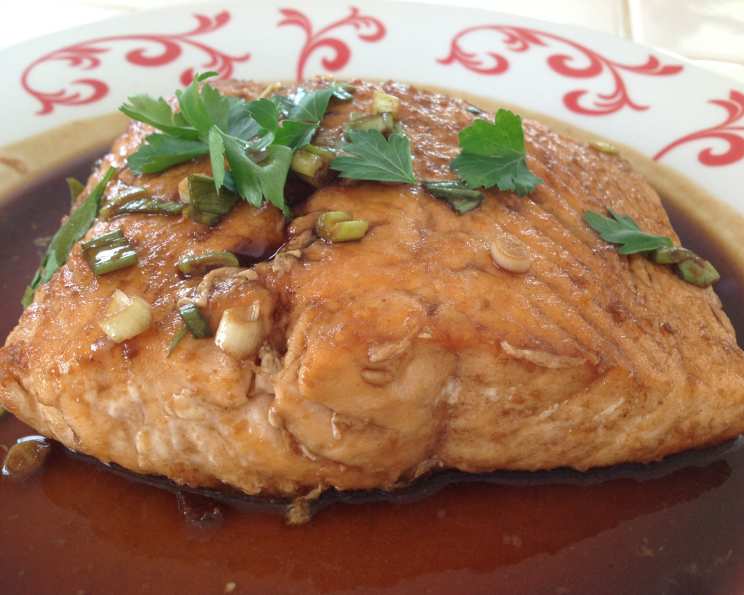
Chinese-Style Flavorful Salmon: A Culinary Journey
The first time I tasted salmon prepared this way, it was a revelation. I was in a small, bustling restaurant in San Francisco’s Chinatown, the air thick with the aroma of ginger, soy, and sizzling garlic. I remember the glistening, perfectly cooked salmon arriving at the table, the bright green cilantro a vibrant contrast to the deep, mahogany-colored sauce. One bite, and I was hooked – the crispy skin giving way to flaky, tender flesh, the umami-rich sauce exploding with flavor. I knew I had to recreate this at home, and after some experimenting, I believe I’ve captured the essence of that unforgettable meal.
Recipe Overview
- Prep Time: 10 minutes
- Cook Time: 10 minutes
- Total Time: 20 minutes
- Servings: 4
- Dietary Type: Pescatarian
Ingredients
- 4 salmon fillets, with skin
- Fresh cilantro, for garnish
- ¼ cup flour
- 1 teaspoon salt
- 2 tablespoons vegetable oil
Sauce:
- 2 tablespoons soy sauce (low sodium recommended)
- 1 ½ tablespoons rice vinegar
- 1 ½ teaspoons sugar
- 1 ½ teaspoons sesame oil
- 2 sprigs green onions, finely chopped
- 1 inch fresh ginger, finely minced
- 1 garlic clove, finely minced
Equipment Needed
- Bowl
- Frying pan
- Paper towels
- Cutting board
- Knife
- Measuring spoons and cups
Instructions
-
First, prepare the flavorful sauce. In a bowl, combine the soy sauce, rice vinegar, sugar, sesame oil, green onions, ginger, and garlic. Whisk together until the sugar is dissolved and the ingredients are well combined. Set aside.
-
Now, prepare the salmon. Cut the salmon fillets into bite-sized pieces, approximately 1-inch cubes. Sprinkle the salmon pieces with 1 teaspoon of salt. Let the salmon sit for 5 minutes. This will help draw out some of the moisture and season the fish.
-
After 5 minutes, use paper towels to pat the salmon pieces dry, removing any excess moisture. This step is crucial for achieving a crispy skin.
-
Lightly coat each piece of salmon with flour, shaking off any excess. A thin coating of flour will help the skin crisp up beautifully in the pan.
-
Heat 2 tablespoons of vegetable oil in a frying pan over medium heat. Ensure the pan is hot before adding the salmon.
-
Carefully place the floured salmon pieces in the hot frying pan, ensuring not to overcrowd the pan. Work in batches if necessary to maintain the pan’s temperature.
-
Fry the salmon for 2-3 minutes on each side, until the skin is golden brown and crispy. The salmon should be cooked through but still moist and tender inside. Avoid overcooking, as it can become dry.
-
Once the salmon is cooked, pour off any excess oil from the frying pan.
-
Pour the prepared sauce over the salmon in the frying pan. Gently fold the sauce over the salmon pieces, ensuring they are evenly coated with the flavorful mixture. Continue to cook for about a minute, allowing the sauce to thicken slightly and glaze the salmon.
-
Serve immediately, garnishing with fresh cilantro. Enjoy the delightful combination of crispy skin, tender salmon, and savory-sweet sauce.
Expert Tips & Tricks
- Crispy Skin Secrets: The key to achieving perfectly crispy salmon skin is ensuring the fish is dry before cooking. Patting it dry with paper towels is essential. Also, make sure your pan is hot before adding the salmon.
- Low-Sodium Control: If you are sensitive to salt, using low-sodium soy sauce is highly recommended. You can even experiment by omitting the added teaspoon of salt altogether to adjust the saltiness to your preference.
- Ginger Finesse: For a more subtle ginger flavor, grate the ginger instead of mincing it. This releases the ginger’s essence more gently.
- Flour Power: While all-purpose flour works well, you can substitute it with rice flour for a gluten-free option and to potentially enhance the crispiness.
- Don’t Overcrowd: Overcrowding the pan will lower the oil temperature and result in steamed, not fried, salmon. Work in batches to maintain that sizzling heat.
Serving & Storage Suggestions
Serve the Chinese-style flavorful salmon immediately while it’s hot and the skin is at its crispiest. Garnish generously with fresh cilantro for a pop of color and freshness. It pairs wonderfully with steamed rice, noodles, or stir-fried vegetables like bok choy or broccoli.
Storage: Leftover salmon can be stored in an airtight container in the refrigerator for up to 2 days.
Reheating: Reheat gently in a frying pan over low heat or in the microwave. Be careful not to overcook it, as it can become dry. Reheating in a frying pan can help retain some of the crispiness. Note that the skin will likely not be as crispy as when freshly cooked.
Nutritional Information
| Nutrient | Amount per Serving | % Daily Value |
|---|---|---|
| Calories | 522 kcal | N/A |
| Total Fat | 23g | 34% |
| Saturated Fat | 4g | 18% |
| Cholesterol | 146mg | 48% |
| Sodium | 1324mg | 55% |
| Total Carbohydrate | 9g | 2% |
| Dietary Fiber | 1g | 1% |
| Sugars | 2g | N/A |
| Protein | 67g | 134% |
Note: Nutritional information is an estimate and may vary based on specific ingredients and preparation methods.
Variations & Substitutions
- Gluten-Free: Use rice flour or tapioca starch instead of all-purpose flour for coating the salmon. Ensure your soy sauce is also gluten-free (tamari is a good option).
- Spicier Kick: Add a pinch of red pepper flakes or a dash of sriracha to the sauce for a spicy kick.
- Sweet & Tangy: Substitute honey or maple syrup for the sugar in the sauce for a different flavor profile.
- Vegetable Medley: Incorporate stir-fried vegetables like bell peppers, snap peas, and carrots into the dish for a more complete meal.
- Herb Variations: Experiment with other herbs like Thai basil or mint instead of cilantro for a unique twist.
FAQs (Frequently Asked Questions)
Q: Can I use skinless salmon fillets for this recipe?
A: While the recipe calls for salmon with the skin on for the added crispiness, you can use skinless fillets. Just be mindful that you won’t achieve the same crispy texture. Reduce the cooking time slightly to prevent overcooking.
Q: What is rice vinegar and can I substitute it?
A: Rice vinegar is a mild and slightly sweet vinegar made from fermented rice. If you don’t have rice vinegar, you can substitute it with white wine vinegar or apple cider vinegar, but use a little less as they have a stronger flavor.
Q: How do I prevent the salmon from sticking to the pan?
A: Make sure the pan is hot before adding the salmon. Using a non-stick frying pan can also help. Additionally, ensuring the salmon is dry and lightly coated with flour helps prevent sticking.
Q: Can I make the sauce ahead of time?
A: Yes, you can prepare the sauce ahead of time and store it in an airtight container in the refrigerator for up to 2 days. This will save you time when you’re ready to cook the salmon.
Q: Is it safe to eat salmon that is slightly pink in the center?
A: Yes, salmon is safe to eat when it is cooked to an internal temperature of 145°F (63°C). At this temperature, the salmon will be cooked through but still moist and slightly pink in the center. Overcooking salmon will make it dry.
Final Thoughts
This Chinese-style flavorful salmon is a delightful dish that’s both easy to prepare and bursting with flavor. The crispy skin, tender salmon, and savory-sweet sauce create a harmonious blend that’s sure to impress. Don’t be afraid to experiment with the variations and substitutions to create your own unique version. I encourage you to try this recipe and share your feedback. Pair it with a crisp Sauvignon Blanc for a truly memorable meal!